

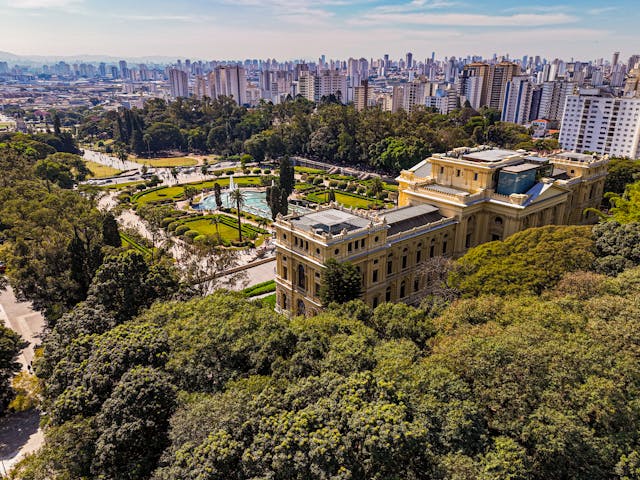

São Paulo is the city most American travelers fly through on the way to Rio de Janeiro and almost none stay in long enough to understand. That is a genuine mistake. The largest city in the Western Hemisphere by some measures, São Paulo is a metropolis of 22 million people that rivals New York and Mexico City for cultural depth, gastronomic ambition, and neighborhood-level character. For Americans who have done Rio and want the Brazil that Brazilians actually live in, São Paulo is the answer.
Getting There and Staying Connected
Direct flights from Miami, New York JFK, and Los Angeles to São Paulo’s Guarulhos International Airport run daily with LATAM, American, and Delta. Flight time from the East Coast is approximately ten hours. From the West Coast, expect twelve.
Brazil is not covered by US carrier international day plans without roaming charges of $10 to $25 per day. In a city where Uber is the standard transport, Google Maps is essential for navigation, and restaurant reservations require a working phone, data is non-negotiable. Holafly’s eSIM in Brazil activates via QR code from home before you board, covering unlimited data on local Brazilian networks from the moment you land. Your US number stays active on your physical SIM for calls and texts simultaneously.
The Museum Scene: World-Class and Largely Unknown to Americans
São Paulo has one of the most significant concentrations of art museums in the Americas, and most American visitors have never heard of any of them.
The Museum of Art of São Paulo Assis Chateaubriand, known universally as MASP, sits on Avenida Paulista on a structure that appears to float above the street on two massive red concrete pillars. The collection spans Western painting from the 12th through 20th centuries and is displayed on transparent crystal easels that allow visitors to view each work from both sides, a presentation method unique in the world. Rated 4.7 from over 111,000 reviews, open Tuesday from 10am to 8pm, Wednesday through Friday until 6pm, and weekends until 6pm. Closed Monday. Admission is free on Tuesdays, which is the day to go if your schedule allows.
The Pinacoteca de São Paulo in the Luz neighborhood is the oldest art museum in the city and focuses on Brazilian art from the 19th century through the contemporary period. Housed in a restored 19th-century industrial building with a central garden, it is rated 4.8 from over 40,000 reviews. Open Wednesday through Monday from 10am to 6pm, closed Tuesday. Free admission on Saturdays.
The Museu Afro Brasil inside Ibirapuera Park, rated 4.8 from nearly 11,000 reviews, is one of the most powerful museum experiences in South America. The collection documents the history and cultural contributions of Afro-Brazilian people through sculpture, photography, painting, and artifacts. Multiple American reviewers describe leaving with more knowledge of Brazilian history than they expected and more emotional engagement than any museum visit on the trip. Open Tuesday through Sunday from 10am to 5pm, closed Monday.
The Museu do Ipiranga, recently reopened after a major renovation and rated 4.8 from over 36,000 reviews, tells the story of Brazilian independence through beautifully curated exhibits in a grand 19th-century palace surrounded by formal gardens. Open Tuesday through Sunday from 10am to 4pm, closed Monday. Free admission on Wednesdays.
Ibirapuera Park: São Paulo’s Central Park
Ibirapuera Park in the Vila Mariana neighborhood is the city’s most important public green space and the anchor for an afternoon that can combine the Museu Afro Brasil, the Museu do Ipiranga, and a long walk through landscaped grounds designed by Roberto Burle Marx. The park hosts weekend markets, food vendors, cycling paths, and the kind of spontaneous social life that reminds you that twenty million people live here and most of them are not tourists.
Vila Madalena and Pinheiros: Where to Eat and Drink
Vila Madalena is São Paulo’s bohemian neighborhood and the area most American visitors gravitate toward after dark. The concentration of bars, restaurants, and street art on Rua Aspicuelta and the surrounding blocks is the most walkable and accessible version of the city’s nightlife for visitors unfamiliar with the layout.
Pé de Manga on Rua Arapiraca 152 in Vila Madalena is rated 4.2 from over 7,200 reviews and consistently praised for its outdoor garden seating under a mango tree that gives the restaurant its name. The salmon with risotto and the cocktail list are the most cited highlights. Open daily from noon to 12:30am, Sunday until 9:30pm.
Olívio Bar & Gastronomy on Rua Delfina 196 in Vila Madalena is the cocktail destination that multiple American reviewers describe as producing the most unusual and creative drinks they have ever encountered. Rated 4.6 from over 4,600 reviews, the specialty cocktails and tuna dishes are the standouts. Open Monday from noon to 11pm, Tuesday through Thursday from noon to 1am, Friday and Saturday from noon to 2am, Sunday until 11pm.
O Escandinavo on Rua Mourato Coelho 1365 in Pinheiros is the São Paulo restaurant that most surprises first-time visitors: a Nordic restaurant in Brazil that delivers genuinely exceptional Scandinavian cooking including smoked salmon, aquavit, and cloudberry desserts. Rated 4.8 from 689 reviews. Open Wednesday through Friday for lunch and dinner, Saturday lunch and dinner, Sunday lunch only. Closed Monday and Tuesday. Reservations required.
Practical Information for American Visitors
Getting around: Uber and 99 are reliable throughout the city. The São Paulo Metro covers the main tourist neighborhoods including Paulista, Vila Madalena via Fradique Coutinho, and the Luz museum district. A single Metro fare costs approximately R$5, under $1 at current exchange rates.
Safety: São Paulo requires the same urban awareness as any major city. The neighborhoods covered in this guide including Vila Madalena, Pinheiros, Jardins, and the Paulista corridor are considered safe with standard precautions. Keep phones in pockets rather than hands when walking, use app-based transport after dark, and avoid peripheral neighborhoods without local knowledge.
Currency: The Brazilian real (BRL). Credit cards are widely accepted in Vila Madalena and Pinheiros restaurants and bars. Cash is useful for markets and smaller establishments.
Language: Portuguese. English is spoken in upscale restaurants and hotels but is not widespread outside these contexts. The Google Translate camera function is indispensable for menus and street signs.
São Paulo FAQs
How many days do you need in São Paulo? Three days covers the essential museums, a full afternoon in Ibirapuera Park, and several evenings in Vila Madalena and Pinheiros. Four days allows a day trip to the colonial town of Embu das Artes or the Serra da Cantareira nature reserve north of the city.
Is São Paulo worth visiting if I only have two weeks in Brazil? Yes. São Paulo as a three-day stop before or after Rio de Janeiro gives your Brazil trip a dimension that Rio alone cannot provide. The cultural depth, the food scene, and the sheer scale of the city are experiences that have no equivalent elsewhere in the country.What is the best neighborhood to stay in São Paulo? For first-time visitors, Jardins and the area around Avenida Paulista offer the best combination of safety, walkability, hotel quality, and proximity to MASP and Ibirapuera Park.

The New Jersey Digest is a new jersey magazine that has chronicled daily life in the Garden State for over 10 years.