

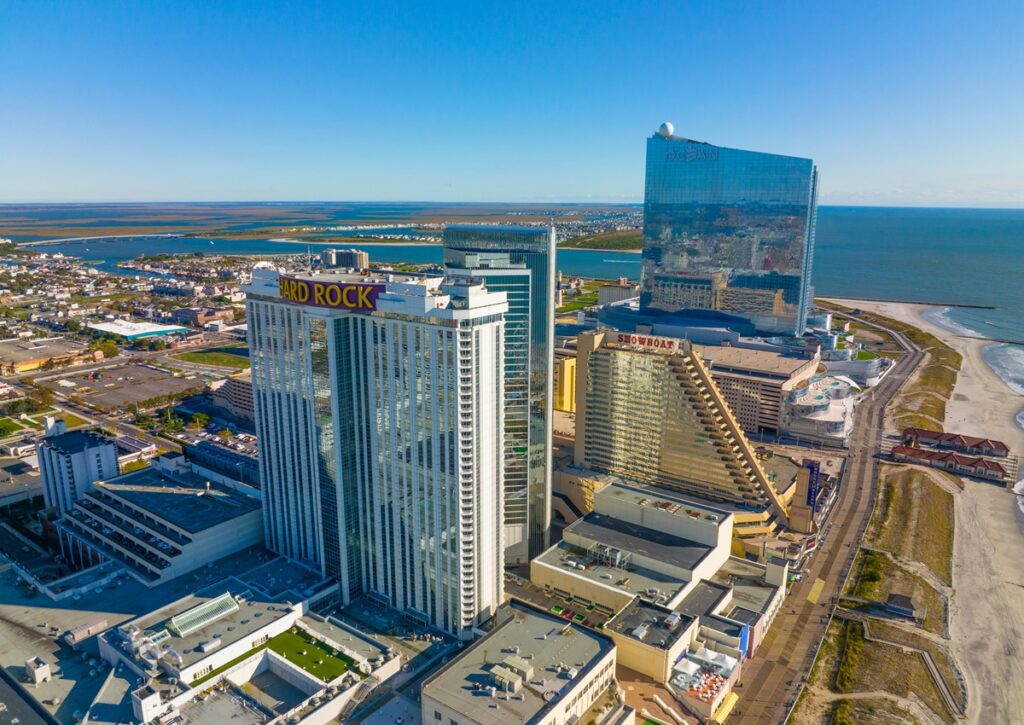

The fear along the Boardwalk is real. So is the case for why Atlantic City might come out of this stronger.
New York City is moving closer to approving three full-scale casinos—a development many Atlantic City insiders initially feared.
I’ve heard the concern from Atlantic City operators, hospitality workers, and local business owners up and down the Boardwalk. The concern is understandable. Pennsylvania, Connecticut, and online gaming have already chipped away at Atlantic City’s market share.
But the full picture looks different.
The Brand Story Nobody Is Talking About
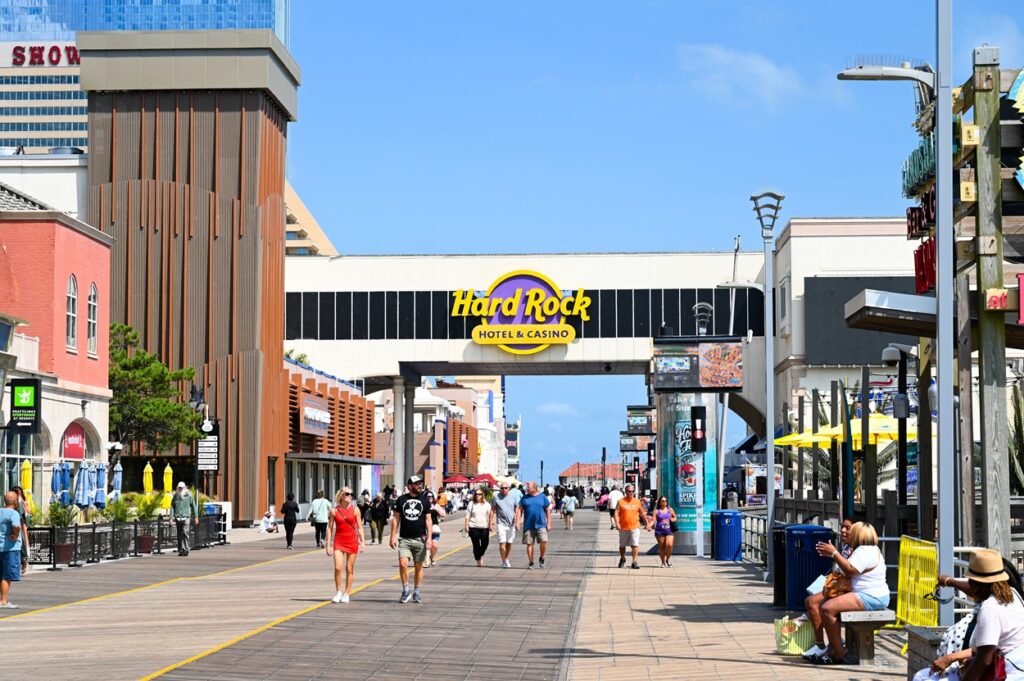
Two of the leading proposals for New York casino licenses are tied to Hard Rock and Bally’s. Both already operate major properties in Atlantic City. That overlap is not a coincidence, and it’s not a conflict. That is, if you understand how these hospitality businesses actually work, an enormous structural advantage for the Shore.
These are not simply casino brands. They are hospitality ecosystems—loyalty programs with millions of enrolled members, marketing operations that spend heavily to keep guests connected across properties, data infrastructure built specifically to move customers from one location to another. When Hard Rock opens in New York, it does not acquire “a customer for New York.” It acquires a customer for Hard Rock. And Hard Rock, in case anyone needs the reminder, is already here.
George Goldhoff, President of Hard Rock Hotel & Casino Atlantic City, put it plainly: “Our goal is always to create experiences that keep guests connected to the Hard Rock brand wherever they travel. When someone discovers Hard Rock in one market, it often leads them to explore our properties in other destinations.”
Read that again slowly if you are an Atlantic City stakeholder who has been spending the last six months anxious about New York. A first-time player who signs up for a loyalty card at a Hard Rock property in Queens is not lost to Atlantic City. That person is now in a marketing funnel—receiving targeted offers, being introduced to the brand’s full portfolio, and being actively encouraged to see what the flagship property looks like. Atlantic City is at the end of that funnel. The New York property is the top of it.
Urban Casinos and Resort Destinations Are Not the Same Business
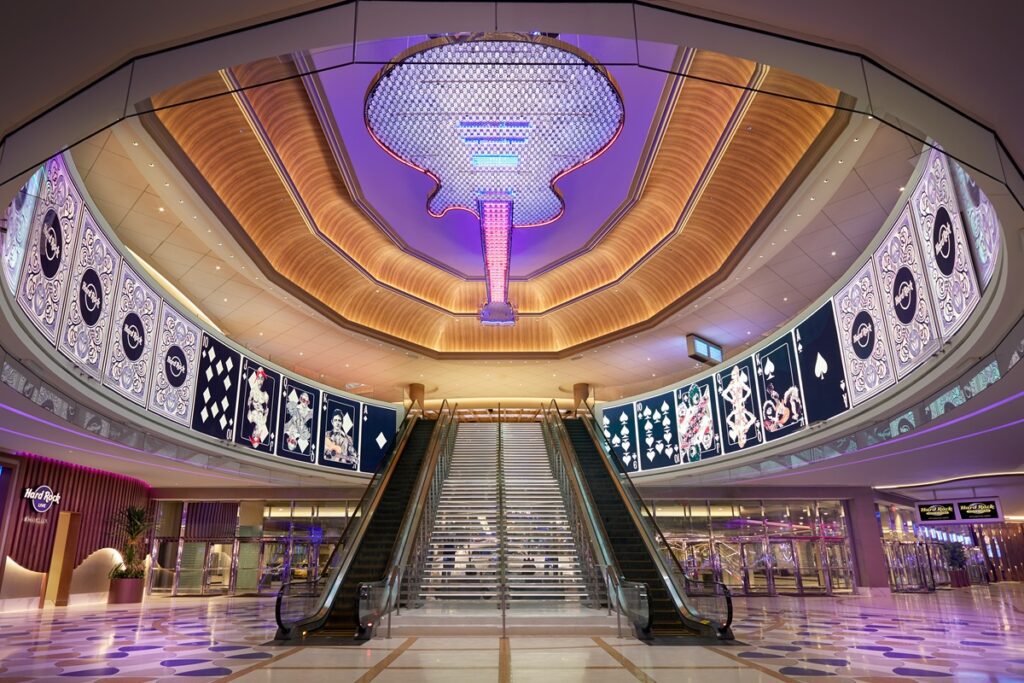
There is a categorical error running through most of the Atlantic City anxiety, and it is worth naming directly: urban convenience gaming and destination resort gaming are not competitors in any meaningful sense. They serve different needs, different occasions, and in many cases, different people entirely.
New York’s casinos will be built for the city they’re in. They will serve the after-work crowd, the Manhattan resident who wants to play for two hours and be home by midnight, the tourist who’s already downtown and wants to add a casino to the itinerary. That is a real market. It is also a fundamentally transactional one—short visits, limited spend on hotels and dining, low attachment to the property itself.
Atlantic City serves something else entirely. When a family from Long Island decides they want a weekend—a real one, with a beach and a concert and a pool and a dinner reservation and maybe a show—they are not going to a casino attached to a midtown or Queens hotel tower. The physical scale of what the Shore’s resort properties offer cannot be replicated in an urban footprint. You cannot build a Boardwalk in Midtown. You cannot put an ocean behind a convention center in Queens.
New York builds the storefront. Atlantic City remains the flagship. That framing is not wishful thinking—it is the actual structural relationship between urban convenience gaming and a mature resort destination, and it is how the industry has played out in every other market where this dynamic has existed.
The Convention Business Is the Underrated Engine
Atlantic City’s conventions and meetings business does not get nearly the attention it deserves, including from people in New Jersey who cover this market for a living. The Atlantic City Convention Center has become, quietly and without much fanfare, a serious regional anchor—trade shows, corporate events, sporting competitions, major conferences that bring tens of thousands of visitors who are not primarily there for the casino floor at all.
The economics of convention visitors are different from leisure gamblers in ways that matter. They arrive midweek, when the resort properties have capacity. They extend their stays. They walk the Boardwalk, eat at the restaurants, and—this is the number the hospitality industry cares about most—they come back. Convention attendees are disproportionately first-timers who discover the destination through a work trip and return on their own. That conversion rate is one of the cleanest arguments for the long-term health of the Atlantic City market.
As New York’s entertainment and gaming economy grows, demand for large-format event space in the broader region will grow with it. Atlantic City already has that infrastructure. Building a convention center and thousands of hotel rooms adjacent to a new casino property takes years and costs billions. The Shore built it already. It sits less than two hours down the Parkway from the country’s largest city, and it is not going anywhere.
Sixty Million Visitors and a Two-Hour Drive

New York City draws more than 60 million visitors annually. Domestic tourists, international travelers, business visitors extending their stays, people who have never been to New Jersey and have no particular reason to come—until, suddenly, they’ve been introduced to a gaming and entertainment culture in one of the most visited cities on earth and start wondering what else is in the region.
Atlantic City has always benefited from its proximity to New York. That proximity does not become a liability when New York gets more interesting—it becomes a stronger hand. The visitor who discovers they enjoy a casino experience in Manhattan is now a candidate for a longer trip. The international tourist who spends four days in New York and asks their hotel concierge what else is worth seeing on the East Coast is now a genuine Atlantic City prospect in a way they were not before the New York casino conversation raised the entire region’s gaming profile.
Two hours down the Garden State Parkway is not a barrier. For the right offer, for the right experience, for the right occasion, it is barely a consideration. The Shore has converted that drive into a weekend trip for generations. The question is whether Atlantic City’s marketing infrastructure is positioned to capture the new top of the funnel that New York is about to create.
A Market That Has Already Survived the Hard Version of This
It is worth remembering, before the concern about New York casinos gets too loud, what Atlantic City has already been through.
Ten years ago, many saw this market as a genuine crisis. Multiple casino closures in a single year. Thousands of jobs lost. A real question about whether the destination had a viable future. The headlines were brutal and, in some ways, deserved. Atlantic City had been slow to adapt, slow to diversify, and slow to understand that the regional gaming monopoly it had built its entire identity around was gone permanently.
What happened next is one of the more underreported economic turnarounds in New Jersey history. The arrival of Hard Rock and Ocean Casino Resort in 2018 brought genuine investment and genuine reinvention. Existing properties have been seriously renovated. Entertainment programming expanded. The online gaming market—in which New Jersey was an early and aggressive mover—created a revenue stream that didn’t exist a decade ago and now contributes meaningfully to the market’s overall health.
The Atlantic City that Pennsylvania’s casinos blindsided was a market with a single product and no contingency plan. Atlantic City, facing New York’s expansion, is a diversified resort destination with national brands, a growing events calendar, and a meaningful online gaming revenue stream—along with a renewed track record of reinvestment. This is not the same Atlantic City that struggled a decade ago. The comparison many critics are making is simply outdated.
What Atlantic City Stakeholders Should Actually Be Doing Right Now
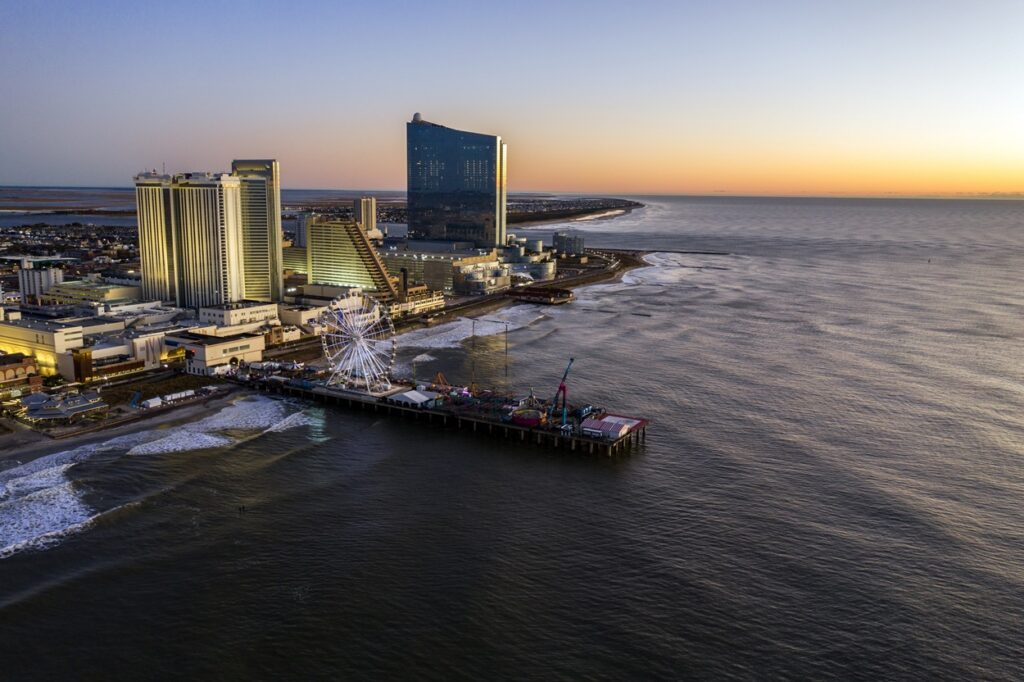
Stop treating New York as a threat. Start treating it as a feeder market. That reframe is not semantic—it changes the entire strategic posture.
The operators with properties in both markets—and there are major ones—have an opportunity right now, before New York’s casinos open, to build the marketing pipelines that move customers from one to the other. Loyalty program integration. Targeted offers to New York members promoting Shore packages. Partnership with the hospitality infrastructure around the new New York properties to position Atlantic City as the natural next step for visitors who want more than a casino floor.
The convention center and events business should be actively courting the overflow from New York’s growing entertainment economy. The Shore’s accessibility—the hotels, the Boardwalk, the beach, the scale of what resort properties here can offer for a multi-day event—is a genuine competitive advantage that is not being marketed as aggressively as it should be.
New York may be building new casinos. Atlantic City is still building something larger and harder to replicate: a destination. In New Jersey, we know better than most that destinations, when they’re built right and defended intelligently, outlast the competition that was supposed to kill them.
Atlantic City has already survived the hardest version of this story. New York’s casinos may simply change the next chapter.

Lifelong Jersey resident and Rutgers and FDU alumnus, Tom La Vecchia is publisher of New Jersey Digest, one of the state’s leading lifestyle media brands. When he’s not growing the Digest, he’s raising four kids, wrangling four cats and pretending it’s all under control. His mission: keep Jersey interesting and impossible to ignore.
