

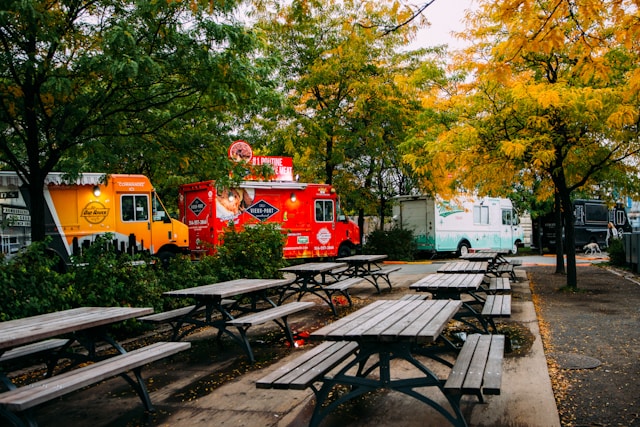
Food trucks continue to attract entrepreneurs looking for a more flexible and affordable alternative to a traditional brick-and-mortar restaurant. A mobile kitchen can allow an owner to test a menu, explore different locations, and learn what works before committing to a permanent site. That flexibility can make it easier to refine a business idea while keeping initial costs more manageable.
New Jersey has a lot going for it on that front. Dense towns, a strong office lunch crowd in places like Newark and Jersey City, plus steady overflow from commuters heading into and out of New York. That’s a lot of customers packed into a relatively small footprint. What trips people up isn’t the demand. It’s the paperwork underneath it.
A Patchwork of Local Rules
There is no one agency in charge of everything. Food truck permits and inspections are handled by local health departments, and requirements can vary by municipality. Business owners should check the requirements directly with the health department in every place they want to work.
So a food truck that is in Newark, Jersey City and Hoboken during the week might need three different permits from each city. Anyone planning to work in more than one city should check if they need separate permits, inspections or local approvals, in each place.
What This Means for Planning a Build
Pick your markets before you finalize the layout. That’s really the core of it. Choosing two or three target municipalities early can make it easier to plan the truck’s layout around the requirements of the markets where it will operate, rather than building a truck first and figuring out where it’ll actually operate later.
Water tank size, sink setup, refrigeration, exhaust hoods, and fire-suppression systems can all vary depending on the menu and how a municipality classifies the risk level of the food being served. Building around too narrow a set of assumptions may lead to costly modifications later if the business expands into additional municipalities.
Finding a builder who can work through those decisions with you before anything is finalized tends to save that headache. Karpatia Trucks is one example of a custom food truck manufacturer that takes local operating requirements into account during the planning stage and considers factors such as water capacity, sink configuration, and ventilation when those decisions may affect where a vehicle can operate.
Then there’s the commissary arrangement, which is often underestimated during the planning stage. Many mobile food operations may need to establish an approved commissary or servicing arrangement, depending on local requirements and the nature of their operations. Owners should confirm the applicable rules with the relevant local health department before finalizing plans for food preparation, cleaning, and waste disposal. Addressing those requirements early, along with any required food-safety certifications and business-registration steps, can help prevent delays during the launch process.
Budgeting Beyond the Truck Itself
Owners tend to budget carefully for the vehicle and equipment, then forget what it costs to actually run across a few jurisdictions: separate permit renewals every year, commissary fees, inspection scheduling, insurance. None of it is huge on its own. Stack it across two or three cities and it adds up faster than most first-timers expect.
And these numbers move. Requirements change year to year, sometimes differ between towns that are a few miles apart, so it’s worth confirming directly with the relevant health department before finalizing a budget rather than relying on last year’s figures.
The Takeaway
There’s real opportunity in New Jersey’s mobile food market, but the regulatory setup rewards people who plan their geography and their build at the same time instead of treating them as two separate problems. Pick the cities first. Understand each one’s permitting timeline. Design the truck around that. It’s a lot easier than trying to retrofit one that’s already on the road.

The New Jersey Digest is a new jersey magazine that has chronicled daily life in the Garden State for over 10 years.
