

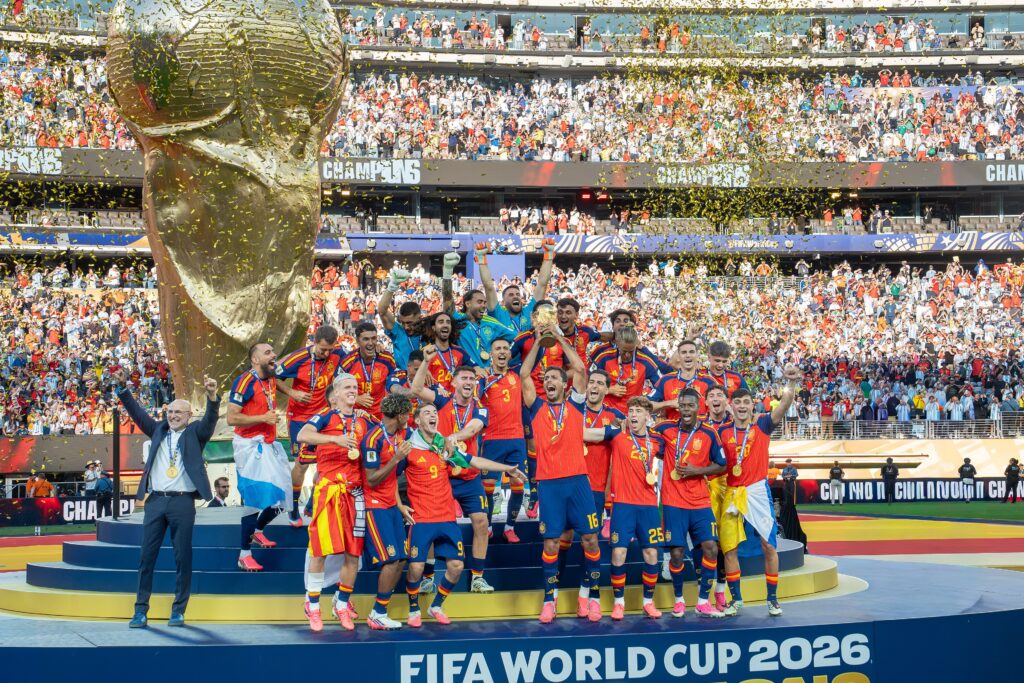

It’s been over a month since the World Cup left ended, concluding with a 1-0 Spain win over Argentina at MetLife Stadium in East Rutherford. As expected, the tournament brought a massive financial boost to New Jersey and New York—but even region officials underestimated just how many dollars it would bring in.
The 2026 FIFA World Cup generated $3.5 billion in total economic impact across both states combined, according to reporting by Forbes. The final figure comes in $200 million over initial predictions.
The study, conducted by Tourism Economics, found the following numbers:
- $1.9 billion in direct economic activity
- 27,424 jobs supported
- $1.4 billion in labor income
- $414.2 million in state/local tax revenue
- 645,000+ fans attended the 8 matches
- 626,300 non-local visitors came to the region for tournament-related events
- Combined, match and non-match visitors drove $1.7 billion in direct spending
Here’s a breakdown of the money spent by visitors and fans:
- Lodging: $653 million
- Food & beverage: $346 million
- Retail: $264 million
- Transportation: $200 million
- Recreation/entertainment: $195 million
“The final numbers demonstrate that New York and New Jersey didn’t just rise to the occasion—we exceeded expectations and delivered an impact that will be felt long after the final whistle,” said CEO of the New York/New Jersey Host Committee Alex Lasry in a statement.
State officials are touting the numbers as a success—and proof that New Jersey is more than prepared to host worldwide events.
“From the first match through the World Cup final, we showed that New Jersey has the infrastructure, workforce, diversity, and hospitality to bring people together and successfully host events of this scale,” Sherrill said, according to Forbes. “The impact reached far beyond the stadium, supporting local businesses, jobs, and economic activity across our state.”
The tournament may be over, but New Jersey and New York continue to benefit from the tourism exposure, revenue generation, expanded soccer programs, and infrastructure partnerships that the World Cup brought to the region.

Lifelong Jersey resident and Rutgers and FDU alumnus, Tom La Vecchia is publisher of New Jersey Digest, one of the state’s leading lifestyle media brands. When he’s not growing the Digest, he’s raising four kids, wrangling four cats and pretending it’s all under control. His mission: keep Jersey interesting and impossible to ignore.
