

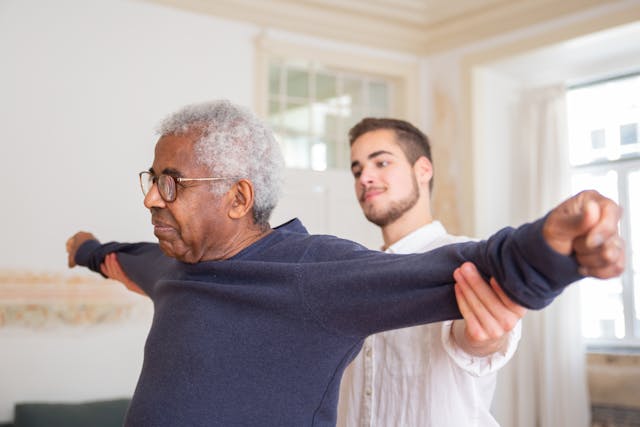

Loneliness in older adults isn’t just a personal struggle, but a well-known public health problem. The National Academies of Sciences, Engineering, and Medicine found that more than one-third of adults aged 45 and older report feeling lonely, and the consequences go well beyond low mood. For seniors who’ve outlived spouses, drifted from longtime neighbors, or simply aged out of the social structures that once kept them connected, isolation can quietly erode both physical and mental health.
Good assisted living communities are built around this reality. They handle the practical stuff, meals, medication, and daily support, but the better ones are doing something harder to quantify. Those researching Assisted Living in Bullhead City will notice that the communities worth considering treat connection as something built into daily life, not tacked on as a wellness program.
Shared Spaces That Invite Interaction
Layout matters more than most families realize when touring a community. Common areas that actually invite people to linger, dining rooms, garden courtyards, and comfortable lounges do a quiet but important job. They give residents a reason to be around each other without requiring any organized activity.
Communal dining is probably the most underrated aspect of assisted living communities. Sharing a meal is one of the most traditional social practices. When residents sit down together at regular times, familiar faces start to become friends. The dining room stops being a cafeteria and starts feeling more like a block you’ve lived on for years.
Programming That Builds Real Relationships
Activity calendars are usually the first things families notice, but a full calendar and a connected community are not the same. The distinction worth paying attention to is whether activities give people a genuine reason to keep coming back or are just filling time.
Interest-Based Groups
Shared interests do most of the heavy lifting. Put a few people with a real love of gardening or a genuine interest in books in the same room regularly, and relationships tend to develop without much prompting. Book clubs, art classes, and music programs—these aren’t just entertainment. Over time, they develop their own rhythms and internal references. That kind of familiarity is closer to what belonging actually feels like than any welcome event will ever be.
Volunteer and Contribution Opportunities
Here’s the thing most people overlook: feeling useful matters as much as feeling included. Residents who have a role, even a small one, whether it’s mentoring someone newer, running a group, or just helping organize an event, report a stronger sense of purpose, which is what keeps people genuinely well.
The Role of Staff in Creating Community
Staff aren’t just there to provide care. They’re often the reason a community feels like one. When a caregiver actually knows a resident’s history, remembers what they care about, and engages with them as a person rather than a task, that signals something residents pick up on immediately.
This is why consistency matters in this case. Communities with high staff turnover make it nearly impossible for residents to build the kind of familiarity that actually reduces anxiety. It’s not about having friendly staff; it’s about having the same people around long enough for trust to develop. That’s a management decision as much as a hiring one.
Personalized Approaches to Care
Standard care feels like ordinary care. Residents come with entire lives behind them, specific hobbies, values, cultural backgrounds, and family histories, and a good community uses that information. A resident who speaks another language as their first language shouldn’t feel like that part of their identity gets left at the door. Matching daily life to who someone actually is makes them feel recognized rather than simply cared for.
Family Involvement Strengthens the Social Fabric
The resident’s social world doesn’t have to shrink just because their address changed. Communities that actively involve families, through regular events, honest communication, and a general attitude of welcome, create something richer for everyone. Residents stay connected to their histories. Families feel less like visitors and more like participants.
Transparent updates from staff, open-door policies for visits, and genuine inclusion in care conversations all send the same message: this isn’t a handoff, it’s a partnership. Residents who feel that tend to adjust better and settle in faster.
Why It All Matters
Belonging isn’t a satisfying outcome that shows up in health data. Social connection is consistently linked to lower rates of depression, slower cognitive decline, and longer life expectancy in older adults. Communities that take this seriously aren’t just running a nicer facility; they’re producing measurably better results for the people living there.
So when evaluating options for a loved one, the question shouldn’t stop at amenities or staff-to-resident ratios. Ask whether the people there actually seem to know each other. Watch how staff interact with residents in passing. The right community doesn’t just meet someone’s needs; it gives them somewhere to belong.