


How Casino Resorts Are Blending Entertainment, Hospitality, and Digital Gaming to Attract New Audiences
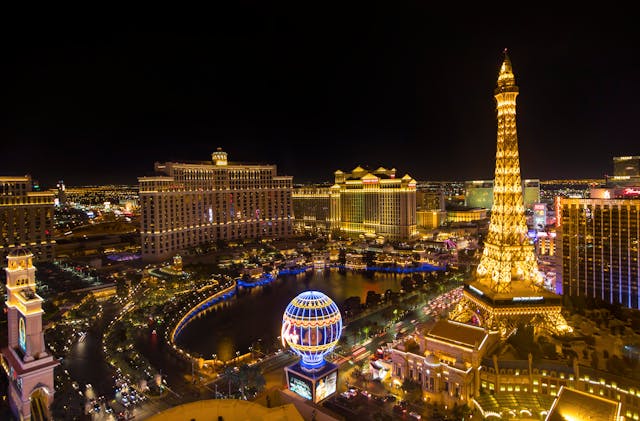
Las Vegas and its rivals are selling more than table limits and room rates. Big‑ticket residencies, cashless floors, and sportsbook apps now sit alongside celebrity chef dining and pool‑club calendars. The pitch is an all-in-one destination where entertainment, hospitality, and digital converge on the same circuit.
The trend has accelerated as operators look for growth beyond core gaming. Executives at the largest groups describe online products as complementary to their resorts, rather than competitors, while properties invest in cashless technology, loyalty integrations, and new performance venues. Analysts say the goal is to attract a larger audience per trip and extend the relationship with those guests beyond their initial visit, where mobile apps and reward systems can continue the connection.
Strategy: Digital and Physical Under One Brand
MGM Resorts’ Chief Executive, Bill Hornbuckle, framed the approach in 2024, stating that the company is building a broader digital platform while expanding its resort footprint worldwide. He cited BetMGM’s international push and the LeoVegas acquisition as part of a wider strategy that includes integrated resorts in Japan, as well as potential developments in Thailand and the UAE.
Caesars has described a similar loop. In a July 2024 release announcing the acquisition of trading firm ZeroFlucs, Caesars Digital president Eric Hession said the company wanted the best sports betting product to complement Caesars Rewards. The comment highlighted a model in which app activity and on-property spend mutually reinforce each other.
Hard Rock’s remaking of the Mirage site into Hard Rock Las Vegas, featuring a guitar-shaped tower, illustrates another key aspect of the playbook: a resort’s identity is anchored in entertainment and carried through its restaurants, rooms, and gaming floor. Corporate statements and interviews by chairman Jim Allen describe entertainment as a core brand driver, not an add‑on.
On the Floor: Cashless and Connected
Resorts World Las Vegas launched with one of the Strip’s most ambitious cashless ecosystems, later adding remote identity verification, loyalty enrollment, and biometric authentication through its mobile app. Guests can pay, earn points, and move between slots, tables, and the sportsbook without handling cash, a convenience play that also feeds data back into marketing.
Cashless features tie into a broader data stack. When casino wallets and sportsbook profiles are connected to the same loyalty account, operators can view trip patterns that were previously stored in separate silos. The appeal for guests is practical, fewer lines and fewer cards to carry, but the business case leans on segmentation and targeted offers that can extend far beyond checkout.
Entertainment Arm’s Race
Mega‑venues and residencies continue to shape visitor behavior. The Sphere, located next to The Venetian, has garnered global attention with immersive shows and a 17,000-seat bowl. Despite high costs and uneven profitability to date, promoters and hoteliers describe the venue effect as real, increasing shoulder‑night demand and creating high‑margin upsell paths in dining and rooms.
Elsewhere, Hard Rock’s expansion in Las Vegas represents a bet that a recognisable entertainment icon can command pricing power. New or renovated theaters at resort properties are booking tours that cross over audiences, which keeps non‑gamblers in the complex and, in many cases, introduces them to first‑time casino play.
Hospitality: Rooms, dining, and rewards for travel
Modern integrated resorts distribute spend across rooms, restaurants, and day‑life venues to buffer gaming swings. Loyalty programs stitch those pieces together. MGM Rewards, Caesars Rewards, and Unity by Hard Rock rely on tiers and co-branded credit cards to capture off-property spend, then recycle those points into complimentary nights or show tickets. The aim is to create a sense of familiarity that feels premium, even during a short stay.
Partnerships reinforce the bridge. Operators collaborate with external brands on chef concepts and pop-up activations, then promote those offers through emails and app feeds, not only at the resort but also months later. Affiliates and review sites, including BonusFinder, have tracked the rise of non‑gaming spend as a share of the Vegas wallet, a signal that the mix keeps shifting toward experience packages.
Risk and reset points
The new model carries risks. Pricing has climbed, and even MGM’s Hornbuckle recently acknowledged guest frustration with Las Vegas costs. Sphere’s early financials show that spectacle alone does not guarantee profits. Cashless systems, while convenient, invite scrutiny from regulators and privacy advocates, and the balance between frictionless play and responsible safeguards remains a key consideration.
Analysts also watch saturation. If every property chases the same residency and the same VIP day‑club guest, the premium market gets crowded quickly. That is where digital products can extend reach into regional markets, catching fans who saw a show on holiday and later tap an app at home. The loop is still forming. Operators describe it as a long game.
For now, the convergence is visible on every marquee and in every app store. Entertainment sets the hook, hospitality keeps the trip smooth, and digital gaming completes the circle when the flight lands. The audience is broader than the floor once suggested, which is the point.

The New Jersey Digest is a new jersey magazine that has chronicled daily life in the Garden State for over 10 years.