


Building performance problems don’t often announce themselves during construction. They show up months or years later as callbacks, complaints, or damage claims. For contractors looking to reduce that risk, the quality of the building envelope deserves serious attention, and that conversation starts with the thermal layer inside the assembly.
- Why Insulation Affects Durability
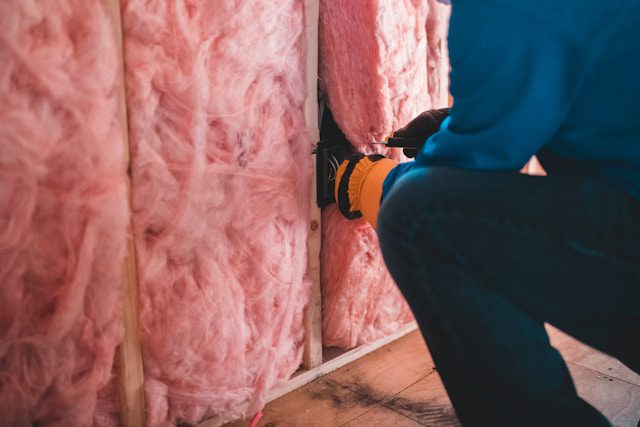
Wall, roof, and floor assemblies experience continuous stress from temperature cycling. As materials expand and contract with seasonal and daily swings, uncontrolled heat flow amplifies those movements, contributing over time to cracking, joint fatigue, and long-term wear on finishes and structural connections. Choosing the right thermal and acoustic insulation products moderates those swings, keeping temperature gradients within assemblies more stable and reducing the cumulative strain on surrounding materials. Insulation is not just an energy-efficiency measure; it actively supports the longevity of the entire building enclosure.
- Moisture, Air Leakage, and Damage Prevention
Proper insulation works best when it is paired with air sealing and moisture control. According to the U.S. Department of Energy, air movement accounts for more than 98% of all water vapor movement in building cavities, making uncontrolled air leakage the primary driver of condensation, mold risk, and moisture-related deterioration. When a thermal layer is correctly positioned within an assembly, it keeps surfaces above the dew point, reducing the likelihood that moisture will condense on sheathing, framing, or other vulnerable materials. Combined with a continuous air barrier and appropriate vapor control, insulation becomes a frontline defense against the structural decay and indoor air quality problems that generate expensive post-completion claims.
- Code Compliance and Current US Trends
Energy codes across the country are tightening their grip on building-envelope performance, pushing contractors toward higher R-values, continuous insulation, and more rigorous air-barrier detailing. California is at the leading edge of this shift. As the California Energy Commission announced in January 2026, the state’s 2025 Energy Code took effect on January 1, 2026, for new buildings and major renovations, strengthening building-envelope efficiency requirements, including improved ceilings, exterior walls, and windows. Notably, Executive Order N-29-25 temporarily suspends certain requirements, specifically solar and battery storage mandates, for residential projects involving repair or replacement of structures damaged by the 2025 Los Angeles area wildfires, though those projects must still be solar-ready. Contractors who stay ahead of these evolving standards will be better positioned both for compliance and competitive differentiation.
- Client Satisfaction and Project Value
A well-insulated building delivers immediate, tangible results that clients notice and remember. Consistent interior temperatures, fewer drafts, and meaningfully quieter interiors all contribute to a sense of quality that clients associate with the contractor who built it. These are also the issues most likely to surface as post-completion complaints when insulation is underspecified or poorly installed. When the thermal envelope performs correctly, the project simply works quietly and reliably. That kind of outcome supports repeat business, referrals, and a reputation for delivering buildings that hold up. Treating insulation as a quality-and-risk-management decision, instead of a code checkbox, is one of the clearest ways to distinguish a contractor’s work in a competitive market.
Insulation decisions made early in a project have consequences that play out for decades. Contractors who treat the thermal envelope as a strategic priority rather than a line item to value-engineer tend to build projects that generate fewer problems and more satisfied clients. In a market where reputation compounds over time, that distinction is worth investing in.