

An NFC chip in a coffee bag is a modest piece of technology, but it made a conspicuous impression at Meraki’s Media Experience in New York on September 29. Ryan Vaxmonsky of Evermore Coffee Roasters brought chipped bags and coffee-branded cards to the reader on the Meraki Espresso Machine. Scanning a compatible coffee brought up suggested grinding and extraction parameters. The small tap became a visible choice about the next shot. Later, attendees used the machine to make their own drinks, putting the recommendation to work rather than merely watching an expert demonstrate it.
Held at SPACS Gallery in Chelsea, the event began with Vaxmonsky introducing and demonstrating the machine. A panel with the roaster, industrial designer Carter McGuyer and media representative Andrea Smith explored the trade-off between a guided coffee workflow and the learning that comes from making mistakes. Afterward, guests followed Vaxmonsky’s lead at the machine while creators showed the process to their viewers and attempted drinks and latte art themselves.
The Meraki coffee machine integrates a grinder, brewing system, steam wand and touchscreen in a single unit. Two scales track different parts of the process: one measures the dose of ground coffee, while the other measures the liquid yield in the cup. The machine can stop grinding and extraction once the selected weights are reached. Separate boilers allow brewing and milk steaming at the same time, and a temperature sensor in the wand can end steaming at a chosen milk temperature.
CoffeeSense links this hardware to a roaster’s instructions. A supported bag contains an NFC chip with a profile for that coffee. Bringing it to the machine loads suggested parameters rather than requiring a user to enter each value from scratch. The data comes from the roaster; the machine does not examine the beans, determine their age or measure flavor. A different batch, different water or simply a different preference may call for changes after the first shot.
That limitation also explains the system’s practical purpose. A person trying an unfamiliar coffee has somewhere to begin, and the two scales make it easier to repeat the same dose and yield while adjusting another variable. The grind setting and brewing controls remain available to change. CoffeeSense works with compatible beans from Meraki’s participating roasters; coffee without a supported chip can still be brewed by setting parameters manually.
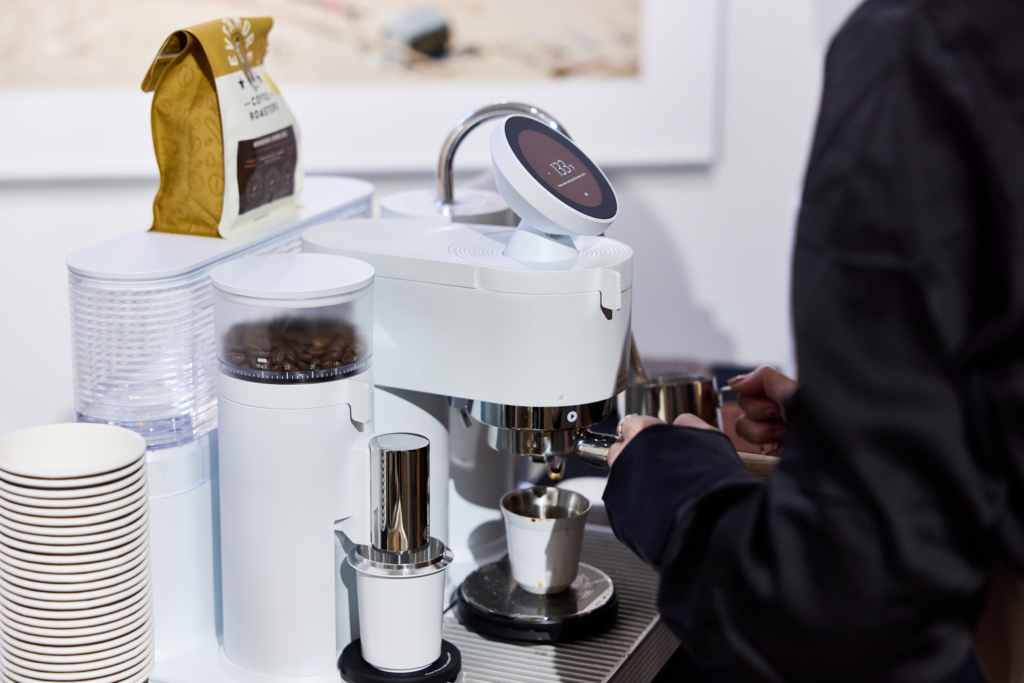
The milk demonstration drew a useful boundary around the automation. The machine can provide steam and a temperature target, but latte art requires someone to texture, tilt and pour with care. The creators’ attempts were part of the event’s appeal precisely because the outcome was not predetermined. A controlled starting point for espresso does not turn its operator into an expert at the pitcher.
Meraki’s event offered a clearer demonstration of the product than simply listing its parts. The panel discussed whether removing guesswork could coexist with craft; the guests’ attempts answered by showing what the system measures and what people still learn. In that sense, the NFC tag is less a promise of a perfect cup than an invitation to start brewing and refine the next one.
For more information visit here:Meraki Espresso Machine

The New Jersey Digest is a new jersey magazine that has chronicled daily life in the Garden State for over 10 years.
