

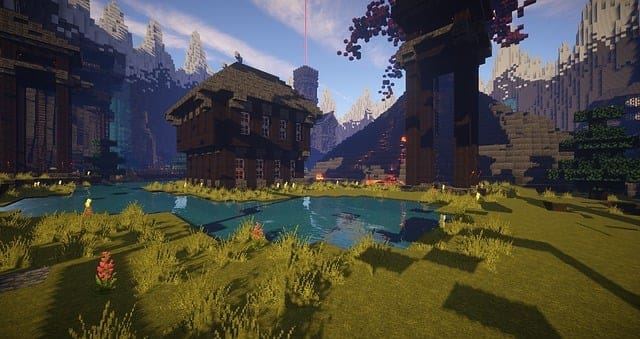

Minecraft has been around for more than a decade, and it still pulls in millions of players every month. The game looks simple at first glance, but once you jump in, you realise how much there is to do. And if you plan to play on a computer, it helps to know how the game works, what hardware you actually need, and why people keep coming back to it.
Below — a clear breakdown of the core parts of Minecraft, from gameplay to updates, plus a look at minecraft pc requirements, choosing a minecraft gaming pc, and what to expect if you’re building or buying a pc for minecraft.
What Makes Minecraft Work
Minecraft is built around blocks. You collect them, break them, rebuild them, and shape the world however you want. The controls are simple enough for kids but flexible enough for older players who want something deeper.
Two things define the game:
- A world that never ends. It keeps generating as you explore. Forests, oceans, caves — all unique on every world seed.
- A loop that pulls you in. You gather materials, craft tools, build a base, and find better resources. Then you push a bit further.
The whole idea is straightforward, which is one reason the game never gets old.
The Main Game Modes
Minecraft offers a few core modes, and each attracts a different type of player. Here’s how they work in practice.
Survival Mode
This is the classic way to play.
You start with nothing. You punch a tree. You build your first wooden pickaxe. And pretty soon, you’re running from zombies because you forgot to place torches.
The rhythm of Survival is simple:
- Find food.
- Build shelter.
- Mine deeper to get iron, diamonds, and rare materials.
- Upgrade gear so you can explore tougher areas.
The mode doesn’t rush you, which is why people sink hundreds of hours into a single world.
Creative Mode
This one is all about building.
No monsters. No hunger. No grinding for materials.
Players use Creative when they want to:
- Build huge cities
- Practice redstone engineering
- Plan multiplayer projects
- Experiment with designs before using them in Survival
Some of the biggest Minecraft creations online — full-scale stadiums, giant castles, even working calculators — were made in this mode.
Adventure Mode
Adventure mode is more niche.
It’s used mostly for custom maps and story-driven worlds created by the community. You can’t break blocks freely, so the focus stays on puzzles and exploration.
The Multiplayer Side
Minecraft’s community is one of the main reasons the game still thrives.
You can join big public servers with mini-games, custom worlds, or complex economies. Or you can join a small private server with a few friends and treat it like a shared project.
A few things stand out:
- Long-term worlds. Some servers have been running for years.
- Player-run events. Building contests, PvP arenas, role-play towns — all common.
- Endless mods and plugins. Many servers add custom tools or new mechanics that change how the game feels.
If you’ve only played solo, multiplayer opens a completely different version of Minecraft.
Updates and What’s New
Mojang releases major updates every year. The last few brought deeper caves, new mobs, new biomes, and tweaks that changed how players explore and build.
Recent updates focused on:
- Improved world generation. Mountains look more natural, caves are bigger, and landscapes feel more varied.
- New mobs. Each update usually adds creatures that change strategy. Some friendly, some not.
- Blocks for builders. More decorative blocks and redstone pieces give players more control over their builds.
Even smaller patches matter because they fix bugs and smooth out performance, especially on PC.
What You Need to Run Minecraft on PC
Minecraft isn’t a heavy game, but it isn’t as “lightweight” as many assume — especially with high-resolution textures or shaders. Some Reddit threads, including the host I’m using now review, often mention how performance changes once you start adding mods or resource packs.
Here’s the simple breakdown.
Basic Minecraft PC Requirements
A modest setup can run vanilla Minecraft:
- A mid-range CPU (even older Intel i5 chips are fine)
- 8 GB of RAM
- Integrated graphics can work, but dedicated GPU helps
- SSD recommended for faster world loading
This is enough for smooth gameplay at regular settings.
What Counts as a Minecraft Gaming PC
If you want shaders, big modpacks, or high render distance, you’ll want something stronger:
- A newer CPU (Ryzen 5 or Intel i5+ works well)
- At least 16 GB RAM
- A mid-tier GPU like GTX 1660, RTX 2060 and above
- SSD storage
Minecraft isn’t about raw visuals, but once you add lighting mods or large multiplayer builds, hardware does start to matter.
Building or Buying a PC for Minecraft
If you’re picking parts:
- Prioritise RAM and CPU. Minecraft relies more on them than on the GPU.
- Choose an SSD. Saves time on world loads and reduces stutter.
- A GPU is optional for vanilla. But needed for shaders and fancy graphics.
If you’re buying pre-built, many vendors list “Minecraft-ready PCs,” but the trick is to check the actual specs, not the label.
Tips and Tricks for New Players
Here are a few things players wish someone told them earlier:
- Carry a bed. If you die far from home without setting a respawn point, you’ll lose a lot of progress.
- Place torches everywhere. Dark spots spawn mobs.
- Use shields. They block almost everything, even creeper blasts.
- Don’t dig straight down. It’s a meme for a reason.
- Learn basic redstone. Even simple circuits save time in Survival.
Small habits like these make your world feel safer and more manageable.
Last Thoughts
Minecraft is now more than just a game. You can learn, build, relax, and explore at your own speed there. You have the most freedom when you play on PC. You can use mods, join servers, get better performance, and update your visuals.
The game is still straightforward to play and understand, whether you’re looking out the prerequisites for a Minecraft PC, choosing a Minecraft gaming PC, or just trying to build your first house. And maybe that’s why so many people come back to it every year.

The New Jersey Digest is a new jersey magazine that has chronicled daily life in the Garden State for over 10 years.