

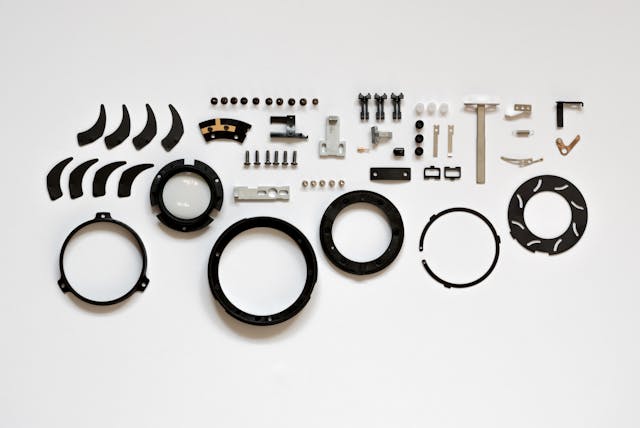

Choosing a replacement part is rarely a purely technical decision. It is a tradeoff between cost, reliability, safety, time, and how long the appliance needs to keep working without another breakdown. The labels people use – OEM, aftermarket, universal – sound simple, but the reality is more nuanced. Some aftermarket parts are excellent. Some are bargain-priced trouble. Some “universal” parts are perfectly acceptable when the fit is truly standardized, while others create headaches because “close enough” is not the same as compatible.
Bosch Dryer Parts illustrate this decision well because dryers include both high-stress mechanical wear items and safety-critical electrical components. A belt or lint filter can be a straightforward choice, while heat-system components and electronic controls carry higher risk if quality is inconsistent. The smartest approach is not to pick a category and stick with it, but to choose based on the part’s role, the appliance’s age, and the consequences of failure.
What OEM, Aftermarket, and Universal Actually Mean
OEM stands for Original Equipment Manufacturer. In appliance parts, OEM usually means the part is made by the same manufacturer that supplied the component for the appliance when it was built, or it is sold under the manufacturer’s service parts program. OEM parts tend to match specifications closely, including materials, tolerances, and performance characteristics. That consistency is the main reason they are more expensive.
Aftermarket parts are made by third-party companies. Some aftermarket manufacturers produce parts that meet or exceed OEM specifications. Others produce parts that meet only the broadest compatibility requirement and may vary in material quality or fit. The range is wide, and that is why aftermarket is not automatically “bad” or “good.”
Universal parts are designed to work across multiple brands and models by using standardized dimensions or adaptable mounting. The word universal can be misleading. Some universal parts are genuinely standardized, like certain venting components or generic fasteners. Others rely on “adjustable” designs that can introduce noise, wear, or inconsistent performance.
The Real Question People Are Asking
Most people are not asking, “Which type is best?” They are asking, “Which choice reduces the chance of doing this repair twice?” Cost matters, but the bigger cost is often time: the appliance is down, a part is delayed, a return is needed, and the problem persists. Reliability matters, but so does risk: some failures are inconvenient, others are unsafe. Warranty matters, but so does practicality: the appliance may be out of warranty, but the part itself may carry its own guarantee.
Those concerns translate into a handful of decision points: How critical is the part? How hard is the repair? How old is the appliance? How quickly does the appliance need to be back in service? How confident is the fit and compatibility?
When OEM Is Worth Paying For
OEM makes the most sense when failure has a high consequence. That can mean safety risk, high likelihood of collateral damage, or a repair that is expensive to repeat.
Control boards and electronic modules are a strong case for OEM in many scenarios. These parts can be sensitive to slight differences in firmware revisions, connector tolerances, or component quality. A cheaper board that intermittently fails can create confusing symptoms that look like a wiring issue or a sensor problem, leading to additional wasted time and money.
Ignition and heating components are another category where OEM often pays off. A part can “work” but not perform properly. In a dryer, a heating element that runs hotter than spec can trip safety cutoffs. In a gas appliance, ignition components and safety devices must behave consistently. Even when aftermarket parts function initially, variability can show up as shortened life, unstable cycling, or nuisance shutdowns.
Seals, gaskets, and door hardware also frequently favor OEM when precision fit matters. A gasket that is slightly off can lead to heat loss, moisture leaks, or long-term wear on hinges and latches. The part may install, but performance can degrade quietly until another issue appears.
OEM is also a strong choice for repairs that require significant disassembly. Replacing a part deep inside a dishwasher or behind a built-in oven is not just a part cost, it is time and effort. If the repair is a major teardown, the most reliable part is often the cheapest overall decision even if the purchase price is higher.
When Aftermarket Is a Smart Choice
Aftermarket makes sense when a part is simple, standardized, and not safety-critical, or when the aftermarket manufacturer has a strong reputation for that category. Many wear items fall into this bucket. Belts, rollers, idlers, and some filters can be good candidates when the part is mechanically straightforward and the aftermarket version matches the correct dimensions and material quality.
Aftermarket is also reasonable when the appliance is older and the OEM price is disproportionate to the remaining value of the unit. At some point, paying premium prices for OEM components on an appliance near end-of-life becomes hard to justify. In that scenario, the “correct” choice may be the one that keeps the appliance running a bit longer without overinvesting.
Another common situation is OEM availability. If OEM parts are discontinued, back-ordered, or difficult to source, high-quality aftermarket may be the only realistic option. The important difference is between a reputable aftermarket part made to proper specifications and a low-grade substitute that is marketed aggressively but fails quickly.
Aftermarket can also be a practical choice for cosmetic and convenience components, where the downside of a mismatch is low. Knobs, trim pieces, and certain door handles can be acceptable aftermarket purchases if fit and finish are reasonable and the part’s failure does not create a safety issue.
Universal Parts: Where They Work and Where They Don’t
Universal parts are best treated as a limited-use category. They are appropriate when the interface is truly standardized and the part’s job is not sensitive to tight tolerances. Examples include certain vent hoses, clamps, some fasteners, and basic connectors that match the correct rating and size.
Universal parts become risky when the appliance relies on precise alignment, exact airflow characteristics, or specific electrical behavior. A universal door switch that physically fits but has different actuation travel can cause intermittent operation. A universal heating component with different resistance can change temperature behavior. A universal belt that is close in size can create squealing, slipping, or premature wear.
Universal parts also complicate compatibility checks. Instead of matching a model number to a specific part number, the choice becomes a measurement and spec exercise. That can be fine for a simple component, but it is less reliable when an appliance is sensitive to performance variation.
The Hidden Cost: Repeated Repairs
Repeat repairs are where the part decision becomes expensive. A part that is 30% cheaper but fails in three months is not cheaper. It is a second shipping delay, another downtime window, and often extra collateral wear. In the worst cases, a low-quality part causes a secondary failure: overheating, wiring damage, water leaks, or stress on adjacent components.
Repeat repairs are especially painful when diagnosing the original issue was difficult. A low-grade substitute can introduce new symptoms. That is how repairs turn into long, frustrating troubleshooting cycles.
This is why the “best value” part often depends on the labor intensity of the repair. If replacing the part takes two minutes and no disassembly, experimentation is less costly. If replacing it takes an hour of teardown, the decision shifts toward reliability.
Warranty and Guarantee: What People Should Know
Warranty questions often show up in two forms: appliance warranty and part warranty.
If the appliance is still under manufacturer warranty, using non-OEM parts may affect coverage, depending on terms and jurisdiction. Even when a warranty is not automatically voided, warranty service can become complicated if a non-OEM component is involved in the failure.
Part warranties are separate. OEM parts often come with clear warranty terms through authorized channels. Aftermarket warranties vary widely. Some reputable manufacturers offer strong warranties. Others offer short coverage windows or have difficult claim processes. Universal parts may have minimal warranty support.
A practical way to think about warranty is not only length, but clarity. Clear terms and a straightforward returns process reduce risk when a part arrives wrong or fails early.
A Practical Decision Framework
A simple framework helps reduce overthinking and aligns with what people actually care about: safety, reliability, and avoiding repeat work.
- Identify whether the part is safety-critical, performance-critical, or convenience-only.
- Estimate the labor intensity of the repair and the cost of repeating it.
- Check whether the appliance is in-warranty, out-of-warranty, or near end-of-life.
- Confirm OEM availability and lead time, then compare against reputable aftermarket options.
- Match by model number and verify the exact part number, including revisions and “replaces” notes.
- For aftermarket, verify material quality cues and manufacturer reputation where possible, not just price.
- Avoid universal parts for heat, ignition, and control functions unless the component is genuinely standardized and correctly rated.
- Choose the option that minimizes total cost over time, not just the upfront price.
This approach reflects the common reality: not every repair requires OEM, but some repairs become expensive when the part is unreliable.
Examples That Clarify the Choice
A dryer belt is often a reasonable aftermarket purchase if dimensions and material match the original and the manufacturer is reputable. The downside of failure is usually noise or loss of tumbling, and replacement is often manageable.
A dryer heating component is a different story. The part affects temperature behavior and can trigger safety cutoffs if it behaves outside spec. This is where OEM or high-quality aftermarket made to precise specifications is often the safer choice.
A control board is typically a high-risk place to gamble. Even small inconsistencies can cause erratic behavior that is hard to diagnose. A board that “kind of works” can waste far more time than the savings justify.
A door gasket can be deceptively important. It is not “electrical,” but its job affects heat retention, moisture control, and how the appliance performs over time. A poor fit can create recurring problems that look unrelated.
Universal parts make sense for simple, rated components like certain venting accessories or clamps, where the appliance does not depend on a proprietary interface.
What Actually Makes Sense in Real Repairs
The best part choice depends on consequences, not labels. OEM is most valuable where precision, safety, or expensive repeat labor is involved. Aftermarket is a good tool when the part is straightforward and quality is proven. Universal is a narrow category for truly standardized, correctly rated components.
The practical goal is not to “always buy OEM” or “always save money.” It is to avoid the repair that has to be done twice. That is the outcome people care about most: a part that fits, works, and keeps the appliance running without introducing new problems.

The New Jersey Digest is a new jersey magazine that has chronicled daily life in the Garden State for over 10 years.