

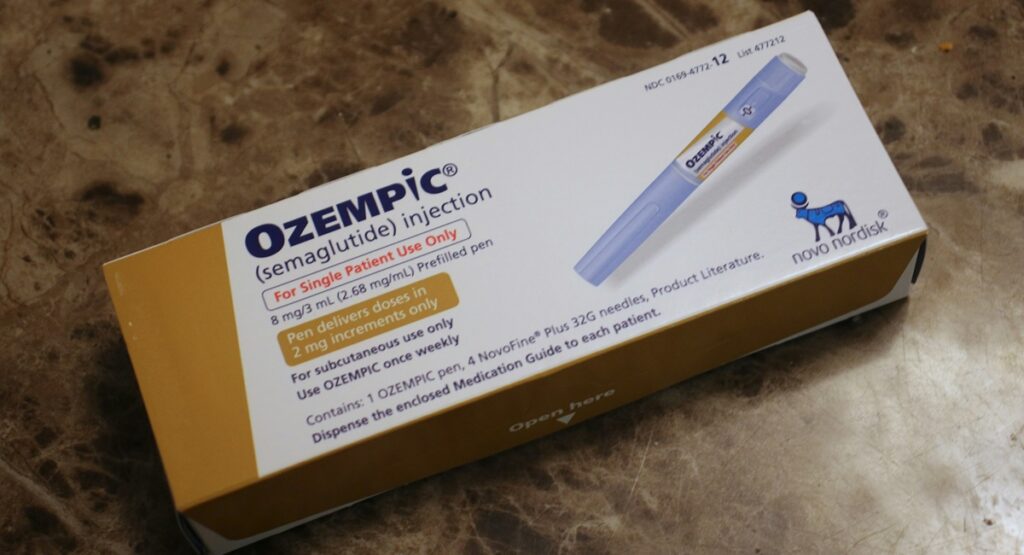
New Jersey is now among the top 10 states where people are searching for Ozempic, Wegovy, and Mounjaro without seeing a doctor—a trend health experts say is raising serious concerns.
GLP-1 medications have quickly become some of the most in-demand drugs in the country. Originally developed to treat Type 2 diabetes, they’re now driving a massive shift in how Americans approach weight loss—and how they try to access prescription medication.
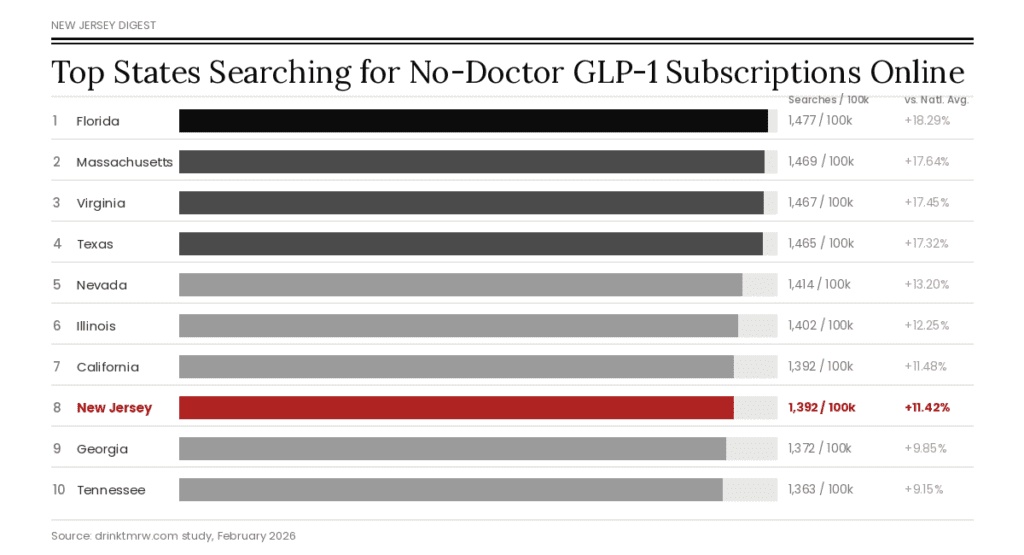
But a new study from drinktmrw.com is raising red flags about exactly how some people are trying to get their hands on them. The research, which analyzed regional search behavior across all 50 states in February 2026, tracked how many people are actively searching for GLP-1 medications paired with phrases like “online subscription” and “no doctor appointment.” What they found should give New Jersey residents pause.
A national surge with a Jersey address
New Jersey isn’t alone in this, but its position in the top ten tells a story. Florida leads the country with 1,477 searches per 100,000 residents—more than 18% above the national average—followed closely by Massachusetts and Virginia. The numbers suggest that across the country, a significant slice of the public is actively trying to access powerful prescription medications without going through the traditional channels that exist for a reason.
The appeal is understandable. GLP-1 drugs have demonstrated real results for weight loss and metabolic health. They’re also notoriously difficult to access—expensive, often not covered by insurance, and subject to nationwide shortages that have left even patients with valid prescriptions scrambling. When the normal path feels blocked, people look for shortcuts.
Online subscription services have rushed to fill that gap, offering GLP-1 prescriptions through telehealth-style platforms that often require little more than a questionnaire. Some are legitimate, operating within proper medical frameworks. Others are not. And for someone searching online without knowing the difference, the line between the two can be almost invisible.
What the experts are actually worried about
Tara Allan, a nutrition expert and registered nurse who has closely followed the GLP-1 boom, doesn’t mince words about what concerns her.
“We’re watching these medications change the weight loss and metabolic health conversation in real time, and there’s a lot of potential there, but also a lot of oversimplification, which can be dangerous,” Allan says.
The oversimplification she’s referring to is the idea that GLP-1s are something you can simply order online and figure out as you go. They’re not. These are medications that directly alter how your body processes appetite, digestion, and blood sugar. The consequences of getting that wrong aren’t abstract.
“These are powerful medications that directly alter appetite, digestion, and blood sugar regulation … this isn’t a casual ‘order it online and see what happens’ situation. Without proper oversight, people can miss contraindications, improper dosing, interactions with other medications, or signs of serious side effects.”
The risks that don’t show up in the ads
One of the quieter dangers of unsupervised GLP-1 use is nutritional. These medications work by suppressing appetite and slowing the rate at which the stomach empties. That means people eat less—often significantly less. In a supervised setting, that’s managed carefully. On your own, it can quietly become a problem.
“When intake drops, but food quality and intentionality don’t increase, nutrient gaps happen fast. I see a lot of people unintentionally under-eating protein, minerals, and even total calories needed to sufficiently maintain lean mass. Without guidance, weight loss can come at the expense of muscle, bone density, energy, and overall resilience,” Allan explains.
Allan also outlines the physical warning signs that someone may not be tolerating the medication well—signs that are easy to dismiss or misattribute when there’s no medical professional in the picture such as persistent nausea or vomiting, hair thinning, and severe digestive issues.
If you’re already using GLP-1s or thinking about it
Allan’s advice for anyone on these medications, regardless of how they accessed them, centers on being deliberate about nutrition rather than just eating less.
The broader message from experts is consistent: GLP-1 medications can be genuinely life-changing for the right patients, under the right conditions. The problem isn’t the drugs—it’s the growing tendency to treat them like a product rather than a prescription. For New Jersey residents searching for no-doctor access at rates well above the national average, that distinction matters more than ever.
If you’re considering GLP-1 medication, the starting point should be a conversation with your primary care physician or an endocrinologist, not a search engine.

The New Jersey Digest is a new jersey magazine that has chronicled daily life in the Garden State for over 10 years.
