

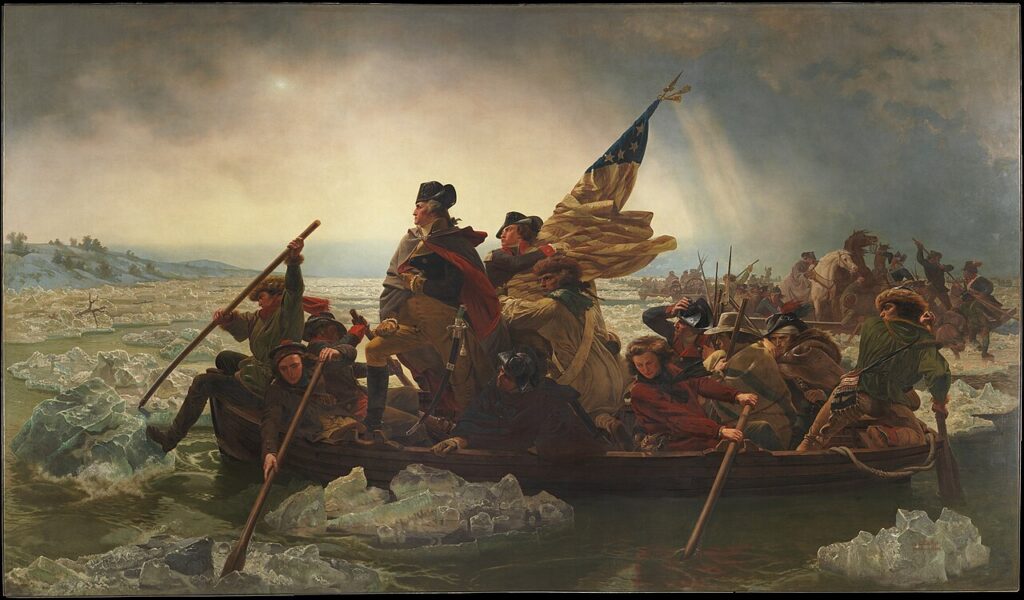
By December 1776—mere months after the signing of the Declaration of Independence—the American Revolution was nearly defeated.
George Washington had just led his army on a humiliating retreat across New Jersey—chased out of New York by the British, bleeding soldiers with every mile traveled. Enlistments were expiring, men were deserting their duties, and the army that had declared independence six months earlier was barely holding together. Thomas Paine, marching with the troops, sat down and wrote what would become the opening line of The American Crisis: “These are the times that try men’s souls.”
Washington crossed the Delaware into Pennsylvania on December 8, stripping every boat from the New Jersey side of the river to keep the British from following. By doing so, he bought himself—and his army—a few weeks.
On Christmas night, 1776, Washington led 2,400 troops back across the Delaware in one of the most audacious military decisions in American history. The river was sheeted with ice, forcing horses, artillery, and men to navigate through sleet and snow. The march to Trenton kicked off in the middle of the night.
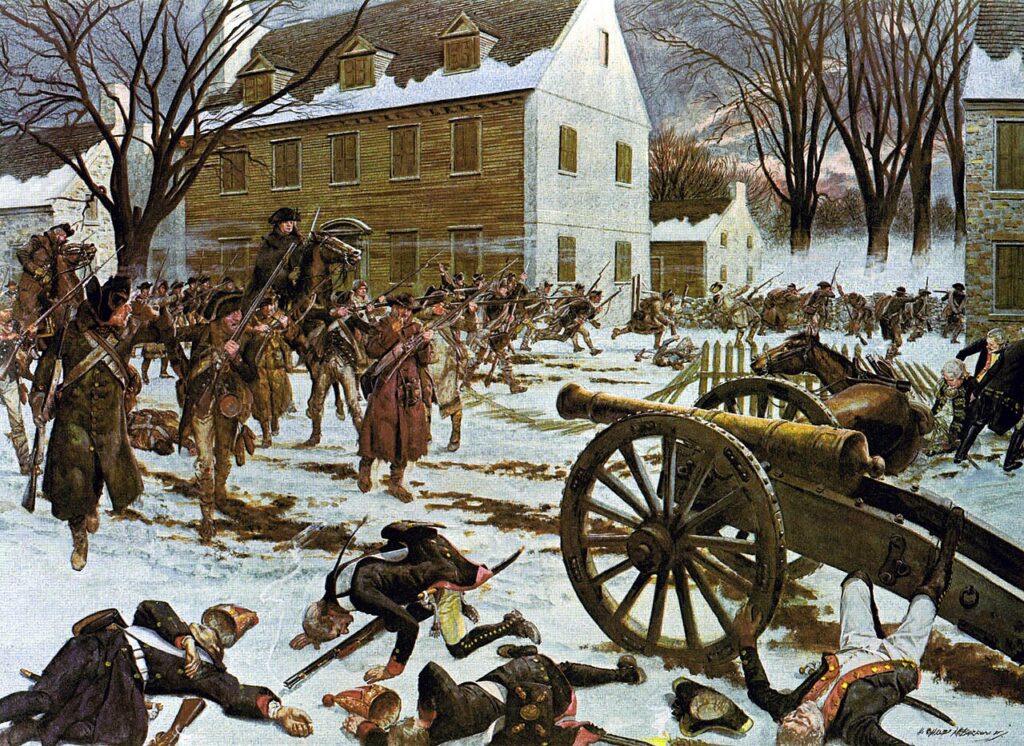
The target was a garrison of Hessian soldiers—German mercenaries hired by the British to suppress the Revolution—camped in Trenton. Washington’s army hit them at dawn in a battle that lasted less than two hours, resulting in the capture of nearly 900 Hessians and minimal loss on the American side. In fact, not one of Washington’s soldiers died in combat—the only two casualties came as a result of the frost. Future president James Monroe also suffered a near-fatal shoulder wound during the fight.
The victory was small in military terms. But for the Revolution, it was enormous. Morale—which had been declining since the defeat at The Battle of Long Island in August—reversed overnight. Expiring enlistments were renewed, the Continental Congress found new confidence just weeks after fleeing Philadelphia in panic, and France took notice, quietly watching to see whether the American cause was worth backing. Ultimately, it was.
Washington wasn’t finished—and New Jersey still had more to give. A week later, cornered in Trenton, he slipped past British General Cornwallis and struck the British rear guard at Princeton on January 3, 1777. The British pulled back to New Brunswick in response. Washington marched to Morristown, where he would winter his army and plan the next phase of the war.
The Revolution had been saved—not in Philadelphia, not in Boston, but on the banks of the Delaware and the frozen fields of Mercer County, New Jersey. Washington’s plan wasn’t to win the war outright. Instead, he played the long game, keeping his army alive just long enough for the British to lose patience. Trenton and Princeton bought him the time to do exactly that.
This weekend, as we celebrate 250 years of independence, it’s worth looking back at the details. The nation as we know it almost didn’t prevail—but New Jersey is where Washington assured it did.

The New Jersey Digest is a new jersey magazine that has chronicled daily life in the Garden State for over 10 years.
