

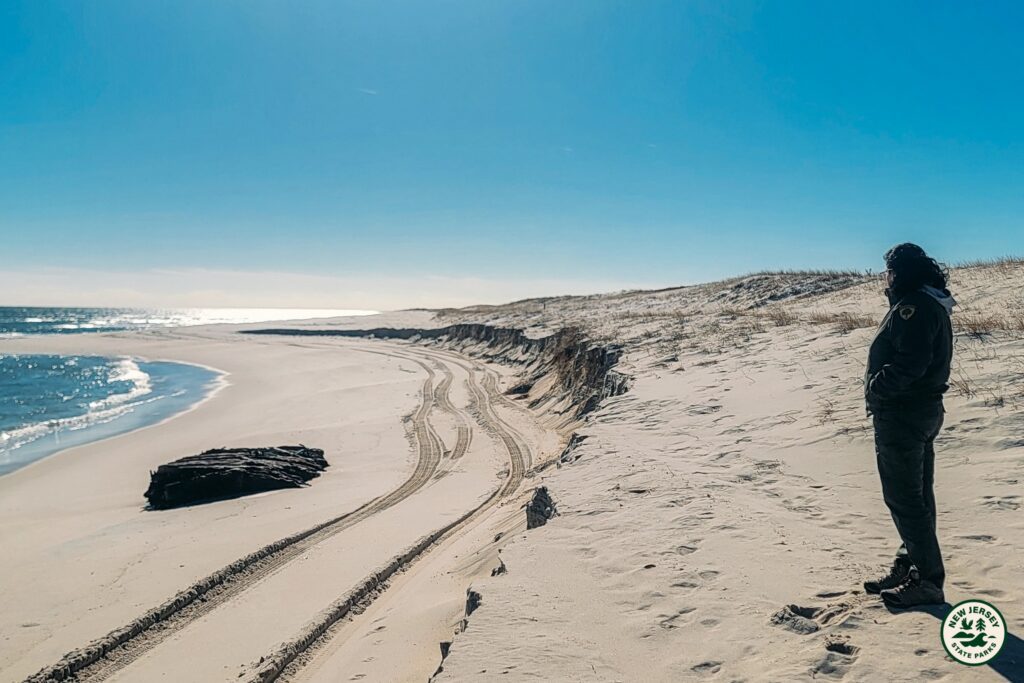
For more than a century, the Lawrence N. McKenzie lay beneath New Jersey sand and surf. This winter, the shoreline shifted, bringing the ship back into view.
After several weeks of high winds and rough seas, parts of the 19th-century schooner emerged from beneath the beach at Island Beach State Park. Weathered wooden ribs, iron fasteners, and curved framing now sit exposed along the shoreline. The shipwreck is expected to remain visible only briefly before the sand inevitably moves again.
In a social media post, Island Beach State Park wrote: “Beach erosion during the winter months is common at Island Beach State Park and is part of a natural, cyclical process. Each year, high-energy waves and seasonal storms remove sand from the shoreline, resulting in narrower beaches and steeper profiles. Most beaches recover from the erosion during the calmer summer months — but for now, this winter’s erosion has revealed a glimpse into the park’s maritime history.”
New Jersey’s 1890 Shipwreck: What Happened?
The Lawrence N. McKenzie sank on March 21, 1890, while carrying a cargo of oranges from Puerto Rico to New York City. The 98-foot schooner began taking on water after becoming disoriented in heavy fog near Barnegat Bay. All eight crew members survived. The ship did not. It was abandoned and declared a total loss.
The wreck lies along one of the most treacherous stretches of the East Coast. For centuries, constantly shifting shoals off New Jersey caused ships to run aground without warning, earning the region the nickname “the Graveyard of the Atlantic.”
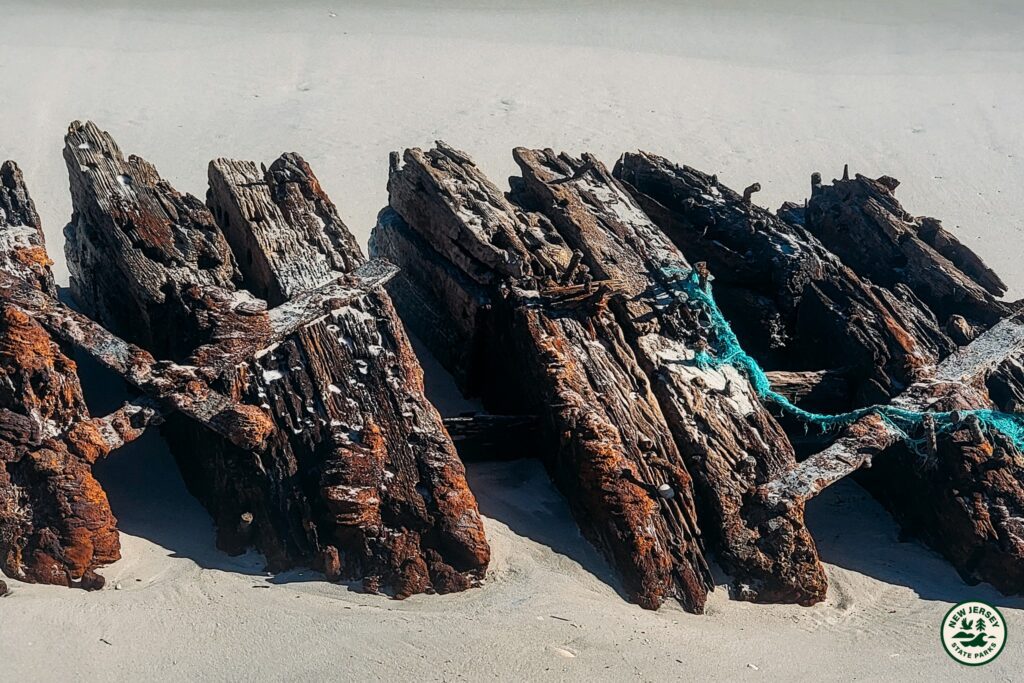
According to state park officials, winter erosion regularly strips sand from the shoreline at Island Beach State Park, exposing lower layers. Most years, the process goes unnoticed. This year, intensified conditions revealed a long-buried piece of maritime history.
Officials are asking visitors not to touch or remove any part of the wreck. The remains are protected. As conditions continue to change, more of the ship may be exposed in the coming weeks—or it could be buried again beneath the sand for another hundred-plus years.
For now, the Atlantic has offered a rare glimpse beneath the surface. As high winds and rough surf reshape the shoreline, a forgotten piece of New Jersey history has briefly returned.

The New Jersey Digest is a new jersey magazine that has chronicled daily life in the Garden State for over 10 years.
