

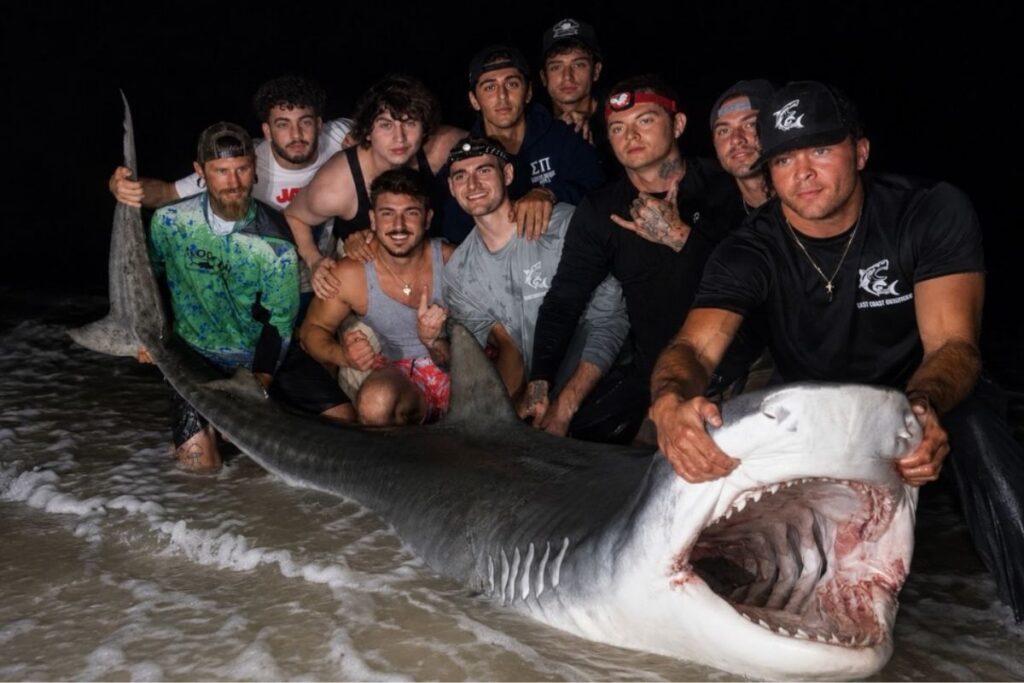

It’s been a wild summer for shark fishing at the Jersey Shore.
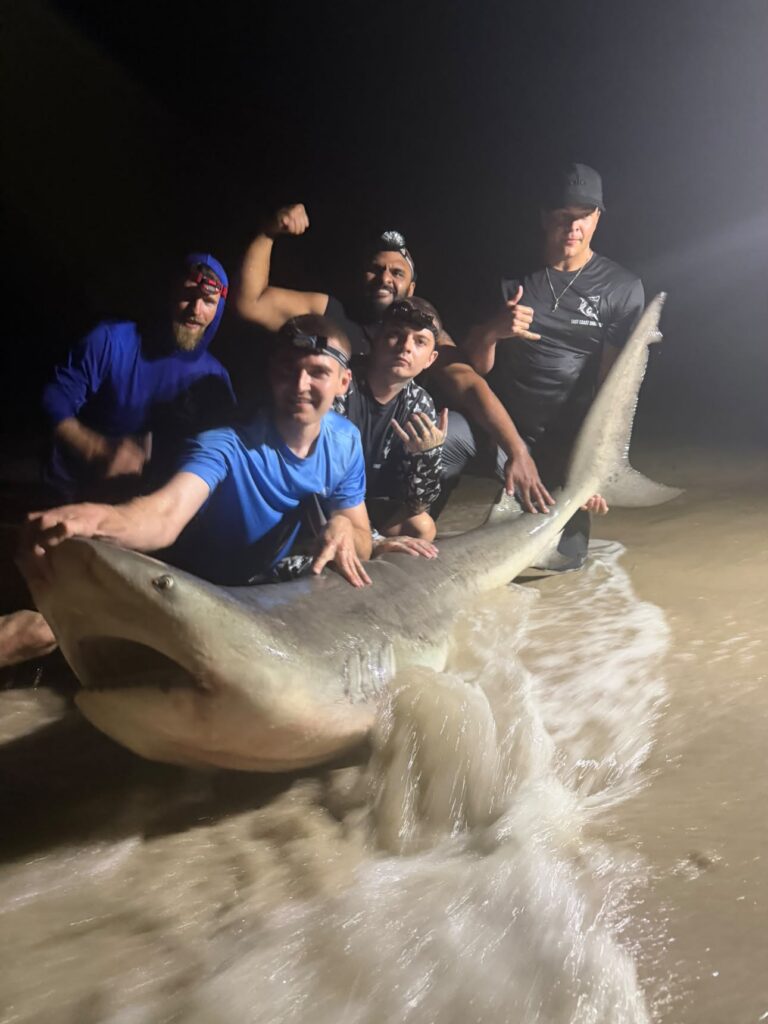
Anglers pulled in what’s believed to be one of the first recorded tiger sharks ever caught from Jersey sand, “Jersey bull” sharks have gone from a rare sighting to something over a dozen anglers have landed this year alone, and nearly every catch is ending up on Instagram within hours.
That visibility comes with a catch—the sport is now being closely watched by the state.
Eyes on Social Media
Land-based shark fishing’s rapid growth is inseparable from social media.
Accounts like East Coast Shredderz have built real followings by documenting catches, and that visibility has helped turn what used to be a niche hobby into something anglers up and down the coast are actively pursuing. But the same posts that built the sport’s audience are now part of how New Jersey enforces it.
Lt. Chris Petruccelli of the New Jersey Bureau of Law Enforcement told The Fisherman magazine that his officers keep an eye on social media accounts, Facebook posts included, checking for violations around how prohibited species get handled. A single post won’t build a case on its own, he said, but a pattern of posts over time can. That kind of evidence has already started factoring into whether prosecutions actually stick.
The NJDEP’s Fish and Wildlife Division is now actively reviewing its own rules around the sport, according to NJDEP Press Officer Vincent Grassi. Part of that process involves reaching out to the towns dealing with the biggest influx of shore-based shark anglers to hear directly what problems they’re running into.
Most Anglers Are Doing This the Right Way
It’s worth being clear about something here: the sport’s growing pains aren’t really about the experienced anglers driving most of the attention.
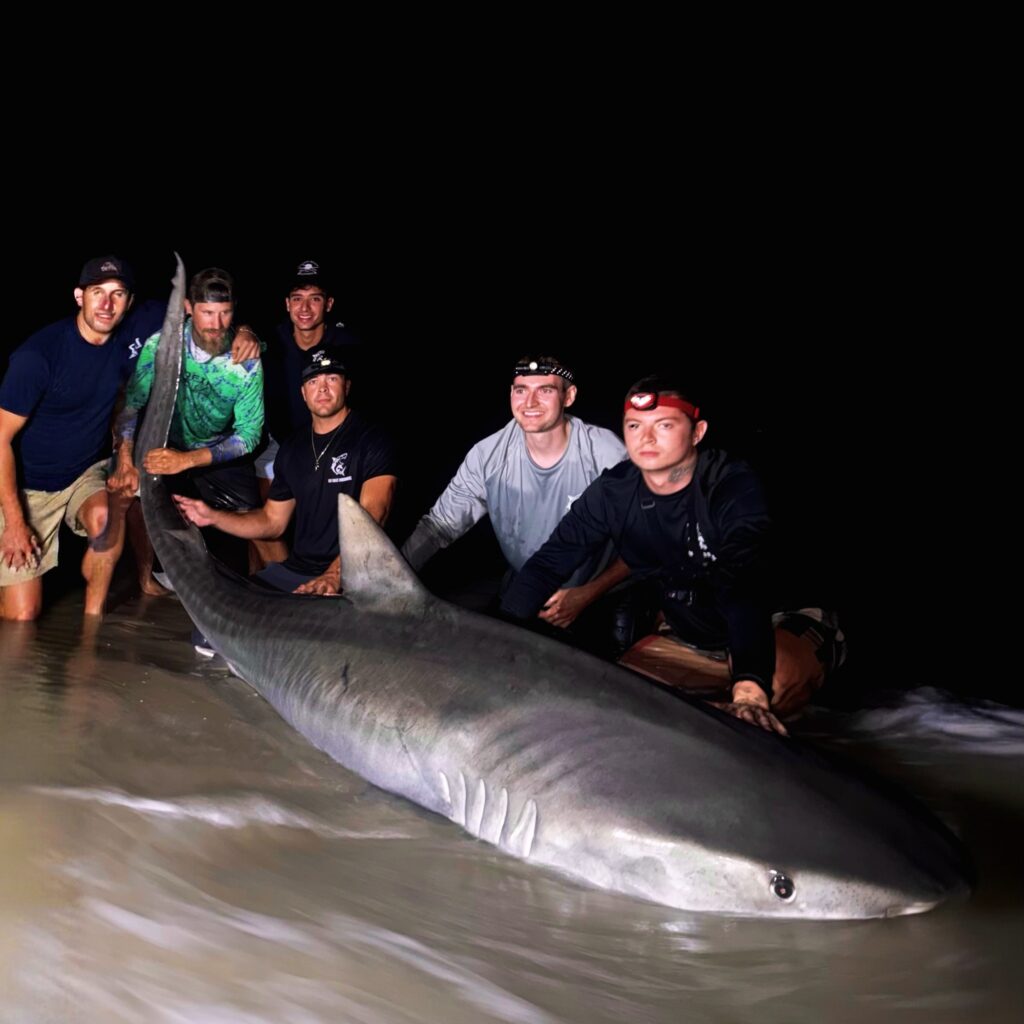
Kenny Rosenblatt, a member of East Coast Shredderz who helped land the tiger shark, has spent years building both better gear and a better reputation for the hobby, according to PhillyVoice. He fishes at night or early morning specifically to avoid crowded beaches, follows the state’s release protocols closely, and has been vocal about wanting the sport to be taken seriously.
“It’s not shark fishing that’s the problem,” Rosenblatt told PhillyVoice. “It’s people not doing it properly. What I’m trying to show everyone is there’s a proper way to do it.”
Brooke Flammang, a shark researcher at the New Jersey Institute of Technology, praised the crew’s handling of the tiger shark specifically, telling PhillyVoice that the detailed account they gave of their gear and care for the animal reflected real respect for the guidelines. That kind of attention to detail matters for a species that’s vulnerable to begin with.
Even within the community, there’s active self-policing happening online. After New Jersey’s Marine Fisheries Council discussed shore-based shark fishing at a recent meeting, anglers themselves weighed in on social media, as reported by The SandPaper. “The state believes that half of all shark anglers are educated on the right techniques and gear, and the other half are not,” wrote fisherman Kevin-Scott van Vlijmen in a Facebook post recapping the meeting. “Guys, I don’t care if you don’t have the money for it. If you’re not willing to make the effort to be a good representation of this sport… I don’t want to see you on our beaches.”
Another angler, Elijah Allen, echoed the sentiment: “We can’t really get mad at the state for enforcing stricter fishing when guys not only treat the sharks poorly, but post it online for views as well. We can do better, for sure.”
What’s Actually at Stake
The regulations themselves exist for good reason. Species like sand tiger and sandbar sharks are federally prohibited from being targeted specifically because they’re slow to mature and produce few offspring, making their populations especially vulnerable to fishing pressure, per NOAA guidelines cited by The SandPaper. New Jersey requires corrodible, non-offset circle hooks, and any prohibited species has to be released without ever leaving the water.
The state isn’t proposing to end the sport.
What’s happening instead is a genuine attempt to catch up with something that grew faster than anyone expected, driven largely by the same platforms that gave it an audience in the first place.
For anglers like Rosenblatt already doing things the right way, that scrutiny probably isn’t the threat it might sound like. It’s the validation of a standard they’ve been trying to set all along—that shark fishing is indeed a serious sport.

The New Jersey Digest is a new jersey magazine that has chronicled daily life in the Garden State for over 10 years.