

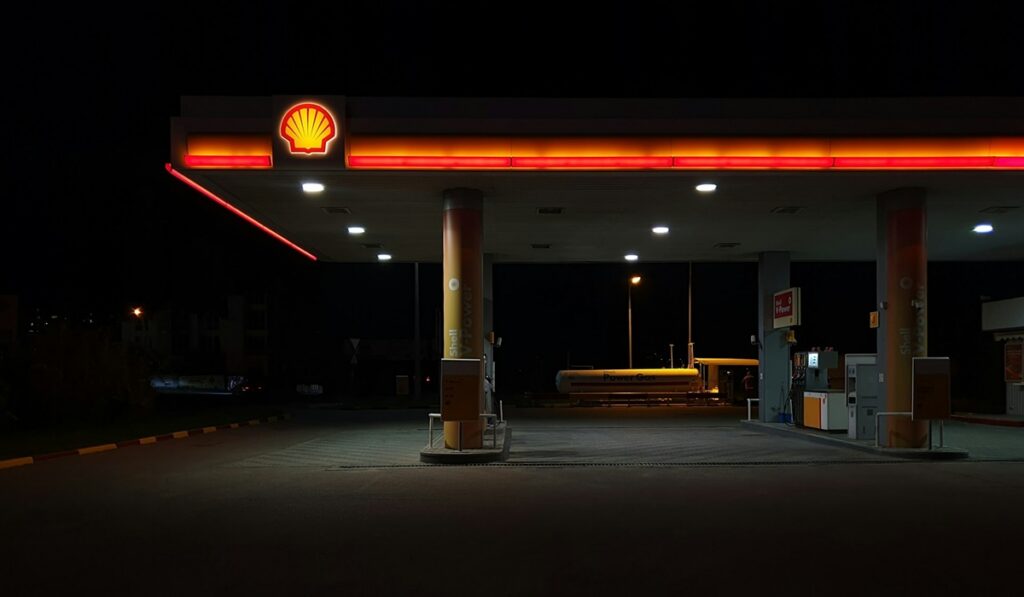

The law is called the Retail Gasoline Dispensing Safety Act. Safety had almost nothing to do with it.
New Jersey is the only state left where you cannot legally pump your own gas. Everybody here knows that part. What most people do not know is that the law is 77 years old and it got written to settle a price war on Route 17.
Gas in New Jersey ran about 21.9 cents a gallon before 1949. Full service, every station, and the number barely moved. Owners had what people at the time called a gentlemen’s agreement, which meant nobody undercut anybody. You could drive twenty miles of highway and pay the same price at every stop.
Irving Reingold broke it. He put up a station in Hackensack with 24 pumps and no attendants, let customers work the nozzle themselves, and priced it at 18.9 cents because he was not paying anyone to stand outside. Three cents under everybody else. Cars backed up for blocks. Three cents sounds like nothing now. In 1949 it was worth getting in line for.
His competitors tried to run him off first. Blockades. Intimidation. Somebody eventually shot at the station. He put in bulletproof glass and stayed open.
So they went to Trenton.
The Bill Was Written by the People It Protected
The Gasoline Retailers Association had just formed. They lobbied for a bill banning self-service and the legislature passed it, under the name Retail Gasoline Dispensing Safety Act.
The reasons they gave are the good part.
Fire hazard led the argument. Regular drivers, the claim went, did not have the training to pump gasoline without setting something on fire. Hackensack’s fire chief had already inspected Reingold’s operation and said publicly that it was safe. That inspection did not seem to make it into the debate.
Slipping was the second reason. Oily pavement, personal injury, real risk. Also a risk in all 49 other states, where people have managed.
The third one is where it stops pretending. The law says outright that nobody except a trained attendant may touch the pump. Written by the employers of those attendants. Filed as public safety.
Good-bye, Oregon
Oregon had the same ban for 72 years, so for most of that stretch New Jersey was not alone. Oregon repealed in 2023.
Repeal bills come up here constantly and go nowhere. The Motorist Fueling Choice and Convenience Act in 2022 would have allowed hybrid stations, self-serve on one side and full service on the other, take your pick. Failed. Jon Bramnick put up another self-serve bill in 2025. Failed.
It is not the oil companies blocking it. They have wanted this for decades, since attendants cost money. It dies because voters kill it.
We Decided We Like It
A recent poll conducted by Fairleigh Dickinson University found that 64% of New Jersey voters want to keep the state’s full-service gas mandate. In contrast, only 24% want to join the other 49 states and switch to self-service.
Jersey Girls Don’t Pump Gas is on t-shirts. Bumper stickers, mugs, probably a tattoo somewhere in Bayonne. We make fun of ourselves for it and brag about it in the same breath.
The arguments for keeping it are not fake, either. The jobs are real jobs. In February, sitting in a warm car while somebody else stands in the sleet is a small daily luxury and I am not going to talk anybody out of it. There are people in this state in their eighties who have never once pumped gas.
None of that is why the law exists. It exists because a trade group lost a customer war and found a legislature willing to fix it for them.
A 1949 Racket Became an Identity
Reingold was trying to save drivers around 15 percent. He got beat, not in the market, in the statehouse.
The men who beat him are all long dead and the law they bought is still here, doing something none of them planned. It stopped being protectionism and turned into a regional trait. People defend it now with actual feeling, the way you defend a hometown or a taste in pizza.
Plenty of laws start out as somebody’s scam. This one got adopted.

The New Jersey Digest is a new jersey magazine that has chronicled daily life in the Garden State for over 10 years.