

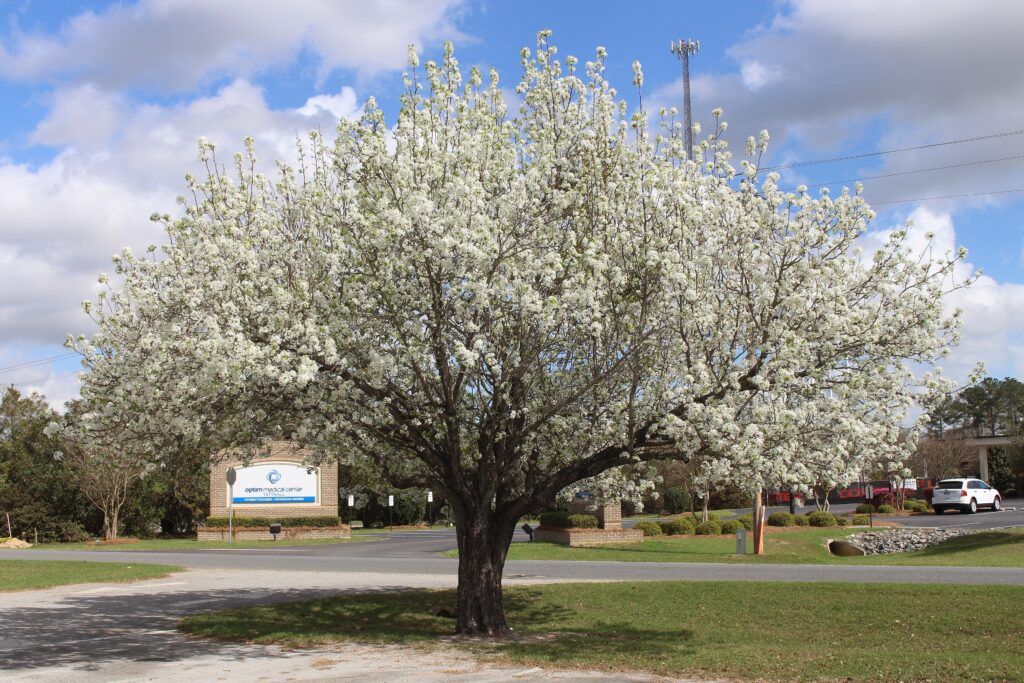

Earlier this month, New Jersey banned the Bradford pear tree—the flowering springtime staple that perfumes neighborhoods with what many describe as the odor of dead fish.
But that only tells half the story. The ban is real, but it won’t take effect overnight. Here’s what the law does, and when.
The Ban Is Already in Motion… Sort Of
Former Governor Phil Murphy signed the Invasive Species Management Act on January 20, his final day in office. The law targets 30 non-native plants in total, with the Bradford pear—formally known as the Callery pear—being the most notorious on the list.
But most coverage is leaving a key detail out: the trees already in your yard aren’t going anywhere. The law does not require existing Bradford pears—or any other banned species—to be cut down or removed. What it does is phase out their future in New Jersey over time.
The Timeline, Broken Down
Starting February 2027—13 months after the law was signed—no one may propagate or import any of the 30 banned species without a state waiver. That also applies to nurseries, who will be barred from growing new stock.
49 months after enactment, in February 2030, it becomes illegal to sell, distribute, or export the banned plants or their seeds anywhere in New Jersey. Violations carry fines of up to $2,000 per day.
The timeline means you can still buy a Bradford pear at a garden center today. But the clock is running out.
Other Banned NJ Trees
Due to its infamous smell, the Bradford pear gets all the attention, but 29 other invasive plants are banned alongside it—including English ivy, Japanese wisteria, running bamboo, and the Tree of Heaven. Many are common in New Jersey yards and gardens.
The New Jersey Department of Environmental Protection and Department of Agriculture will oversee enforcement of the law. A new statewide Invasive Species Council has also been established to guide future additions to the banned list.
If you’ve been outside this spring, then you know the Bradford pear trees are still spreading their scent—and that may linger for a few more springs. However, eventually, New Jersey’s Bradford pear era will be a thing of the past.

The New Jersey Digest is a new jersey magazine that has chronicled daily life in the Garden State for over 10 years.