

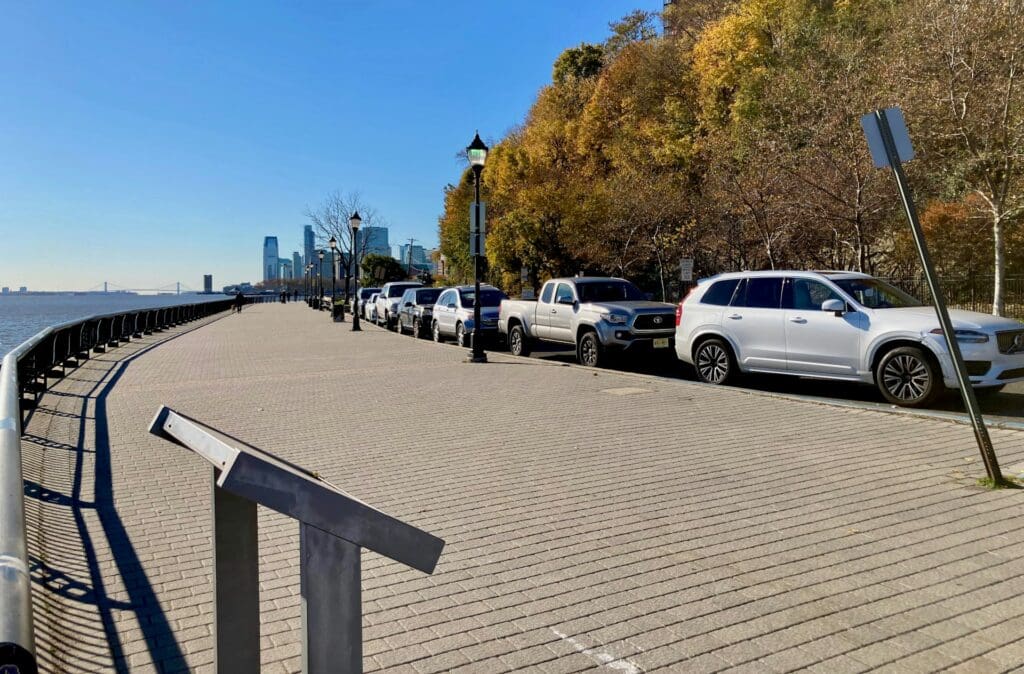
Anyone who’s spent an evening circling the same few blocks in Hoboken knows the feeling—headlights bouncing off parked cars, one eye on the parking signs, the other hoping someone pulls out. It’s a small city with big traffic problems, but officials say a familiar face might finally bring some relief. Despite that, the city’s infrastructure was never built to hold this many residents. From 2000 to 2020, the city’s population grew by 56.6 percent (from 38,577 residents to 60,419). Regardless of parking garages, the Mile Square City’s limited space has never been more limited.
Mayor Ravi Bhalla this week appointed Gregory Francese as the city’s new Acting Director of the Department of Transportation and Parking—a promotion that comes as Hoboken continues to balance big ambitions for pedestrian safety and sustainability with the everyday frustrations of gridlock and limited parking.
Francese isn’t new to the challenges of Hoboken’s streets. For more than seven years, he’s worked behind the scenes as the city’s transportation planner—helping to secure the Citi Bike partnership with Lyft, advance the Vision Zero pedestrian safety plan, and design projects like the upcoming Sinatra Drive Redesign, which aims to calm traffic along one of Hoboken’s busiest corridors.
He’s also been instrumental in developing the city’s electric vehicle charging network and congestion mitigation plans, as well as expanding bike lanes and crosswalk improvements across the city.
“[Francese] has been an integral part of our transportation team, and his leadership has helped shape a safer, more accessible Hoboken,” Mayor Bhalla said in a statement. “I’m confident that in this role, Greg will continue to deliver on our vision for a more multi-modal and forward-thinking transportation network.”
Francese takes over during a pivotal time. Hoboken’s compact, mile-square layout makes it both one of the most walkable cities in New Jersey—and one of the hardest to drive through. Between rideshares, delivery trucks, commuters, and construction zones, even short trips can stretch into long waits.
The city’s ongoing efforts to make streets safer for pedestrians and cyclists have earned praise from urban planners nationwide, but they’ve also stirred debate among longtime residents who worry about the loss of parking spaces.
“Every street redesign means trade-offs,” one resident said while waiting for a spot near the Monroe Center. “Love the walkability, but even up here, parking’s never been tougher.”
Francese said he’s aware of those tensions and sees the job as finding balance. “The work we do to make our streets safer and more accessible is rewarding,” he said. “I want to thank Mayor Bhalla for his support, and I’m excited to keep advancing our shared vision for a more connected Hoboken.”
The Vision Ahead
City Hall officials say Francese will continue to oversee several long-term initiatives tied to Vision Zero, Hoboken’s commitment to eliminating all traffic-related deaths and serious injuries.
He’ll also remain active on the Hudson County Vision Zero Task Force and the Hoboken Planning Board, where he’s been a consistent advocate for sustainable infrastructure and accessible mobility.
“Transportation isn’t just about cars,” Francese noted in a past interview. “It’s about how people move—whether that’s by bike, on foot, by bus, or by car. Every decision we make should make it easier and safer for everyone to get where they’re going.”
Francese’s appointment follows the departure of former Director Steve Weber, who led the department.
“[Weber] has been a valued member of my administration and has overseen a number of important improvements to our streets,” Bhalla said. “His work has made a real difference in the lives of Hoboken community members, and I wish him nothing but success in his future endeavors.”
For now, the city says the transition will be seamless—projects already in progress, including CLEAR, the Sinatra Drive redesign, and additional Vision Zero upgrades, are expected to continue on schedule.
A City Still Searching for Space
Hoboken’s transportation story has always been one of adaptation. In just over a decade, the city has transformed from a car-clogged commuter hub into one of the most progressive small cities in the region—with green bike lanes, public e-scooter options, and one of the densest networks of EV chargers in the state.
Still, parking remains Hoboken’s great equalizer—the issue that unites and divides residents in equal measure. While the city doesn’t publish an exact count of permits, it’s clear that Hoboken has issued far more parking permits than there are parking spaces. Estimates suggest the city has under 10,000 legal street spots but close to 15,000 active permits (exact figures unknown).
“They really should increase the yearly cost for street parking,” one Reddit user said, “It’s too cheap $59 a year is basically free. Too many people have cars they don’t even use [because] there’s no cost to keeping one. They just camp it all week.
“Also, not sure why they over-issue permits.”
As Francese steps into his new role, the city’s residents are likely to be watching closely—not just for new bike paths or EV chargers, but for any sign that daily life behind the wheel might finally get a little easier.

The New Jersey Digest is a new jersey magazine that has chronicled daily life in the Garden State for over 10 years.
