

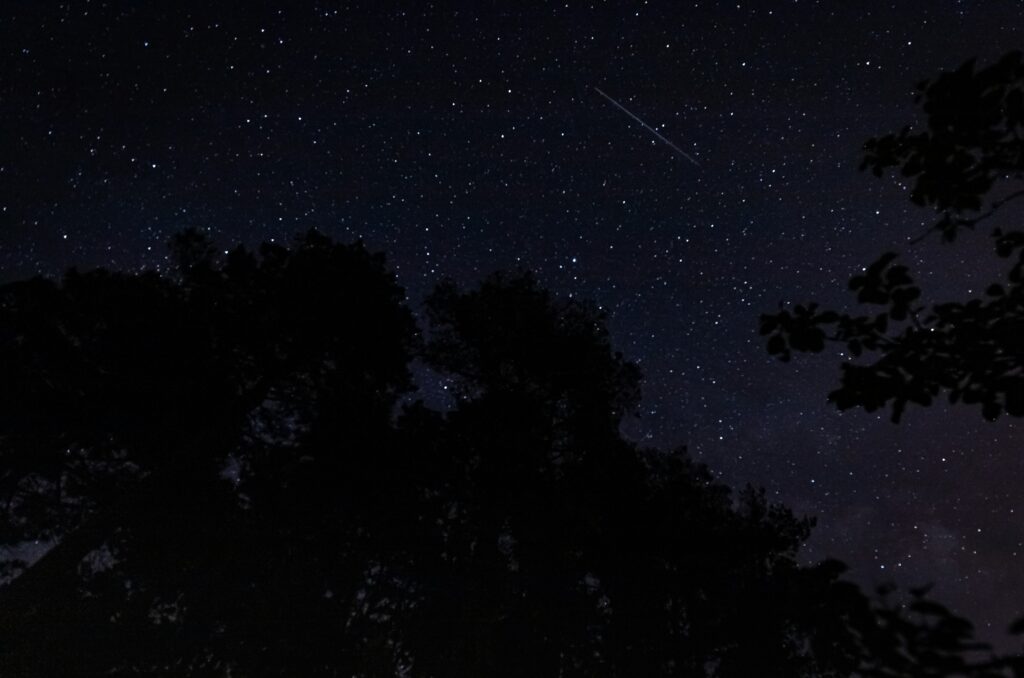

The first major meteor shower in more than three months is arriving this week—and the viewing conditions are about as good as it gets.
The Lyrid meteor shower peaks the night of Tuesday, April 21, into the early morning of Wednesday, April 22. At its peak, skywatchers can expect to see between 15 and 20 shooting stars per hour, according to NJ.com.
Timing couldn’t be better. This year’s peak coincides with a crescent moon, meaning minimal light interference, making for one of the cleanest viewing windows in recent years.
Next year’s Lyrids won’t be as lucky, with a nearly full moon expected to wash out much of the display. So, make sure to tune in—you won’t get this opportunity again for the foreseeable future.
What Are the Lyrids?
The Lyrids are one of the oldest known meteor showers.
Historical records of the event date back approximately 2,700 years. The meteors are debris left behind by Comet Thatcher, which burns up in Earth’s atmosphere and produces the streaks of light we see as shooting stars. NASA notes the meteors often appear as fast-moving fireballs—often as large as a basketball.
The shower is active from April 14-30, but the peak window on Tuesday night into Wednesday morning is when the action really occurs.
Tips For Watching
The best viewing window is during the second half of the night, when the shower’s radiant point sits high in the sky. For the clearest view, head somewhere away from city and suburban light pollution—giving yourself at least 30 minutes outside before peak time to let your eyes fully adjust to the darkness.
If you miss this one, the next opportunity isn’t far off. The Eta Aquarids are forecast to peak the night of May 5 into the early morning of May 6. But for the Lyrids specifically, this is your shot.
Set an alarm, drive west, and look up.

The New Jersey Digest is a new jersey magazine that has chronicled daily life in the Garden State for over 10 years.