

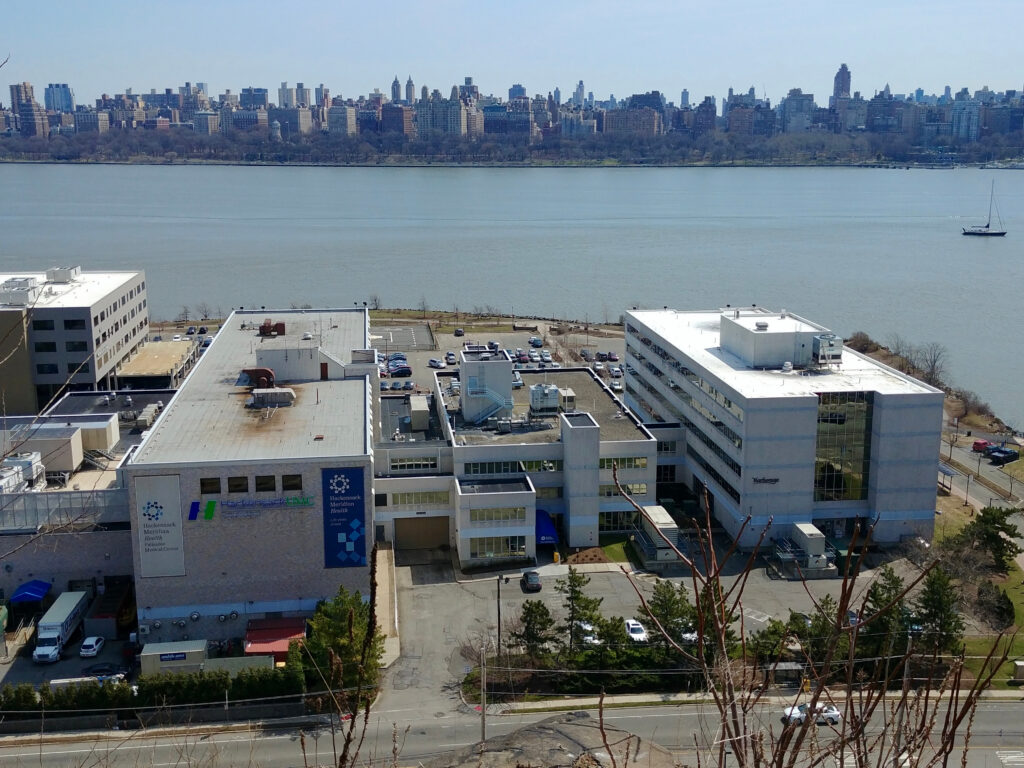

A new report is raising alarms about the financial stability of a dozen New Jersey hospitals. And a dramatic development in Jersey City this week shows just how real the threat is.
An analysis by Public Citizen, a consumer advocacy group, identified 12 New Jersey hospitals among more than 400 nationwide that face a high risk of closing, service cuts, or layoffs due to Medicaid cuts signed into law by President Trump.
New Jersey is projected to lose $3.6 billion in annual federal Medicaid funding—money that 1.8 million lower-income residents depend on for health coverage.
The cuts stem from federal legislation passed last year that reduces social services funding.
A Jersey City Hospital Nearly Closed Yesterday
The stakes became painfully clear this week when Heights University Hospital in Jersey City—formerly known as Christ Hospital—withdrew its Certificate of Need application for closure just hours before a scheduled public hearing on Tuesday night. The hospital had shuttered most operations in November 2025, citing operating losses exceeding $60 million annually.
Hudson Regional Health, the owner, said it withdrew the application after renewed talks with its landlord prompted a reconsideration. Despite the withdrawal, the New Jersey Department of Health confirmed the public hearing would proceed as planned Wednesday evening.
The hospital’s future is still uncertain.
The 12 Hospitals at Risk
According to Public Citizen’s analysis, the following New Jersey hospitals face the highest risk of closure.
- Bayonne Medical Center
- Capital Health Regional Medical Center – Trenton
- Clara Maass Medical Center – Belleville
- East Orange General Hospital
- Hoboken University Medical Center
- Inspira Medical Center – Vineland
- Monmouth Medical Center – Lakewood
- Newark Beth Israel
- Palisades Medical Center – North Bergen
- Robert Wood Johnson University Hospital – New Brunswick
- St. Michael’s Medical Center – Newark
- Trinitas Hospital – Elizabeth
What Hospital Leaders Are Saying
Executives at some of the listed hospitals pushed back, suggesting that closure projections are incorrect.
RWJBarnabas and Hackensack Meridian—two of the state’s largest hospital networks—said their financial position would help absorb some of the impact on their affiliated hospitals.
But the New Jersey Hospital Association didn’t mince words.
According to a report by NorthJersey.com, association president Cathy Bennett warned: “Hospitals will absorb a growing burden of uncompensated care with fewer resources to sustain it,” she said. “What begins as a funding reduction becomes, ultimately, a public health crisis that affects every community in the state.”
New Jersey’s Medicaid rolls could drop by 155,000 to 300,000 people depending on how the state Legislature and Governor Sherrill respond to federal cuts. State funding can be used to offset some of the damage, but hundreds of thousands of New Jersey recipients are still projected to lose coverage.
The cuts don’t take effect until next year. But for some New Jersey hospitals, the clock is already ticking.

The New Jersey Digest is a new jersey magazine that has chronicled daily life in the Garden State for over 10 years.