


New Jersey quietly opened a new front in its ongoing fight against the mental health crisis this week—and it’s one that could change how thousands of residents get help.
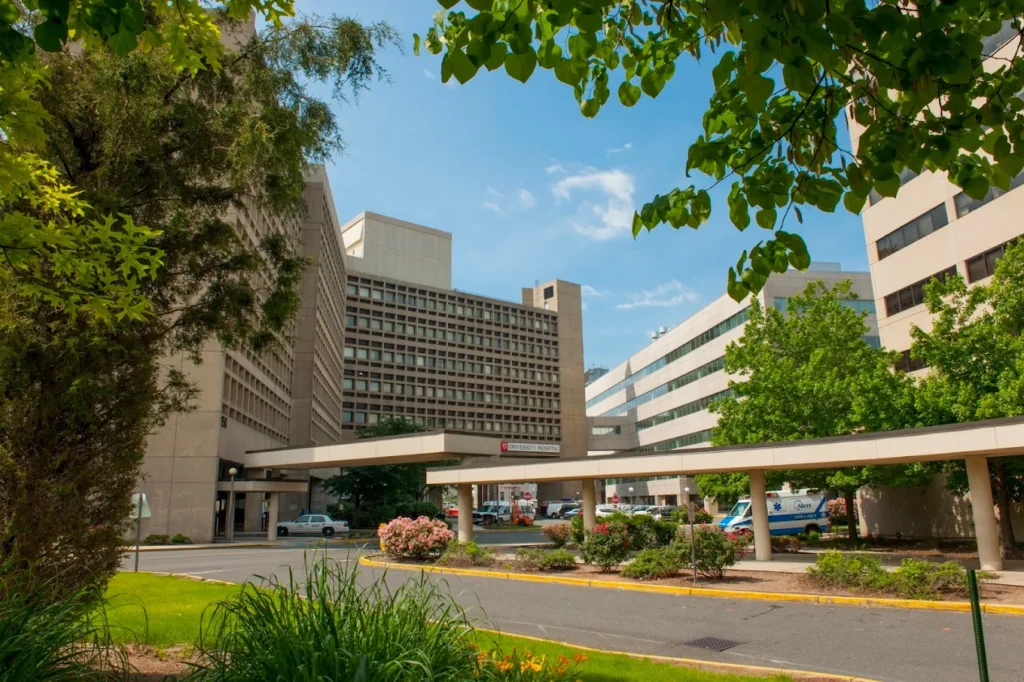
State officials gathered at University Hospital’s campus in Newark on Tuesday to mark the opening of New Jersey’s first crisis receiving stabilization center—a facility designed to give people undergoing a mental health or drug-related emergency somewhere to go that isn’t a hospital emergency room.
The center, operated by University Behavioral Health Care on South Orange Avenue, is open 24 hours a day, seven days a week, and is free to access regardless of insurance or ability to pay, according to New Jersey Monitor.
The Missing Piece
The Newark center isn’t a standalone facility—it’s the final piece in a crisis response system the state has been quietly building over the past four years.
It starts with the 988 Suicide and Crisis Lifeline, which New Jersey launched in July 2022.
Since then, monthly calls have grown from roughly 3,800 to more than 8,600. Last year, the state added mobile response teams—two-person units consisting of a mental health professional and a peer specialist. 988 operators can dispatch response teams to people in non-life-threatening situations.
Now, when someone needs more than a phone call or a home visit, there’s somewhere to send them.
What Happens Inside
The stabilization center is designed to feel less sterile than an emergency room. Private clinical rooms, comfortable lounge chairs, and large windows make up the space. Patients are seen simultaneously by a nurse practitioner and a mental health professional, so they don’t have to repeat their story one, two, even three times. It’s an important detail that reduces fatigue in an already distressing situation.
From there, individuals can receive medication for addiction disorders or mental health diagnoses, connect with additional services, and rest in the facility for up to 24 hours. If a situation requires urgent medical attention, University Hospital is just steps away.
The center also accepts walk-ins and people brought in by law enforcement, offering an alternative to the ER, which can come with long waits and additional hurdles.
What Comes Next
New Jersey’s mental health care revolution isn’t over—Newark is just the beginning.
Four more stabilization centers are planned for Morris, Bergen, Monmouth, and Camden counties, pending funding. The state has invested $37 million since 2024 to get the program off the ground, with Governor Mikie Sherrill’s current budget proposal including $28.8 million for the broader 988 system.
For now, New Jersey has quietly built a stronger and more equitable mental health care system, and the crisis stabilization center at University Hospital is only the start. If you or someone you know is in crisis, help is available by calling or texting 988.

The New Jersey Digest is a new jersey magazine that has chronicled daily life in the Garden State for over 10 years.