

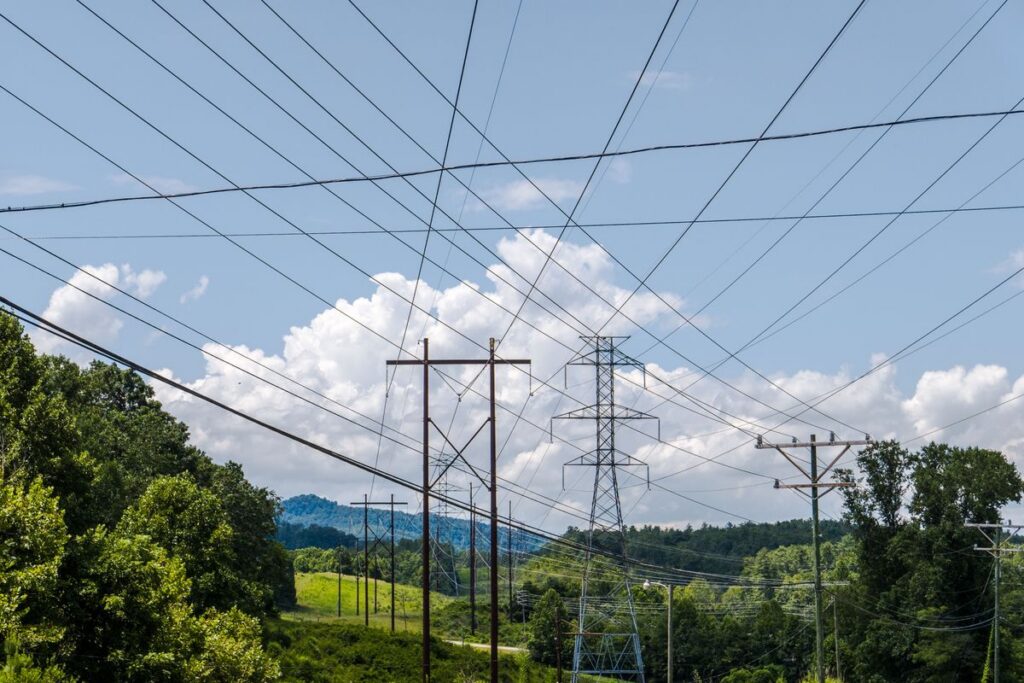

It does not mean the lights are about to go out. It means officials are not willing to find out what happens if they do nothing.
October in New Jersey is supposed to feel like October. Hoodies, football, the heat finally backing off. Instead it’s warm enough that people are still running air conditioning, and that warmth is doing something uncomfortable to the regional power grid at exactly the wrong moment (and though it might feel like 80 today, we’re already hearing reports of temps dropping near 30 this weekend).
The U.S. Department of Energy issued an emergency order earlier this week covering New Jersey and 12 other Mid-Atlantic states. The directive allows certain power generating facilities to operate beyond their normal restrictions, essentially telling plants that would otherwise be throttled back or offline that they need to be available and ready. It runs through Friday.
Federal officials were quick to say this is not a sign that blackouts are coming. Energy Secretary Chris Wright framed it as a precaution, a way to make sure additional generation capacity, including backup power, is sitting there if demand spikes past what the grid can otherwise handle. “This order will help ensure millions of American families and businesses across the mid-Atlantic have access to affordable, reliable, and secure electricity,” Wright said.
Why the Timing Is the Problem
The grid runs on a rhythm. Summer is the heavy demand season, air conditioning running everywhere, and utilities plan around that. Fall is when power plants go offline for scheduled maintenance, which is normally fine because demand drops with the temperature and there’s room to breathe.
This fall the temperature has not cooperated. PJM Interconnection, the regional organization that coordinates wholesale electricity across New Jersey and a stretch of neighboring states, is projecting demand to hit around 111,500 megawatts while a significant number of generators are offline for that planned maintenance. Warm weather pulled demand up. Maintenance schedules pulled supply down. The two things happened at the same time and that’s how you end up with a federal emergency order in mid-October.
PJM applied for the order and the DOE issued it. That chain of events is the grid working the way it’s supposed to, a regional operator seeing a problem developing and escalating to the federal level before it becomes a crisis rather than after.
What the “Emergency” Actually Does
The order doesn’t flip any switches for consumers. Your electricity works the same way it did last week.
What it does is give certain generating facilities legal cover to run harder and longer than environmental or operational rules would normally allow. Plants that might otherwise be restricted on emissions or output can stay online and producing. Backup generation that would normally sit idle gets added to the available pool.
The idea is that if demand does spike, there’s more to draw from. It is a margin of safety, not a signal that the margin has already run out.
The Bigger Picture Behind One Warm Week
This situation is small compared to what the grid is facing over the next decade, and New Jersey is closer to the center of that problem than most states want to acknowledge.
The data center buildout happening across South Jersey right now, most visibly the 350-megawatt facility going up in Vineland, represents exactly the kind of demand growth that makes grid management harder. Artificial intelligence infrastructure runs around the clock and pulls enormous amounts of power. PJM has said publicly it is playing catch-up on the demand forecasts. One warm October is a minor stress test. A decade of AI-driven industrial load growth is a different problem entirely.
The emergency order expires Friday. The underlying tension between rising electricity demand and a grid that was not built for this moment does not.

The New Jersey Digest is a new jersey magazine that has chronicled daily life in the Garden State for over 10 years.