

New Jersey households are about to see some relief on their energy bills. Governor Mikie Sherrill says it’s just the beginning, as she tries to make good on a campaign promise to bring energy costs down.
Sherrill signed three major energy bills into law this week alongside an announcement of immediate bill credits for New Jersey ratepayers. All 3.6 million residential utility customers in the state will receive a $25 credit through the Residential Universal Bill Credit program, while lower- to moderate-income families will receive an additional $150 through the Residential Energy Assistance Payment program ahead of the summer months.
Combined with other actions taken by the administration over the past six months, the changes are projected to save New Jersey ratepayers more than $1 billion annually, according to an analysis by Synapse Energy Economics.
“For too long, New Jersey families have paid the price for poor oversight, outdated policies, and rising demand on our electric grid by unchecked actors,” Sherrill said. “Today, we’re putting money back into people’s pockets while holding utility companies and large data centers accountable.”
Here’s what the three new laws actually do:
Repeal ROE Adder (S1673/A2757) eliminates an incentive that allowed utility companies to add extra charges to customer bills simply for participating in the regional power grid operator, PJM. The bill makes that participation mandatory rather than voluntary, which removes utilities’ eligibility for the added charge.
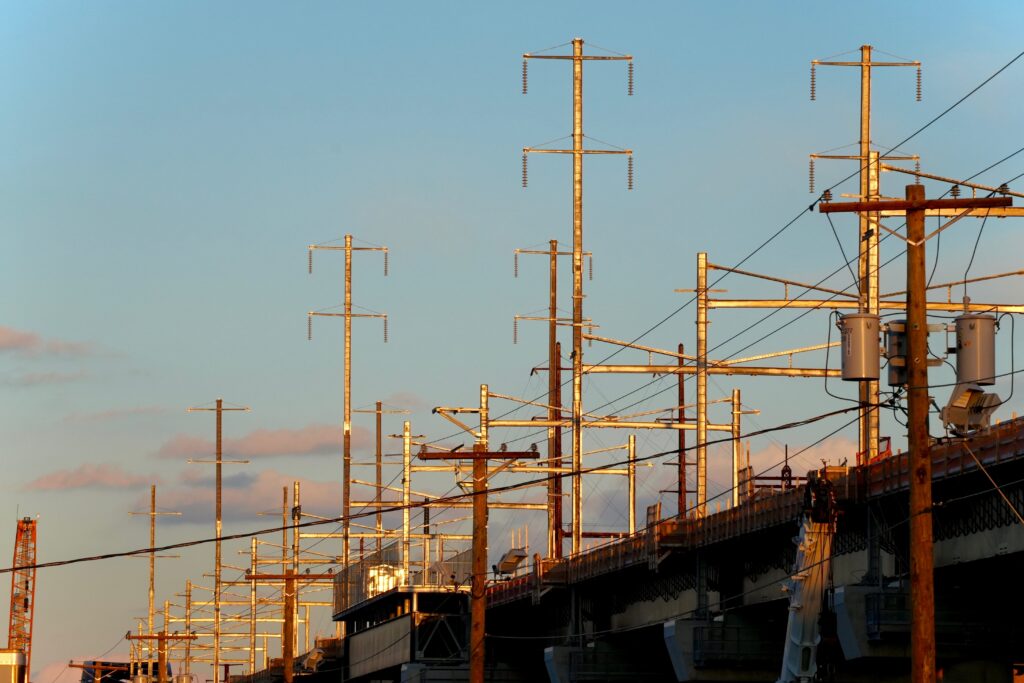
Advanced Grid Technologies Act (S4411/A5188) closes a loophole that let utility companies build supplemental infrastructure projects—wires, poles, substations—without state oversight, passing the costs on to ratepayers. Utilities will now need state approval before building these projects. The stakes are significant: supplemental project spending made up 79% of New Jersey ratepayer transmission costs between 2008 and 2025, totaling $14.7 billion, according to the Rocky Mountain Institute. New Jersey represents just 12% of total demand on the PJM grid but nearly 22% of its supplemental project spending—the largest gap of any state in the system.
Data Center Fair Share Act (S731/A796) targets a growing concern: data centers driving up energy costs for everyday households. The law creates a new rate structure requiring data centers to pay for their own energy use and the grid infrastructure needed to support them, rather than shifting those costs onto residential customers and small businesses. It also requires data centers to scale back their energy use before residential customers are impacted during periods of grid strain.
The administration has also renewed its Summer Termination Program, which protects vulnerable households from utility shutoffs during extreme heat, and approved 12 new solar projects expected to generate enough electricity to power roughly 45,000 homes.
Assembly Speaker Craig Coughlin praised the legislation, calling it part of a “continued focus on both immediate and long-term solutions to help bring energy costs down.” Assemblyman John Bailey, a sponsor of the Data Center Fair Share Act, was more pointed: “We want to make sure data centers pay for the energy they use and the infrastructure they need, not our constituents.”
Mikie Sherrill cruised to victory last fall on a promise to bring energy costs down. This latest move is a part of that continued effort.

The New Jersey Digest is a new jersey magazine that has chronicled daily life in the Garden State for over 10 years.
