

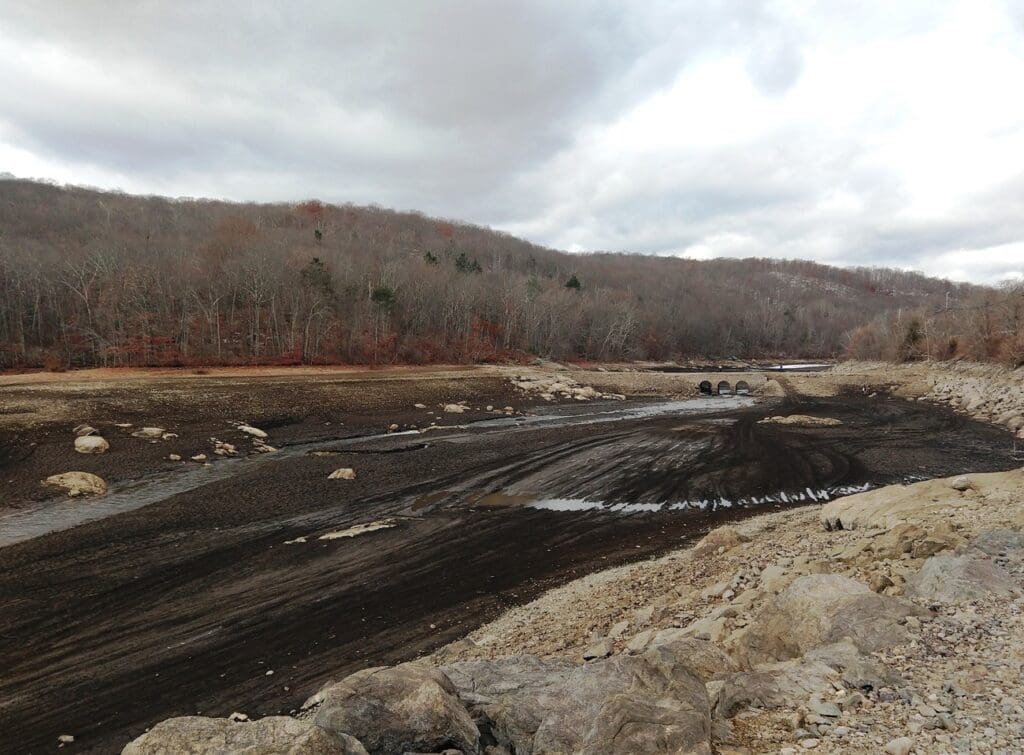

New Jersey officially entered a statewide Drought Warning after more than a year of low rainfall and rapidly declining reservoir levels. The decision was issued under the Murphy Administration, reflecting growing urgency over the state’s diminishing water supply.
The Department of Environmental Protection authorized the change after reviewing long term precipitation trends, stream flows and groundwater levels. While no mandatory restrictions exist yet, the warning gives DEP expanded authority to coordinate water transfers between systems, adjust reservoir releases and manage flows in rivers and streams. State officials now have the ability to balance supplies region by region to prevent one area from reaching critical shortage ahead of others.
A statewide warning last appeared in late 2024 and ended earlier this year following heavy spring rainfall. That recovery never fully lasted. Reservoirs dipped again through summer and fall, and the state recorded only intermittent months of above average rain. Climate data shows that the majority of the past 15 months produced either severely dry or extremely dry conditions.
Under a Drought Warning, the state aims to preserve available water before conditions worsen. DEP has already met with suppliers to evaluate capacity and operational flexibility, and the agency plans to direct transfers where losses appear most severe. The warning operates as a buffer layer below a Drought Emergency, which could trigger required cutbacks if storage continues to decline.
Current conditions vary by region, though most areas trend below seasonal norms. The Northeast region, home to the state’s highest population density, reads the most concerning. Twelve interconnected reservoirs in that area now average around 48 percent of total capacity compared to a typical 72 percent for December. Systems operated by the North Jersey District Water Supply Commission have fallen near 45 percent. Veolia’s Bergen County reservoirs sit near 50 percent. Newark and Jersey City’s systems hover slightly above 50 but remain lower than last winter.
The Central and Coastal North regions show moderate stress with both near 79 percent capacity. These numbers sit below typical benchmarks and could slip further if winter stays dry. Other regions rely primarily on groundwater rather than large reservoirs, but those aquifers also show heavy strain. Northwest, Southwest and Coastal South each record extremely dry groundwater levels, with slow stream flow and precipitation deficits stacking pressure from below the surface.
Residents and businesses now play a direct role in slowing demand. Practical conservation matters most during winter, when snow can mislead people into thinking water supply has recovered. Households can save significant volume by fixing leaks, insulating outdoor pipes, shutting down irrigation systems and running appliances only when full. Swapping fixtures for low flow models reduces consumption year round. Native landscaping and drought tolerant grasses use less irrigation heading into spring, while composting food scraps keeps water away from garbage disposals.
A Drought Warning does not require restrictions, but it signals a pivotal moment. The state wants to prevent an escalation to emergency status, and early intervention often determines whether mandatory limits arrive later. Stream levels remain low, reservoirs continue to fall and persistent dry weather supports little natural recharge. New Jersey now moves into active water management with the expectation that every gallon saved today buys flexibility tomorrow.

The New Jersey Digest is a new jersey magazine that has chronicled daily life in the Garden State for over 10 years.