

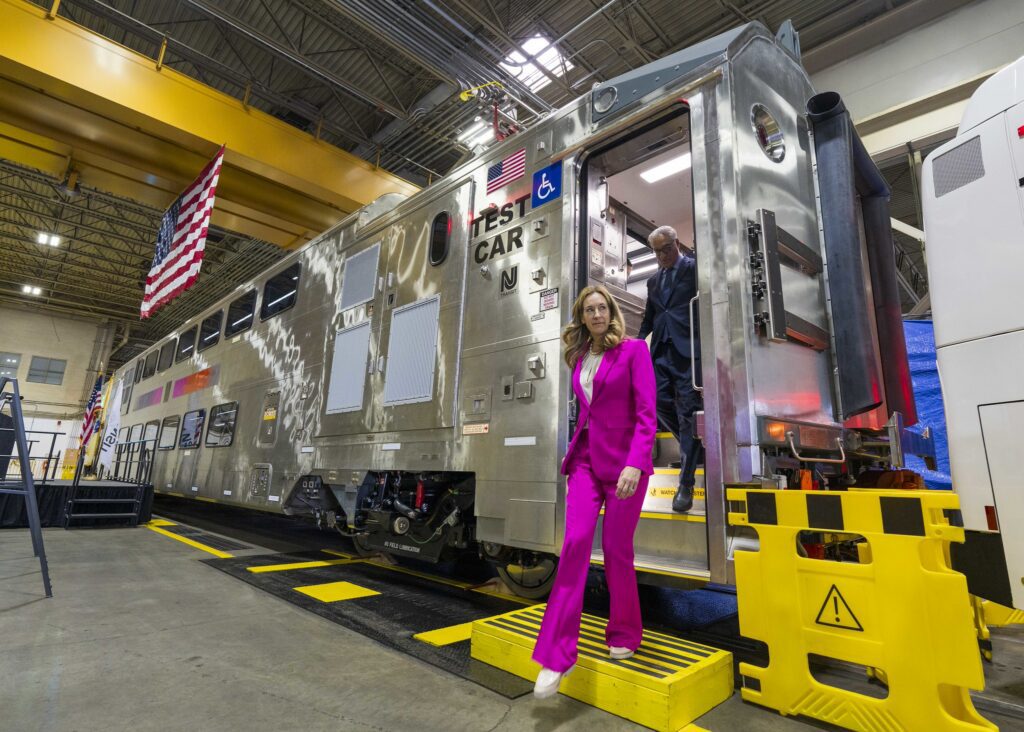
For years, NJ Transit commuters have dealt with a barrage of delays and cancellations, driven by one consistent culprit—aging trains, prone to constant breakdowns. That’s starting to change.
The first of 374 new Multilevel III rail cars arrived at NJ Transit’s maintenance complex in Kearny on Monday, marking the beginning of a fleet overhaul that has been a long time coming.
The first 40 cars are expected to enter service by the end of 2026. Commuters will potentially see them as soon as late summer or early fall.
The Old Trains Were a Problem
The numbers tell the story. The Arrow II cars the new trains are replacing—some of which have been in service for 52 years—were averaging just 46,803 miles between mechanical failures at their worst. The new cars are expected to average 400,000 miles between failures. That’s nearly nine times the reliability.
For aging cars, 2025 was the straw that broke the camel’s back. Mechanical failures and equipment shortages were the top causes of NJ Transit train cancellations last summer, accounting for a staggering 922 canceled trains between June and August 2025 alone. Last week, Arrow car mechanical problems were the single biggest source of delays on the system.
“For every car we can put in service that is not an Arrow, that increases reliability,” NJ Transit CEO Kris Kolluri said Monday in a press conference.
For too long, NJ TRANSIT riders have been promised change.
Today, we start delivering the results they deserve – with the introduction of 40 new railcars, 250 new buses, and 30 new accessible vehicles for NJ Transit.
This is a first step toward fully replacing NJ TRANSIT’s… pic.twitter.com/qZB1JywWL6 — Governor Mikie Sherrill (@GovSherrillNJ) April 13, 2026
What the New Trains Offer
The Multilevel III cars—manufactured by Alstom in Plattsburgh, New York—are double-decker trains capable of reaching speeds up to 110 mph. They include USB charging ports, onboard screens, increased seating capacity, and the ability to run on their own power on electrified portions of track rather than being pulled by a locomotive.
The remaining 334 cars are due to arrive through 2031. By then, NJ Transit plans to have retired all of its aging single-level Arrow and Comet cars.
The Bigger Picture
The new trains are part of a $3 billion modernization effort that also includes more than 1,400 new buses already authorized under former Governor Murphy.
Governor Mikie Sherrill allocated over $1 billion for NJ Transit in her first budget—a 26% increase over the prior year.
“By the end of the cycle, we’ll be the most modern transit agency in the country,” Kolluri said.
That’s a bold claim for NJ Transit, which has become untrustworthy in the eyes of many commuters. The new trains won’t fix aging infrastructure—NJ Transit shares track with Amtrak, some of which is more than 100 years old—but they do remove one of the most common sources of failure from the equation.
For New Jersey commuters, it’s a start. And after years of delays, a start is worth something.

The New Jersey Digest is a new jersey magazine that has chronicled daily life in the Garden State for over 10 years.
