



More than a million soccer fans are descending on the New York-New Jersey region this summer for the 2026 FIFA World Cup, and many of them are going to need a place to sleep. Airbnb sees the opportunity—and so do New Jersey homeowners. The problem is that in dozens of towns across Bergen, Hudson, and Essex counties, what’s being listed online is flat-out against the law.
That inconsistency is exactly what makes this dangerous for visitors booking accommodations right now. Someone scrolling through Airbnb listings in Kearny or Englewood has no visible warning that the host may be breaking local law. If a municipality chooses to enforce and the listing gets shut down, the guest loses their accommodation. There’s no guarantee of a refund, and in a region where hotels will be booked solid throughout the tournament, there’s no guarantee of a replacement either.
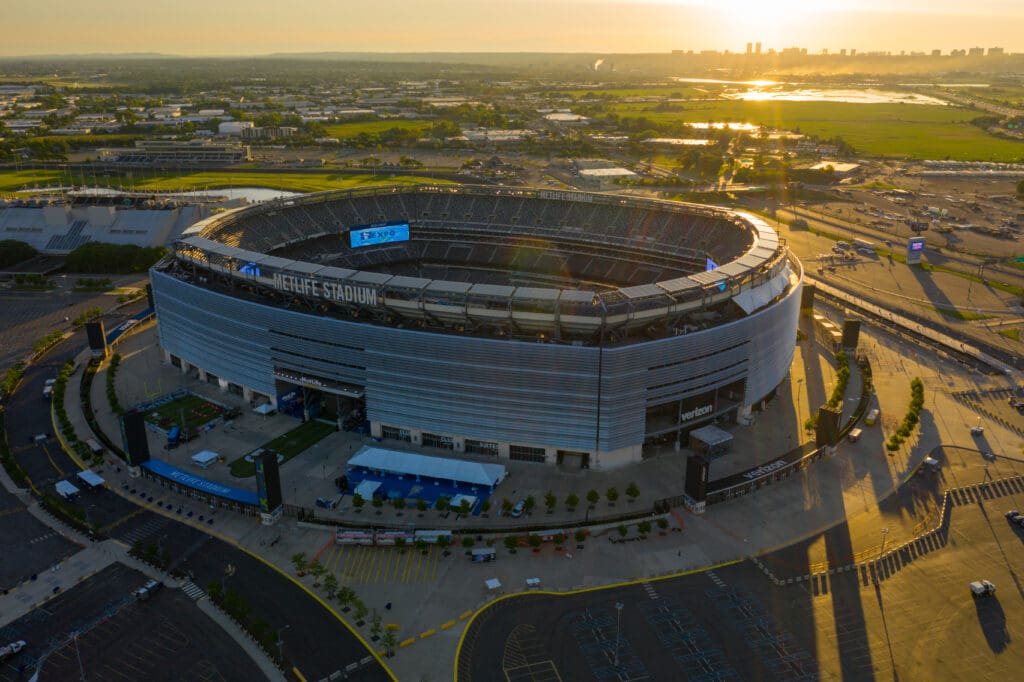
The tournament runs June 13 through July 19, with eight matches—including the final—set for MetLife Stadium in East Rutherford. That’s put a spotlight on every town within a reasonable train ride or car trip, and it’s also exposed a regulatory minefield that neither Airbnb nor prospective visitors seem fully prepared for.
Airbnb is actively recruiting new hosts in more than 53 northern and central New Jersey ZIP codes, dangling a $750 bonus to property owners who have never listed on the platform before, so long as they complete a booking by July 31. The targeted areas span Bergen, Hudson, Passaic, Essex, and Union counties—communities that range from dense urban centers to quieter residential neighborhoods a short drive from the Meadowlands. But some of the municipalities named in those eligible ZIP codes have ordinances on the books that prohibit short-term rentals of less than 30 days, period.
Englewood, in Bergen County, is one of them. A three-bedroom home there is currently listed on Airbnb at roughly $1,000 per night, marketed as a retreat just 15 minutes from MetLife Stadium with a backyard, fire pit, and roomy deck. It shouldn’t be. Englewood bans short-term rentals entirely, and town officials aren’t blinking. The city has warned it will pursue legal action not just against individual hosts but against platforms that facilitate violations through cash incentives.
Kearny tells a similar story—and makes it starker. The Hudson County town of about 40,000 people sits less than three miles from MetLife Stadium and has a legitimate claim to being one of the most soccer-mad communities in America. Yet rather than open the door for World Cup visitors, Kearny slammed it. The Town Council recently expanded a 2017 ban on short-term rentals in single-family homes to cover every residential property in town—apartments, two-family homes, and multi-family buildings included. Violations carry fines of $750 per day and up to 10 days in jail. In Kearny, many have pointed to quality-of-life complaints: residents woken at 2 a.m. by guests returning from matches at Sports Illustrated Stadium, tour buses idling curbside overnight, strangers showing up in tight residential blocks with no accountability. The welcome mat is not out.
West New York and Union City, two of the most densely populated municipalities in the entire country—both minutes from the stadium and Manhattan—also prohibit short-term rentals. So does Edgewater, a Hudson River waterfront community in Bergen County where officials describe the borough as an “urban bedroom community” and want it to stay that way. By one count, at least 10 towns within the Airbnb-targeted ZIP code list have banned short-term rentals outright.
New Jersey has no statewide law governing this industry. Every town makes its own rules, which means the regulatory landscape is less a map and more a patchwork of individual zoning codes, permit requirements, and outright prohibitions—many of which were written long before anyone imagined the World Cup final would be played in East Rutherford. No single framework applies across the region. What’s legal in Elizabeth—where the city allows licensed short-term rentals in designated zones and Mayor Christian Bollwage has called regulation the responsible middle ground—is illegal in Englewood a few miles north.
Airbnb has maintained that it is offering the bonus incentive across eligible ZIP codes based on geographic proximity to the stadium. The company has not confirmed that it is screening individual listings for municipal compliance before distributing those bonuses. Local officials in several towns say they intend to notify the platforms directly of their ordinances and demand listings be removed — but enforcement is complicated. Kearny’s own councilmembers acknowledged during recent meetings that staffing shortages make actively monitoring social media and short-term rental platforms difficult.
For international visitors planning extended stays in the area, the math matters. A month-long rental of 30 days or more bypasses most of these ordinances entirely, since they specifically target stays shorter than that threshold. Anyone booking a week-long stay — a natural window for attending multiple World Cup matches—is in the zone where local bans apply.
The broader irony is that New Jersey was supposed to be the beneficiary in this market. New York City all but eliminated short-term rentals when it enacted Local Law 18 in 2023, which requires hosts to be physically present during any stay and effectively collapsed the Airbnb market there by roughly 90 percent. NYC’s mayor and city council have refused to ease those rules even temporarily for the World Cup, pushing demand across the Hudson. New Jersey was supposed to absorb it. Instead, a significant portion of the state’s most accessible communities are turning visitors away just as the world is looking for a place to stay.
The visitors who will be hurt most are those who don’t know what they don’t know—tourists from Brazil, Morocco, Portugal, and elsewhere who booked a listing in good faith months ago, without any reason to research the zoning code of a New Jersey suburb. That’s the gap nobody in this process has closed.
Planning to get to MetLife Stadium? Read our report: [80,000 Fans, No Parking: New Jersey Faces a World Cup Transportation Test]—there will be no parking and no tailgating, and every one of those fans will need to get there another way.

The New Jersey Digest is a new jersey magazine that has chronicled daily life in the Garden State for over 10 years.