

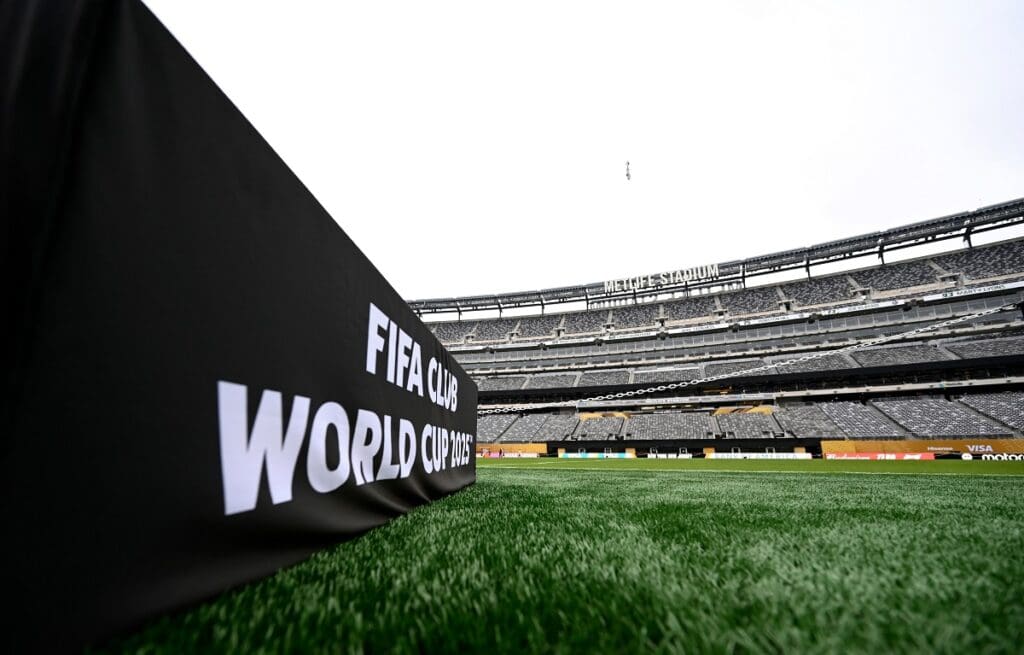

This article examines how MetLife Stadium became the center of two overlapping conversations: player safety in the NFL and preparations for hosting the 2026 FIFA World Cup Final. It unpacks the long-running criticism from players about MetLife’s artificial turf and high-profile injuries, then contrasts that with FIFA’s requirement that the World Cup final be played on natural grass, forcing a massive surface change at the same venue.
A brief history of MetLife’s turf and why players have criticized it
MetLife Stadium opened in 2010, built at a cost of approximately $1.6 billion. From its inauguration, the playing surface was artificial turf, a choice that has elicited dissatisfaction among players. Over the years, the field has evolved through several iterations, with the most recent upgrade in 2023 introducing “FieldTurf Core,” a multi-layer dual-polymer monofilament fiber surface designed to reduce injuries. Despite the improvements, many NFL players continue to express frustration with artificial turf, arguing that it increases the risk of ligament and soft-tissue injuries compared to natural grass. The NFL Players Association (NFLPA) has been vocal about replacing all artificial surfaces with natural grass. Reports indicate that at least 15 players have torn their ACL or Achilles at MetLife since 2020, leading some to label it one of the worst playing surfaces in the league.
How high-profile NFL injuries have shaped public perception of the surface
The conversation around MetLife’s turf reached national prominence after several high-profile injuries. Star players such as Malik Nabers and Nick Bosa both suffered torn ACLs during games played on the surface. Quarterback Aaron Rodgers’ season-ending ruptured Achilles in 2023 reignited the debate, as teammates and fans pointed fingers at the turf. The term NFL injuries has become synonymous with discussions about artificial surfaces, as players, coaches, and fans link injury trends to specific venues. While the league insists that injury data does not conclusively prove turf is more dangerous than grass, players’ perception remains firmly against it. Studies have ranked MetLife ninth in lower-extremity injuries league-wide and first for visiting players, further intensifying the scrutiny. The perception of MetLife’s field has influenced everything from player negotiations to the broader discourse about safety and fairness in the NFL.
FIFA’s insistence on natural grass for the 2026 final and what that means for MetLife
For the 2026 tournament, FIFA has mandated that all matches—including the final—be played on natural grass. On February 4, 2024, MetLife Stadium was officially announced as the host of the 2026 FIFA World Cup Final, setting in motion one of the most ambitious field conversions in sports history. Because the stadium’s current surface is artificial turf used for NFL games, it must undergo a complete transformation to natural grass. The conversion process is projected to cost between $3 million and $4 million per venue, involving advanced drainage systems, grow lights, and field dimension adjustments to meet FIFA’s 75 by 115-yard requirements. These changes will also require the removal of approximately 1,740 seats to accommodate the expanded playing area. After the World Cup concludes, the stadium will revert to its synthetic surface for NFL use, raising concerns about the sustainability of such large-scale conversions.
What New Jersey fans should expect as the stadium shifts between NFL and global soccer use
Fans in New Jersey can expect to see significant transformations as MetLife alternates between hosting NFL games and international soccer events. The temporary grass installation will affect not only field conditions but also game-day logistics and fan experiences. Field markings, player tunnels, and seating arrangements will shift to comply with FIFA regulations. The temporary seat removal will slightly reduce capacity, but it will allow the stadium to meet FIFA’s field width standards. The difference in surface texture and play speed will be evident—soccer fans will experience a slower ball roll and softer traction than the artificial turf used for football. With global attention turning to the 2026 final, fans can also expect increased security, media infrastructure, and a full international atmosphere. After the event, the stadium will return to its NFL configuration for the New York Giants and Jets, displaying the remarkable versatility required of modern sports venues.
The continuing turf debate and what it signals for future stadium design
The MetLife turf debate is emblematic of a broader question confronting modern stadiums: should multipurpose venues prioritize safety, cost, or flexibility? The tension between player safety and economic practicality has never been sharper. Artificial turf is cheaper to maintain and easier to manage in varying weather conditions, but players overwhelmingly prefer grass. The scrutiny surrounding MetLife may push owners and leagues toward standardized surface quality and even hybrid systems that combine durability with the feel of real grass. The dual-event model—hosting both NFL and FIFA games—demonstrates the challenge of balancing league requirements with global standards. The financial and logistical burdens of field conversions also highlight a growing debate about whether multipurpose venues can truly serve both worlds effectively.
What the turf controversy means for global branding and fan experience
Hosting the World Cup final places MetLife on the global stage, giving New Jersey a chance to display itself as a sports capital. However, it also means fans will witness firsthand the contrast between how different sports value surface conditions. Soccer’s tradition and rules prioritize natural grass for its impact on player performance and gameplay quality, while American football’s emphasis on durability and weather resistance keeps turf as the more practical choice. This juxtaposition creates a unique narrative—one where a single stadium embodies the evolving expectations of two of the world’s most popular sports.
Dual identities of MetLife Stadium
MetLife Stadium is now a symbol of two sporting identities—an NFL powerhouse known for hosting fierce battles on turf, and soon, the global centerpiece for soccer’s grandest stage on grass. Its $1.6 billion construction, subsequent turf controversies, and upcoming multimillion-dollar conversion encapsulate how sports infrastructure reflects shifting athletic priorities. For players and fans alike, it represents the convergence of different standards and cultures in a single arena.
Implications for player safety, coordination, and fan experience
The constant shift between turf and grass spotlights player safety as a primary concern. It challenges engineers, architects, and sports scientists to develop better systems that minimize injury while satisfying international regulations. The planning of transitioning from NFL mode to FIFA mode will be a test of precision, while fan experiences—ranging from sightlines to tailgating traditions—will adapt to each sport’s requirements.
A case study in modern stadium evolution
MetLife’s transformation is a case study in how major sports venues must evolve to meet diverse demands. Its story demonstrates how infrastructure, economics, and athletic performance are intertwined. Whether this model will become a blueprint or a cautionary tale depends on the success of the 2026 World Cup final and the subsequent NFL seasons that follow.
What the next chapters hold
The coming years will reveal whether MetLife’s grass conversion satisfies FIFA’s standards while addressing long-standing NFL injury concerns. If successful, it could inspire similar upgrades across U.S. stadiums. If not, it will stand as a reminder of the limits of compromise between differing sporting worlds.
Final reflection on One Stadium, Two Worlds
The debate over MetLife’s turf is more than a technical issue—it is a symbolic crossroad between tradition and innovation, safety and spectacle, national and global sport. As 2026 approaches, MetLife Stadium stands as both a proving ground and a global stage, embodying the complexities of modern athletic infrastructure. The outcome of its transformation will not only shape future turf debates but also influence how sports fans worldwide define the perfect playing field.

The New Jersey Digest is a new jersey magazine that has chronicled daily life in the Garden State for over 10 years.