

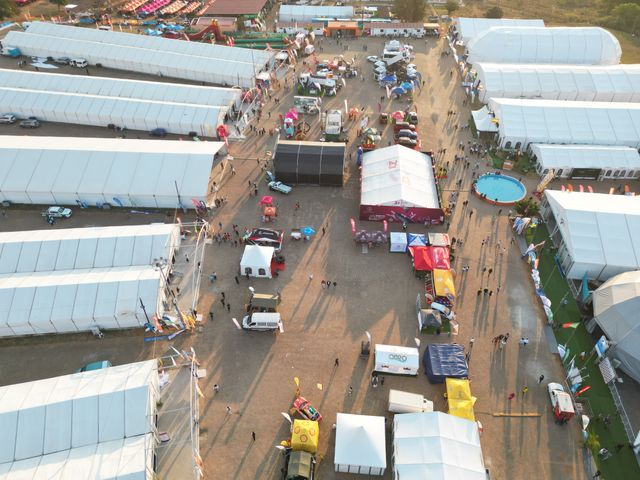
Every booth on the floor started as a line item. Rent, carpet, a place to hang your banner from 2019. Then twenty thousand people walk past that line item and it stops being furniture. It becomes the cheapest lead generation channel you own that week. That is the part the spreadsheets miss. A trade show floor is a compressed market. Vendors, buyers, competitors, and press all in one room for three days, and the exhibitors who understand that density come home with contracts instead of tote bags. It is why I still think renting beats buying for most first time exhibitors, and why the rental math has quietly gotten better in the last few years.
Suppliers now build modular frames that snap together on site, which means one booth can look like your company at three different shows without a warehouse or a storage unit. If you’re planning your first show, the practical starting point is 10×10 trade show booth rentals, because that footprint fits nearly every venue and nearly every budget. Here’s the angle most business writers skip. These small booths, multiplied by hundreds of exhibitors, add up to something the state actually counts.
Where the money actually lands
Our team spent a season tracking the actual costs of exhibiting, and the surprising number wasn’t the booth fee. It was everything surrounding the booth: drayage, electrical, lead capture software, the hotel you booked three weeks too late because you were still deciding whether to go.
Here’s my opinion, stated plainly. Buy your booth last. Rent everything else first. Space, carpet, furniture, and lighting are commodities you can price in an afternoon. The booth structure is the only piece you might reuse for five years, and even that math changes if you switch industries.
State level numbers back this up. New Jersey’s business recruitment and retention efforts generated more than $1 billion in economic impact in a single year, and the state’s business attraction group, Choose New Jersey, tracks those returns closely because events, conferences, and exhibitor spending keep showing up in the totals. That is the macro picture. Your booth is a small tile in it.
Why does the smallest booth size still make the most sense in 2026?
Because buyers don’t walk the floor looking for square footage. They walk it looking for a reason to stop. Most show floors price larger spaces at two to four times the cost of the entry level, and unless you’re launching a product or running live demos, that premium buys you nothing but empty carpet.
The pros who exhibit constantly treat a small booth as a decision filter. If you can’t explain your pitch in the eight seconds someone spends scanning your back wall, a bigger booth won’t fix that problem. It’ll just display it louder. According to the U.S. Census Bureau, services and trade sector activity drives the majority of employment in the country, and business to business services sit inside that number. Census data on service sector employment is worth a look if you want to understand why so many exhibitors are service firms and not manufacturers.
Three decisions that separate profitable booths from expensive furniture
I’ve watched exhibitors make the same three mistakes on repeat. Here’s what to do instead.
- Choose the meeting geometry before the design. Decide whether you want one conversation, two, or a walking demo. A 10×10 with a single tall counter and two stools hosts one serious buyer at a time. That’s usually the right number for a first show, because your staff can’t actually handle six simultaneous pitches anyway.
- Budget backwards, not forwards. Start with your target cost per qualified lead, then work out how many you need, then work out how much booth you can afford. Most exhibitors do this in reverse and end up measuring vanity foot traffic.
- Measure the show, not the booth. Count conversations that turn into calendar invites. If the invites were booked after the show, you had a good show, whatever the booth looked like.
One more opinion, since I’ve earned it with a few bad shows. Skip the gimmick. Nobody remembers the magician. They remember the vendor who solved their problem and followed up in two days.
What the events industry itself keeps pointing to
The Events Industry Council is the umbrella body for the meetings and exhibitions trade, and its core message has stayed consistent for years: business events are economic infrastructure, not entertainment. Cities build convention centers because the exhibitor dollar circulates through hotels, restaurants, taxis, and local suppliers long after the booths come down. That’s the reason rent still makes more sense than buy for most companies attending two or three shows a year.
There is a use case for owning, and I’ll name it honestly. If your brand identity is fixed for three years, you exhibit more than six times a year, and you have somewhere to store panels, ownership wins on cost per show. That’s a narrow set of conditions. Everyone else should rent, because rental suppliers now offer modular frames that reconfigure for a different show each quarter without a warehouse lease or a storage unit eating your margin every month between events.
A concrete scenario worth copying
A medical device rep I know exhibits six times a year on a budget that most companies blow on one show. Her booth fits in two cases. She ships ahead, sets up in under an hour, and uses a single backlit wall, two stools, and one tablet loaded with a scheduling app.
Last year, at a regional conference, she booked nineteen meetings over three days from a booth smaller than most people’s cubicle. Her trick wasn’t the booth. It was choosing a show where her buyers outnumbered the tire kickers. That’s the framework I’d hand to any first time exhibitor: one wall, two stools, a screen, and a target list built before the show opens.
Start with the smallest show you can win
The regional show beats the national one for a first outing. Fewer exhibitors, lower floor fees, cheaper travel, and buyers who actually have budget authority. You’ll learn the rhythm of a show floor without burning your whole marketing year on it.
Book the booth, then build the lead list, then write the follow up email before you leave the office. Most exhibitors do those three things in exactly the wrong order, then wonder why the badge scan pile felt like homework a week later. Pick one regional show, rent the smallest booth that fits your pitch, and count the calendar invites after. If the number beats your last email campaign, you already know what to do next.

The New Jersey Digest is a new jersey magazine that has chronicled daily life in the Garden State for over 10 years.
