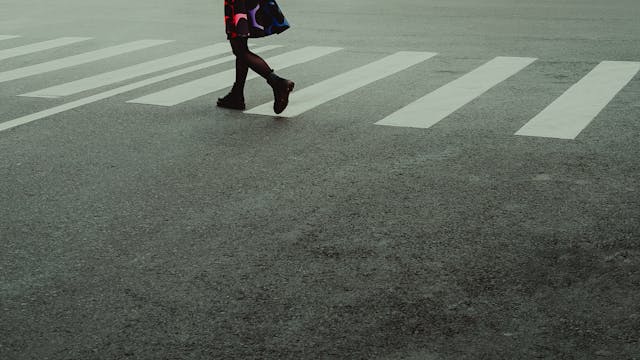

Pedestrian accidents present many challenges when it comes to establishing fault. Unlike collisions between two vehicles, where damage patterns and traffic violations often point clearly to one driver, pedestrian cases involve an inherent physical imbalance that complicates liability analysis. Drivers, insurers, and even witnesses may carry assumptions about pedestrian behavior that do not always align with the evidence.
California law provides strong protections for pedestrians, but recovering compensation still requires a clear demonstration of how and why the accident occurred. A Los Angeles pedestrian accident lawyer can examine the facts of a collision, gather the evidence necessary to establish fault, and ensure that liability is assigned based on what actually happened.
The Legal Standard for Pedestrian Accident Liability
Fault in pedestrian accident cases is determined through the same negligence framework that applies to all personal injury claims in California: the injured pedestrian must establish that the driver owed a duty of care, breached that duty through their conduct, and that the breach directly caused the pedestrian’s injuries and resulting damages.
Every motorist has a legal obligation to exercise reasonable care when operating a vehicle, which includes maintaining awareness of pedestrians and yielding the right of way where required by law. California Vehicle Code § 21950 mandates that drivers yield to pedestrians within marked or unmarked crosswalks.
When a driver fails to comply with this or other applicable traffic statutes and strikes a pedestrian, the doctrine of negligence per se may apply. This means that the violation itself is considered evidence of fault.
Key Evidence Used to Establish Fault
The traffic collision report prepared by responding law enforcement officers documents vehicle and pedestrian positions, road conditions, witness accounts, and any citations issued. While not binding in court, this report carries significant weight in both insurance negotiations and litigation.
Surveillance and dashcam footage, when available, can provide an objective visual record of the collision. Traffic cameras, business security systems, and residential doorbell cameras near the scene may capture the driver’s speed, the pedestrian’s position, and the sequence of events immediately before impact. Because many recording systems operate on short overwrite cycles, securing this footage quickly is critical.
Physical evidence at the scene, including skid marks, vehicle damage location, and debris patterns, helps accident reconstruction experts determine the speed of the vehicle, the point of impact, and whether the driver attempted to brake or take evasive action. Mobile phone records can also reveal whether the driver was distracted at the time of the collision.
Driver Behaviors That Establish Fault
Certain driver behaviors are frequently identified as the cause of pedestrian accidents. Common violations include:
- Failing to yield at crosswalks
- Running red lights or stop signs
- Making turns without checking for pedestrians
- Speeding through residential or school zones
- Driving while distracted or impaired
California Vehicle Code § 22350 requires drivers to travel at speeds that are reasonable and prudent given current conditions. In areas with heavy pedestrian traffic, such as school zones and commercial districts, this standard demands heightened attention from motorists.
Driving under the influence of alcohol or drugs, prohibited under Vehicle Code § 23152, not only establishes fault but may also support a claim for punitive damages. Impaired drivers demonstrate a conscious disregard for the safety of others, which California courts recognize as grounds for additional financial penalties beyond standard compensatory damages.
How Comparative Fault Applies to Pedestrians
California’s pure comparative negligence system means that fault does not have to rest entirely with one party. A pedestrian who contributed to the accident, such as by jaywalking or crossing against a signal or while being distracted by a mobile device, can still recover damages, but their compensation is reduced by their assigned percentage of responsibility.
Insurance adjusters often attempt to inflate the victim’s share of fault. Common arguments include alleging that the pedestrian entered the roadway outside of a crosswalk, failed to look before crossing, or was wearing dark clothing at night. While some of these factors may be relevant, they do not automatically shift most of the blame to the pedestrian.
California Vehicle Code § 21954 states that pedestrians outside of crosswalks must yield the right of way to vehicles, but it also requires drivers to exercise due care for the safety of any pedestrian on the roadway.
The Role of Government Liability
Dangerous road conditions, malfunctioning traffic signals, inadequate crosswalk markings, and poor lighting at intersections can all contribute to collisions. When a government entity responsible for maintaining the roadway or traffic infrastructure fails to address a known hazard, it may share liability for the resulting injuries. In California, victims must file an administrative tort claim within six months of the accident before pursuing a lawsuit in civil court.
Conclusion
Determining fault in pedestrian accident cases requires a thorough examination of several factors. California’s legal framework protects pedestrians, but it also permits fault to be shared when the evidence supports it. Victims who secure and preserve key evidence early in the process are best positioned to ensure that liability is assigned accurately and that their right to fair compensation is protected.