

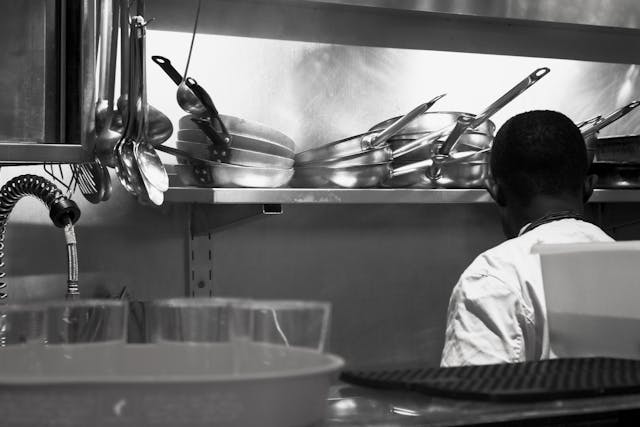

The restaurant industry continues its rapid transformation. Ghost kitchens and food trucks represent two of the most dynamic segments reshaping how Americans eat. Understanding these models reveals broader shifts in consumer expectations, technology adoption, and culinary entrepreneurship.
Why Ghost Kitchens Dominate Industry Conversations
Ghost kitchens operate without traditional dining rooms, focusing exclusively on delivery and takeout orders. This model emerged from changing consumer behaviors and accelerated dramatically in recent years. The concept now represents a fundamental shift in restaurant operations.
These facilities maximize kitchen efficiency by eliminating front-of-house costs. Operators save on real estate, décor, and service staff that traditional restaurants require. The savings enable lower menu prices or higher profit margins depending on market positioning.
Multiple restaurant brands can operate from a single ghost kitchen location. This shared infrastructure model spreads costs across several concepts. A single facility might house Italian, Asian, and Mexican brands simultaneously, each serving distinct customer segments through separate delivery apps.
Technology integration reaches its highest potential in ghost kitchens. Without in-person service demands, operators focus entirely on production efficiency and order accuracy. Automated systems manage incoming orders from multiple platforms while kitchen display systems optimize cooking sequences.
Real estate flexibility represents another significant advantage. Ghost kitchens can operate from industrial spaces, strip mall back rooms, or purpose-built facilities. This adaptability allows operators to position production capacity precisely where delivery demand exists.
What Makes Food Trucks Persistently Popular
Food trucks maintain strong appeal despite evolving market conditions. Their combination of mobility, personality, and accessible pricing creates lasting consumer loyalty. Several factors sustain their prominence in the foodservice landscape.
Lower barriers to entry attract aspiring restaurateurs. A food truck requires significantly less capital than a brick-and-mortar establishment. This accessibility enables culinary experimentation and concept testing before major investments.
Mobility creates unique marketing opportunities. Trucks can follow events, serve different neighborhoods on different days, and build social media followings around their movements. This nomadic presence generates excitement that stationary restaurants cannot replicate.
Direct customer interaction distinguishes the food truck experience. Operators often serve customers personally, creating connections impossible in traditional fast-casual settings. This intimacy builds loyal followings that sustain businesses through competitive pressures.
Quality equipment now matches stationary kitchen capabilities. Modern food trucks incorporate professional-grade appliances from manufacturers like Roller Grill that deliver consistent results in compact mobile formats. European manufacturers produce equipment specifically designed for the space constraints and power limitations of mobile operations.
How Technology Transforms Both Models
Digital infrastructure enables both ghost kitchens and food trucks to operate efficiently. Several technological developments have proven particularly impactful for modern foodservice operations.
Technology Ghost Kitchen Application Food Truck Application Order aggregation Multi-platform management Real-time menu updates GPS tracking Delivery optimization Customer location sharing Kitchen displays Production sequencing Order queue management Inventory systems Multi-brand stock control Space-efficient purchasing
Point-of-sale systems designed for delivery operations handle the complexity of multiple revenue streams. These platforms integrate with major delivery apps while tracking sales, inventory, and customer data across all channels.
Kitchen automation reduces labor requirements in both settings. Smart equipment monitors cooking progress, adjusts temperatures automatically, and alerts operators when maintenance is needed. This intelligence maintains consistency during busy periods when human attention faces limits.
Mobile payment acceptance has become universal. Contactless transactions through cards, phones, and watches represent the expected norm. Food trucks that once relied on cash now process payments as efficiently as any restaurant.
Social media integration drives customer acquisition differently than traditional advertising. Real-time posts about locations, specials, and wait times create urgency that converts followers into customers. Both models leverage these platforms extensively.
Which Challenges Persist for Operators
Success in these formats requires addressing significant operational challenges. Understanding these obstacles helps aspiring operators prepare realistic business plans.
Delivery commission fees consume substantial revenue. Major platforms charge 15-30% of order value for access to their customer bases. Ghost kitchens dependent on these platforms face constant margin pressure that demands careful pricing strategies.
Food quality degradation during delivery remains unsolved. Items that excel when served immediately may arrive compromised. Menu development must account for transport time, container moisture, and temperature maintenance.
Regulatory compliance varies dramatically by jurisdiction. Food trucks face especially complex permitting requirements that differ between municipalities. Some regions welcome mobile vendors while others create prohibitive regulatory barriers.
Labor markets present ongoing difficulties. Skilled kitchen staff command premium wages in any setting. The demanding conditions of compact mobile kitchens or high-volume ghost facilities intensify recruitment and retention challenges.
Equipment reliability becomes critical when production capacity is limited. A single breakdown can halt operations entirely. Investing in commercial-grade equipment from established manufacturers reduces this risk despite higher initial costs.
What Market Data Reveals About Growth Trajectories
Industry statistics illuminate the scale and trajectory of these foodservice segments. Data from market research firms provides context for investment decisions.
The ghost kitchen market demonstrated extraordinary growth rates through recent years. Some analysts project continued expansion as delivery becomes normalized across age demographics. Urban areas show particularly strong demand for delivery-focused concepts.
Food truck industry valuations reached several billion dollars in recent assessments. Growth projections remain positive though more modest than ghost kitchen forecasts. The segment benefits from events returning to pre-pandemic levels and outdoor dining preferences.
Consumer surveys consistently show willingness to pay delivery premiums for convenience. This price tolerance sustains the business models despite commission structures that compress margins. Quality expectations continue rising alongside prices.
Regional variations affect both segments significantly. Dense urban markets support ghost kitchens most effectively due to concentrated delivery demand. Food trucks thrive in areas with regular events, markets, and outdoor gathering spaces.
FAQ
Can food trucks use the same equipment as traditional restaurants?
Yes, though space constraints require careful selection. Modern commercial equipment manufacturers produce compact versions of professional appliances specifically designed for mobile operations. These units deliver restaurant-quality results while fitting within food truck footprints and power systems.
How much does starting a ghost kitchen cost compared to a traditional restaurant?
Ghost kitchen startup costs typically range from 50,000 to 150,000 dollars depending on location and concept. Traditional restaurants with dining rooms often require 250,000 to 500,000 dollars or more. The savings come primarily from real estate and front-of-house expenses.
Do ghost kitchens need special permits different from restaurants?
Requirements vary by jurisdiction. Some areas classify ghost kitchens as food manufacturing facilities with different regulations than restaurants. Others treat them identically to traditional establishments. Local health departments provide specific guidance for each market.
What percentage of restaurant sales now come from delivery?
Delivery represents approximately 20-30% of restaurant industry revenue in most markets. Ghost kitchens by definition achieve 100% delivery or takeout sales. Traditional restaurants have increased delivery capacity significantly to capture this revenue stream.
How do food trucks handle health inspections?
Food trucks undergo regular health inspections similar to stationary restaurants. Inspectors evaluate food storage temperatures, handwashing facilities, waste disposal, and preparation procedures. Many jurisdictions require trucks to return to commissary kitchens for certain tasks that mobile units cannot accommodate safely.
__________________________________________________
Sources:
· [Grand View Research] – Food Service Equipment Market Size | Industry Report, 2030: https://www.grandviewresearch.com/industry-analysis/food-service-equipment-market
· [The Restaurant Warehouse] – 10 Key Food Service Industry Trends for 2025: https://therestaurantwarehouse.com/blogs/restaurant-equipment/food-service-industry-trends
· [Fortune Business Insights] – Commercial Cooking Equipment Market Research Report, 2032: https://www.fortunebusinessinsights.com/commercial-cooking-equipment-market-110517· [Polaris Market Research] – Commercial Kitchen Appliances Market Size, Industry Trend, 2034: https://www.polarismarketresearch.com/industry-analysis/commercial-kitchen-appliances-market

The New Jersey Digest is a new jersey magazine that has chronicled daily life in the Garden State for over 10 years.