

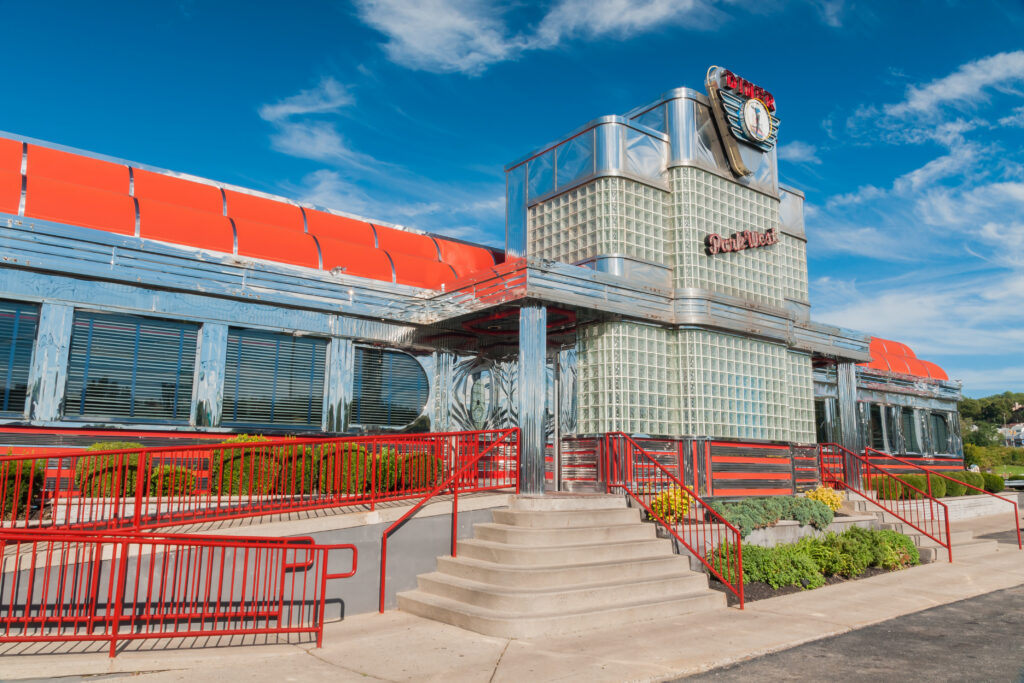

New Jersey has well over 400 diners. At its peak, the Garden State was home to almost 600. For a state of this size, that’s no small number. There’s about one diner per every 16 square miles—or, if you want to put it into human terms, one diner per every 22,000 residents.
If you’re reading this, then it’s probably not news to you that New Jersey is considered the diner capital of the world. But how did a small Northeastern state take that crown? New Jersey certainly didn’t invent the diner. Instead, it perfected, manufactured, and mythologized them more than any other state.
Diners are an intrinsic part of the Garden State’s fabric. Through plates of disco fries and club sandwiches—gyro platters and French toast—New Jersey remains the diner Mecca today. It’s worth taking a deeper look at how this came to be, and how we’ve maintained the status throughout the decades.
Before New Jersey: The Diner’s Origins
It’s 1872. Ulysses S. Grant is president, and New England is thriving. An entrepreneur named Walter Scott had a bright idea to bring food directly to the working class. He converted a horse-pulled wagon into what he called a “lunch wagon,” selling sandwiches, pies, eggs, coffee, and more to people out late at night.
Before then, a majority of folks enjoyed meals solely in their homes. In a 2018 interview with BBC, Michael C. Gabriele—who has authored several books on the topic—said that until Scott’s invention, “working people didn’t eat out; that was something reserved for the wealthy.”
His bright idea wasn’t just a new format to eat—nor was it just a quick buck. It was a class shift. It expanded who got to enjoy a meal outside of the home.
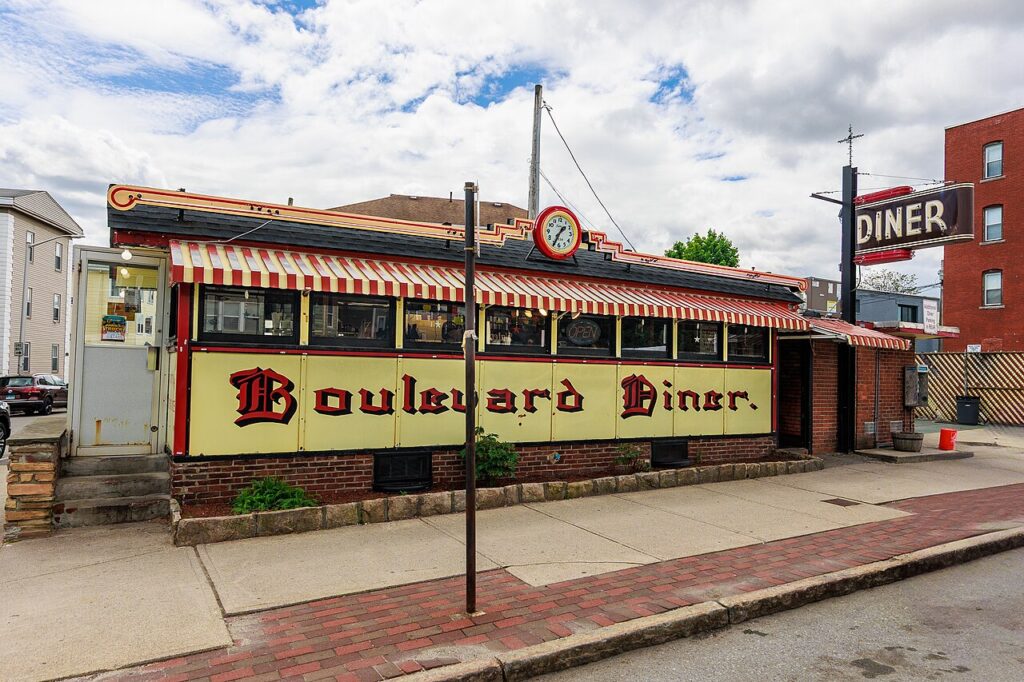
This sparked a craze around the concept. Another Providence entrepreneur, Ruel B. Jones, began building lunch carts and operated several throughout the region. His cousin, Samuel Messer Jones, also began building cars of his own after relocating to Worcester, Massachusetts. Samuel took the concept even further, incorporating full interiors, with room to sit.
But it was Worcester builder Charles H. Palmer who ended up receiving much of the credit. He purchased most of Jones’ carts and, in 1891, received the first-ever patent for a lunch cart. His design—an enclosed body with a counter separating a rear kitchen from stools and chairs up front—set the industry standard for the next 25 years.
As lunch wagons grew more popular, another builder pushed the concept in a different direction entirely. Patrick J. Tierney, working out of New Rochelle, New York, built longer wagons with counters running the length of the car rather than across it. He also leaned hard into the look of a railroad car, and borrowed the actual word for it, calling his creations “diners.” The name stuck.
Meanwhile, in Worcester, T.H. Buckley—who had been in the lunch cart business since 1888—was solving a different problem. Early lunch wagons had to be hauled to and from their spot every single day.
In 1905, Buckley cracked the code. He rolled out a model built on low wheels that could be parked permanently in one place. That simple change unlocked a world of possibilities. With permanent locations, operators could install electricity, gas stoves, and running water. The interior layout improved too, with the kitchen tucked behind a U-shaped counter and a shallow eating shelf running along the perimeter.
A year later, Philip H. Duprey founded the Worcester Lunch Car and Carriage Manufacturing Company, buying out a rival firm and hiring away several of Buckley’s own former employees in the process. It was a savvy consolidation more than an invention, but it forever etched Worcester’s name in the diner history books.
Just like that, the diner as we now know it had taken shape. New Jersey hadn’t entered the story yet.
Enter New Jersey: Jerry O’Mahony
In 1912, Bayonne’s Jerry and Daniel O’Mahony built the first stationary lunch wagon in New Jersey along with John Hanf. The trio later sold it to a restaurateur named Michael Griffin for $800, who parked the diner at a transfer station in Union City, New Jersey. This marked the beginning of a new business venture.
In 1917, they officially opened the Jerry O’Mahony Diner Company, which went on to manufacture over 2,000 diners during its 35-year run.
This also marked the beginning of a new way of diner construction: diners were built in a factory, then trucked to their permanent location. But more importantly, it marked the beginning of New Jersey’s golden age of diners.
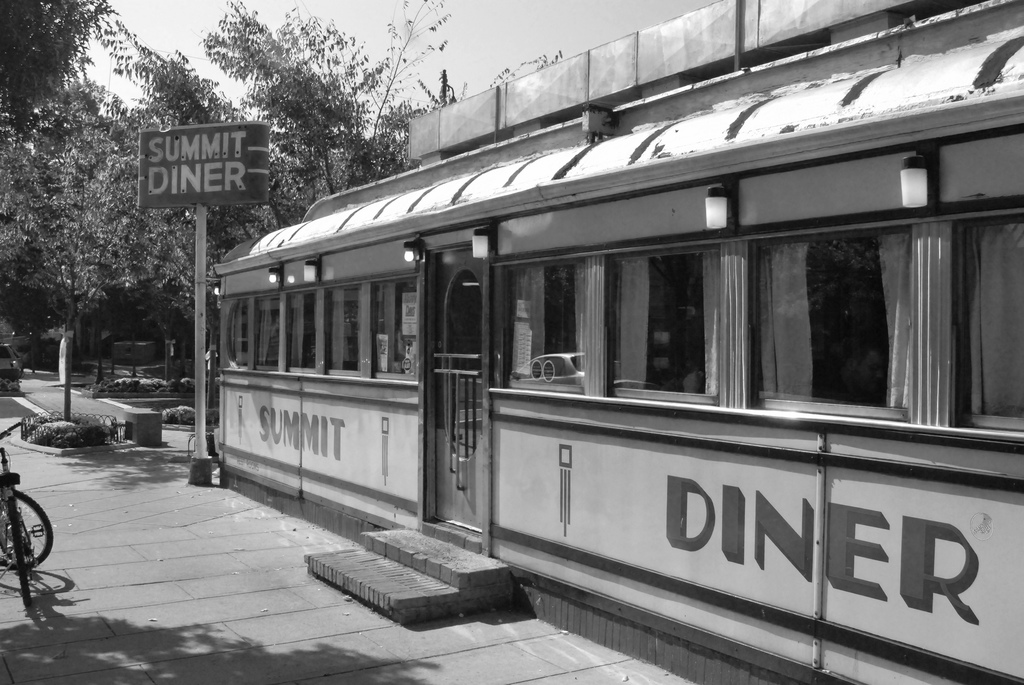
There are around 20 original O’Mahony diners still operating in the U.S., including Summit Diner in Summit, New Jersey, and Jersey City’s Miss America Diner, which closed in 2025. The Excellent Diner—which was built by O’Mahony and operated in Westfield from 1947-1995—was shipped to Germany, then eventually to Disneyland Paris, where it operated as Café des Cascadeurs.
Piggybacking off O’Mahony’s success, around 20 total New Jersey manufacturers began building diners in the decades to follow.
Why New Jersey, Specifically
There are a lot of reasons why New Jersey became the breeding ground for diner culture. At the time, Gabriele says the Garden State’s road infrastructure was second to none. Long before McDonald’s drive-throughs and Starbucks populated the roads, diners were the option for travelers seeking out a quick, cheap bite—which New Jersey saw a lot of.
At the same time, Greek immigrants came to New Jersey in droves, and many turned to diners as their shot at the American dream. Suddenly, diners were popping up everywhere in the Garden State, many Greek-owned, and all of them looked to fill the same space: reliably cheap food, open for breakfast through dinner, with large menus and a wealth of options to choose from.
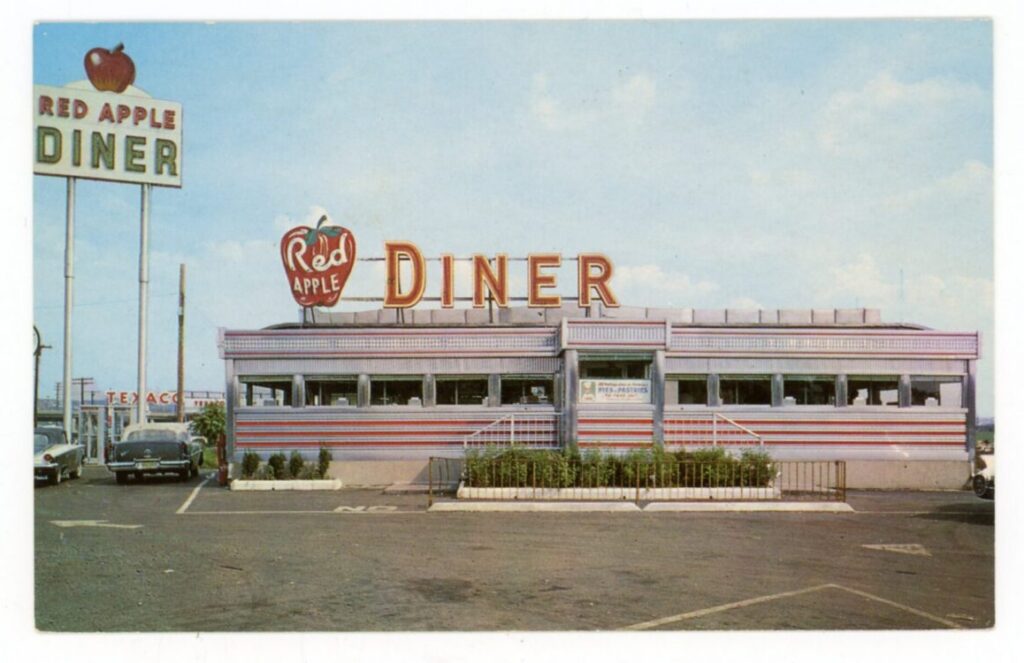
New Jersey as a manufacturing hub further contributed to the diner boom. Whether it was any of the shiny, new diner makers or O’Mahony’s before them, the concept remained the same. Diners were built in factories and transported to location.
So, while New Jersey diner companies were laying the seeds for their own diner landscape, they were also shipping off diners to the rest of the country.
Diners were the hot new thing. And New Jersey was its maker.
From Lunch Cars to Landmarks
These factors added up. New Jersey was in the midst of a full-on diner boom, pioneered by the Jerry O’Mahony Diner Company.
Suddenly, up to 20 companies building a similar product emerged in Jersey: Paterson Vehicle Company, Swingle Diner Manufacturing Inc., Paramount Dining Car Company, Kullman Dining Car Company, and Fodero Dining Car Company, to name a few.
Today, many of the most iconic diners in Jersey—and in the world—were built by one of these original dining car powerhouses. During their peak in the 1950s, it’s estimated that around 6,000 New Jersey-built diners were scattered around the U.S., according to Gabriele. Today, that number has dwindled, but if you look around, you can still find artifacts from the era sprinkled throughout small towns and main streets.
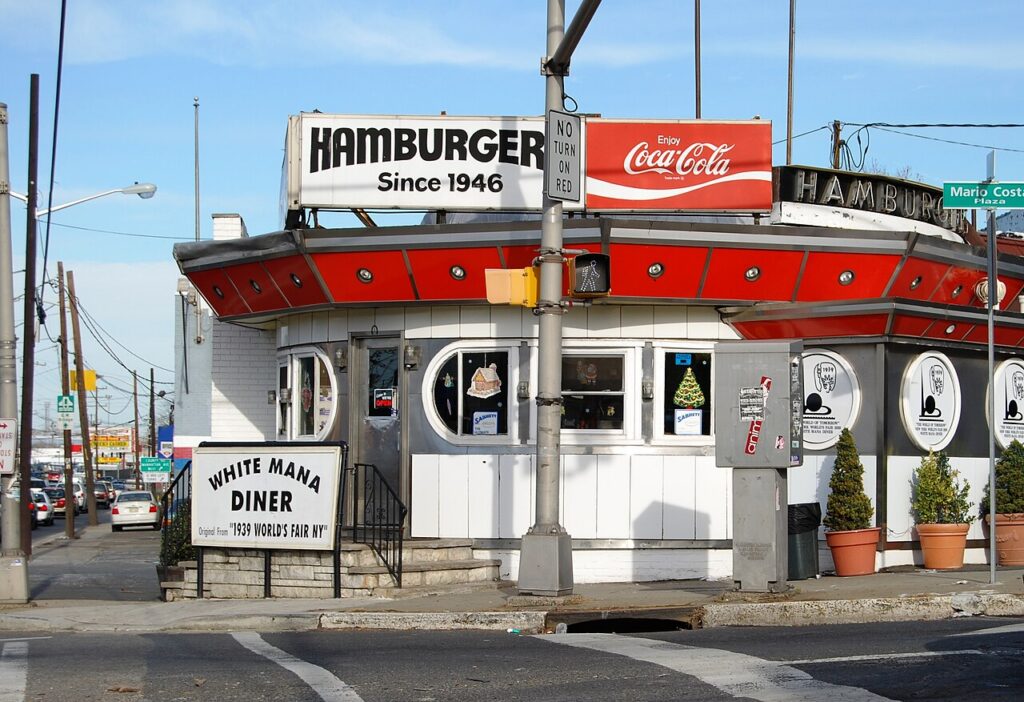
Both Jersey City’s White Mana and Hackensack’s White Manna were built by Paramount Dining Car Company. The diners—which became known for serving onion-topped hamburger sliders and are still in operation today—were purchased at the 1939 World’s Fair by Louis Bridges. In fact, Bridges kept Paramount busy, owning five diners at his peak, all named White Manna. The remaining locations—now independently owned—remain packed every single day.
When it was discovered that Hackensack’s White Manna was expanding to a new part of town, the restaurant quickly clarified that the Paramount-built diner was making the move with it—a testament to the quality, longevity, and concept of an original dining car from the era.
Then there’s Mustache Bill’s in Barnegat Light, which has long been praised for its classic diner digs, just a stone’s throw from Barnegat Bay on one side and the Atlantic Ocean on the other. Mustache Bill’s is still housed in an original dining car from Fodero—the Newark-born diner manufacturer was known for its stainless steel exteriors and Art Deco aesthetics during its heyday in the mid-20th century.
The aforementioned Summit Diner is a necessary pilgrimage for any diner fanatic. Built by Jerry O’Mahony and crew in 1939, the Union County diner still holds onto its old-school appearance. As with most pre-War diners, the exterior closely resembles a train car, with its lengthy paneling and painted block-font name. However, the interior leans heavier into that post-War feel—red leather-backed booths, checkered flooring, a mix of wood and stainless steel, and, of course, an army of barstools, perched directly in front of the countertop.
Summit Diner consistently wins awards because of its history and commitment to quality diner grub. Our own readers voted it the best diner in the state in 2025.
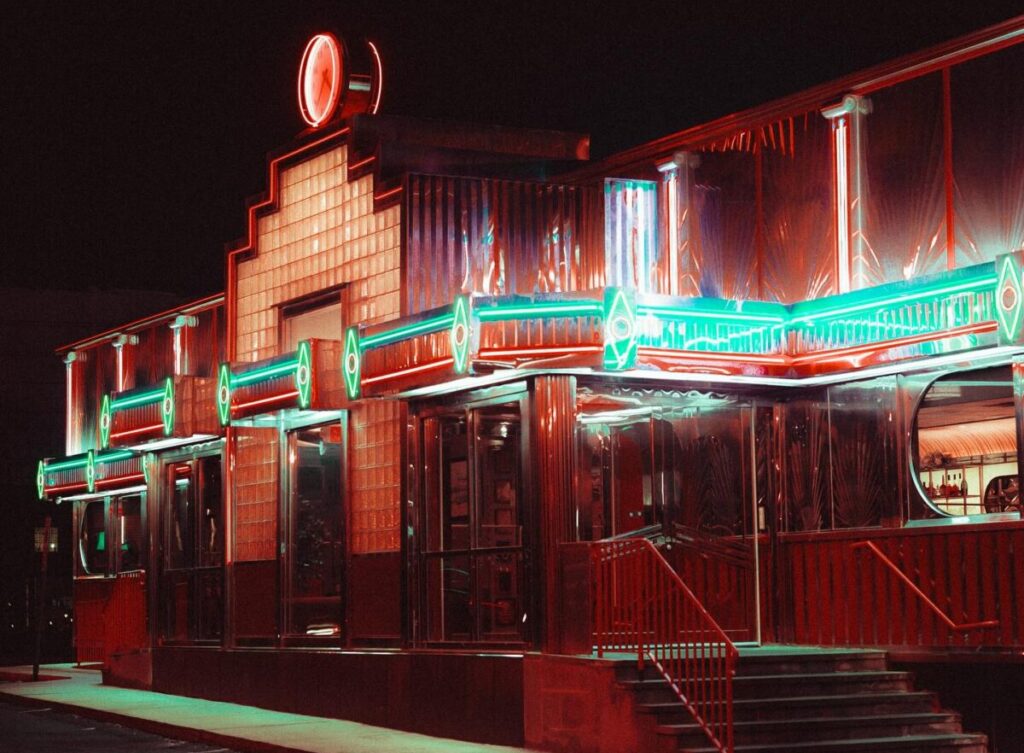
The boom brought with it more than original cart-style diners. Plenty of free-standing diners popped up during the mid-century as well. This is where New Jersey really took off with the Diner Capital crown.
Large structures—with full parking lots and room to seat dozens more than their railcar predecessors—began to open. These new diners kept the Art Deco feel, wrapped in a mix of stainless and neon, satin-backed booths and counter stools to boot. But now, full dining rooms entered the mix. Waitstaffs resembled small armies. Two cooks behind the counter turned to 10 in a commercial kitchen, putting out hundreds of plates an hour. Diners morphed from small, working-class greasy spoons to full-on, family-oriented restaurants.
The Tick Tock Diner, Tops, The Arlington Diner, Broadway Diner, Menlo Park, Silver Coin—they all opened between the 1940s and the end of the century. They were larger, open 24 hours a day, somehow even more kitschy, and the food was damned good. Many even added beer and cocktails, and most included Greek menu specialties like their diner ancestors before them.
The demand was there. Whether classic, O’Mahony-style dining car institutions, or the newer, larger, free-standing restaurants, New Jerseyans couldn’t get enough of their diners. And restaurateurs were bringing them to the state by the dozen.
New Jersey: The Diner Capital of the World
As the 20th century evolved, diners started to fizzle out.
Diners remained as popular as ever, but fewer were opening. The prefabricated diner manufacturers all shuttered, and the quick-service aspect of diners became less of the draw. McDonald’s was now seemingly everywhere, and consumer tastes preferred fast-food-style dining for their road trips and cheap bites.
Simply put: the manufacturing industry that built New Jersey’s diner identity was no more. However, the culture it built was (and is) still alive and well. The diner boom of the mid-century created a taste for the style of restaurant that could not be erased. New Jerseyans who grew up with diner cheeseburgers and milkshakes now had kids of their own to pass the tradition down to.
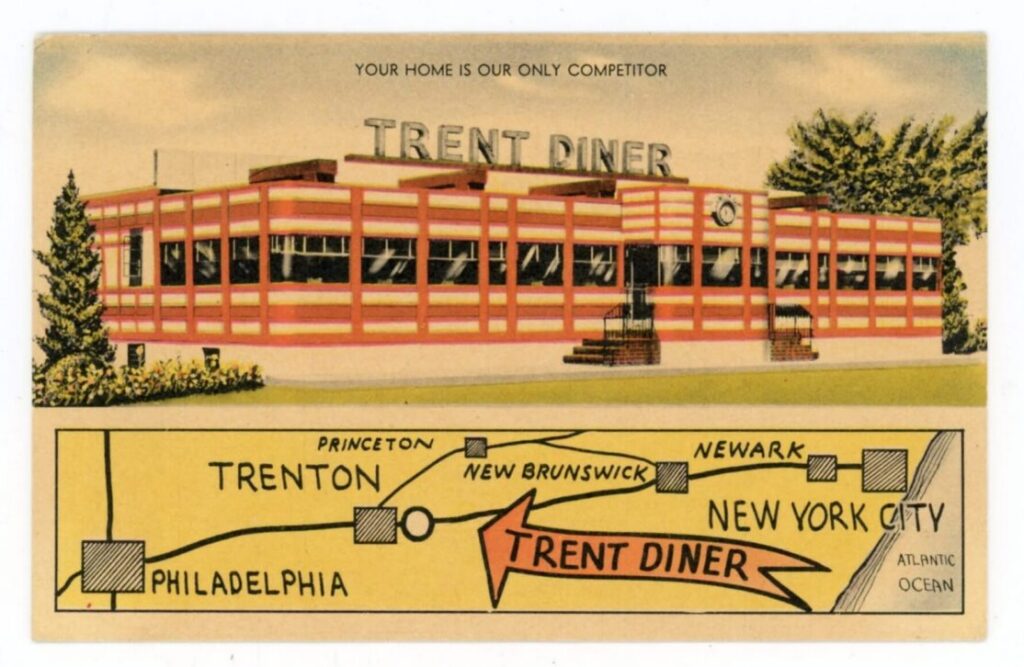
Late-night disco fries after a night out, Taylor Ham and pancakes for Sunday breakfast, creamy cheesecake baked on premise for dessert—all of these things were cemented in canon as Garden State delicacies.
But, more than anything, it became a sense of pride for locals. Arguments like “no, my hometown diner has the best homefries” are still common today. Traveling out of state sparks homesickness when the “diner” stops serving breakfast at noon, because obviously diners serve breakfast all day.
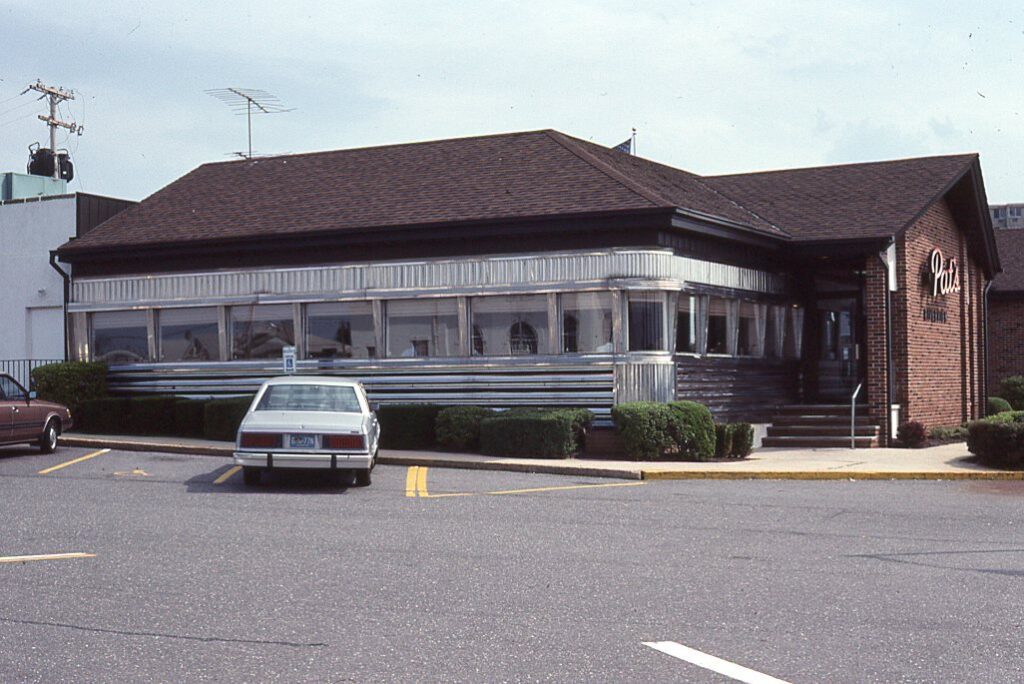
And though 24-hour diners are rare these days—only around 20 remain in the state—we still talk about 24-7 operations with a fondness that can’t be faked. I will always long for a 2 a.m. gyro with a vanilla Pepsi, no matter how far removed I become from it as a reality.
More than a century ago, a lunch wagon in Providence gave working people somewhere to eat outside their own kitchens for the first time. New Jersey took that idea and turned it into an identity. The factories that built it might be gone, but no one told the diners. They’re still here in New Jersey—400-something strong, and supported by an army of hungry regulars.
That is why New Jersey remains the diner capital of the world.

Peter Candia is the Food + Drink Editor at New Jersey Digest. A graduate of The Culinary Institute of America, Peter found a passion for writing midway through school and never looked back. He is a former line cook, server and bartender at top-rated restaurants in the tri-state area. In addition to food, Peter enjoys politics, music, sports and anything New Jersey.
