


Every inch of the store you shop at was designed by someone whose job is getting you to spend more than you planned. Here is how the trick works.
You went in for milk. You came out $82 lighter with a rotisserie chicken, two bags of chips, a candle, and a bag of those little clementines you will absolutely forget about until they go soft in three weeks.
That is not a personal failing. That is the store doing its job.
Supermarkets are among the most obsessively engineered retail spaces on earth. Nothing about the layout is accidental, and this is not a conspiracy theory. Store design is an entire consulting industry with conferences and case studies and people who get paid handsomely to move the endcaps four feet to the left. New Jersey happens to sit at the center of a lot of it. Wakefern Food Corp, the cooperative behind ShopRite, is headquartered in Keasbey, making it one of the largest retailer-owned grocery co-ops in the country. Whatever gets tested here tends to travel.
Here is what is being done to you.
The Produce Wall Is a Setup
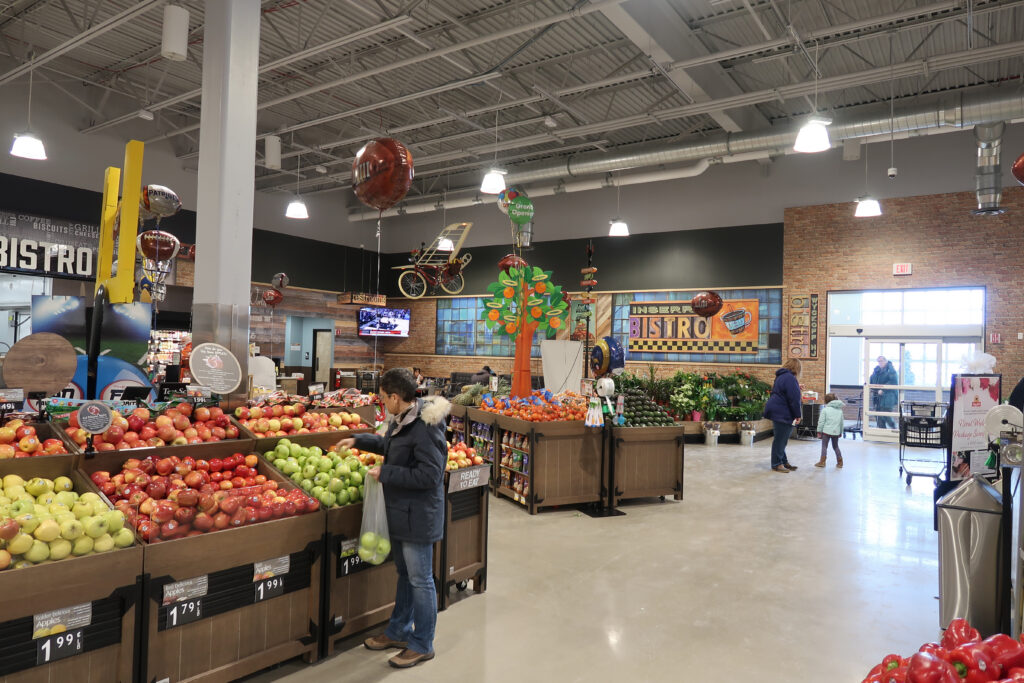
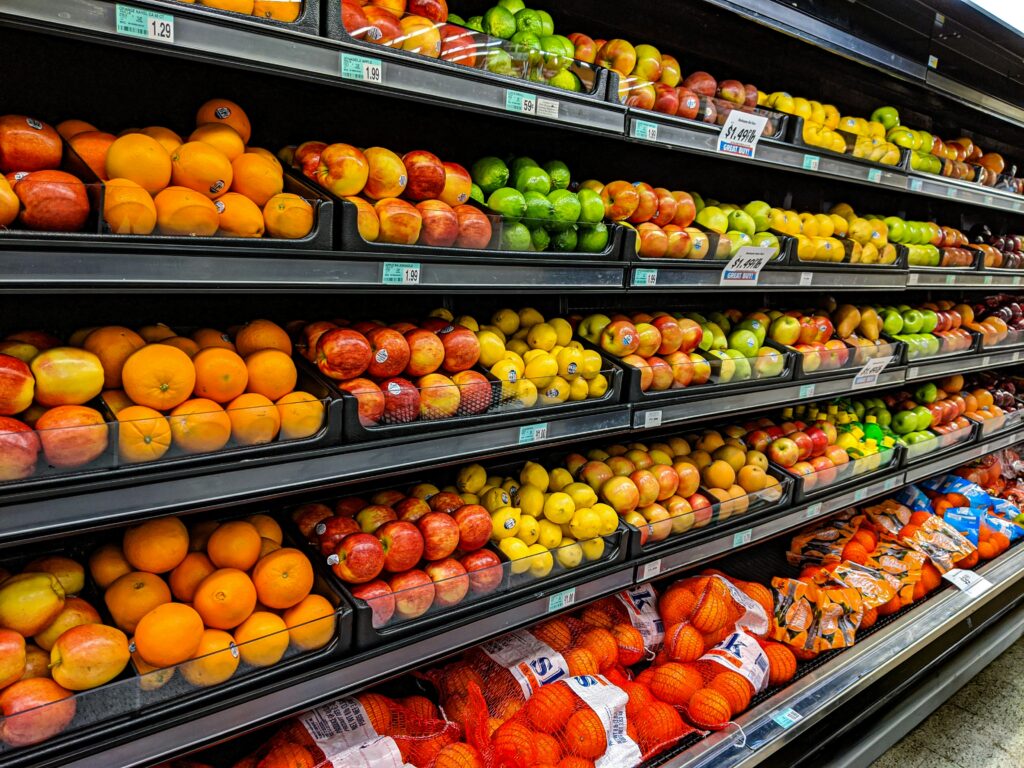
You walk in and hit a wall of color. Tomatoes, peppers, oranges, all of it under lighting that makes everything look like it was picked twenty minutes ago.
There are two things happening. The obvious one is mood. Bright colors and fresh smells put people in a better mood, and cheerful people are more willing to open their wallets.
The second is much subtler—psychologists call moral licensing. When you drop a bag of spinach in the cart first, some part of your brain files a receipt. Good decision made. Box checked. Twenty minutes later, standing in front of the ice cream, that receipt makes it easier to say yes. You have already been virtuous today. You earned it.
Nobody has produced a hard number on how much this costs shoppers, and be suspicious of anyone who claims otherwise. But the effect itself is well documented in behavioral research, and grocery stores have been building their front-of-house around it for decades.
Milk Is In the Back for a Reason
Milk, eggs, bread. The three things most people are actually there for, placed as far from the door as the building allows.
The walk is the point. Getting to the dairy case means passing snacks, soda, frozen meals, the bakery, whatever seasonal display is up, and roughly four hundred products you had no intention of buying. Every one of those is another chance for something to catch you.
This is why the “I’m just running in for one thing” trip almost never stays one thing. The store is not built to let it.
Price Tags Are Strategic
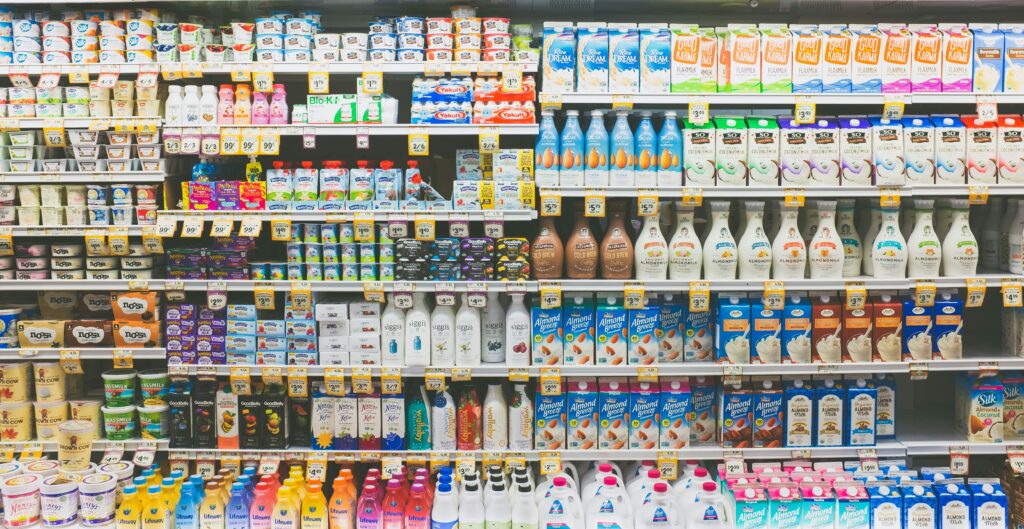
The left-digit effect is the oldest one in the book and it still works. Your brain reads $9.99 and processes “nine dollars,” even though you know better. The penny is doing more work than any penny should.
Anchoring is the more expensive trick. Place an $80 bottle of wine next to a $30 bottle—suddenly, the $30 looks much more reasonable. Sometimes the expensive one is not really there to sell. It is there to make the thing next to it feel like a deal. Watch for it in wine, olive oil, coffee, and anything with a premium tier.
Then there is the discount that is not a discount. A price goes up quietly for a few weeks, then comes back down under a big yellow sign announcing 30 percent off. Legally murky in some states, common everywhere, and impossible to catch unless you were already tracking the price. This is genuinely what those grocery price tracking apps are for.
The Carts Got Bigger On Purpose
Shopping carts have grown substantially since the 1950s, and retail consultants have been open about why. A bigger cart stays visually empty longer. An empty cart nags at you.
There’s a well-circulated claim that doubling cart size lifts spending by 40 percent. That number traces back to marketing consultant Martin Lindstrom describing his own client work, not any published study, so treat it as a story rather than a statistic. The underlying logic still holds, though. Grab a hand basket instead of a cart sometime and watch how fast your arm starts making decisions for you.
Slow Music, Good Lighting, Warm Bread
Marketing researcher Ronald Milliman ran a study back in the early 1980s and found something simple: slow background music made supermarket shoppers move slower and spend more. That one study gets cited constantly now, sometimes with the numbers stretched well past what it actually showed, but the core finding has held up enough that tempo is now a standard lever in retail sound design. Fast music in a coffee shop at 8am. Slow music in a grocery store at 6pm. Nobody’s picking those playlists for fun.
Lighting is the other big one. Produce sits under light tuned to make green look greener. Meat cases use lighting that pushes red. The steak is the same steak it would be under fluorescent tubes in a warehouse. It just looks better here.
And the bakery. If you walk into a store and immediately smell bread, that is deliberate placement and ventilation. Hunger destroys impulse control. Shopping hungry is the single most expensive thing you can do in a grocery store, which is exactly why the smell hits you at the door instead of somewhere in the back where it would be more convenient for the bakers.
The Checkout Line Is the Final Trap
By the time you get in line you have made a couple hundred small decisions. Compare, choose, reject, repeat. That grinds down the part of your brain that says no.
Behavioral scientists call it decision fatigue, and the checkout lane is built for it. Candy, gum, energy drinks, batteries, magazines, all of it small enough that no individual purchase feels like a real choice. Collectively those racks are some of the most profitable square footage in the entire store.
What Actually Helps
Very little of this can be beaten by willpower, because it is designed specifically to route around willpower. What works is boring.
Bring a list and actually stick to it. Eat first, always. Grab a basket instead of a cart when the trip’s genuinely small. Shop the perimeter for what you actually need and skip the interior aisles you never planned on entering. Check unit price instead of shelf price, too, the bigger package isn’t automatically the cheaper one.
None of this makes the store evil. It makes it a business, run by people who understand human behavior considerably better than most of us understand our own. Every trip is a negotiation between what you planned to buy and what the room was built to sell you.
Go in with a list. It is the only real leverage you have.

The New Jersey Digest is a new jersey magazine that has chronicled daily life in the Garden State for over 10 years.