

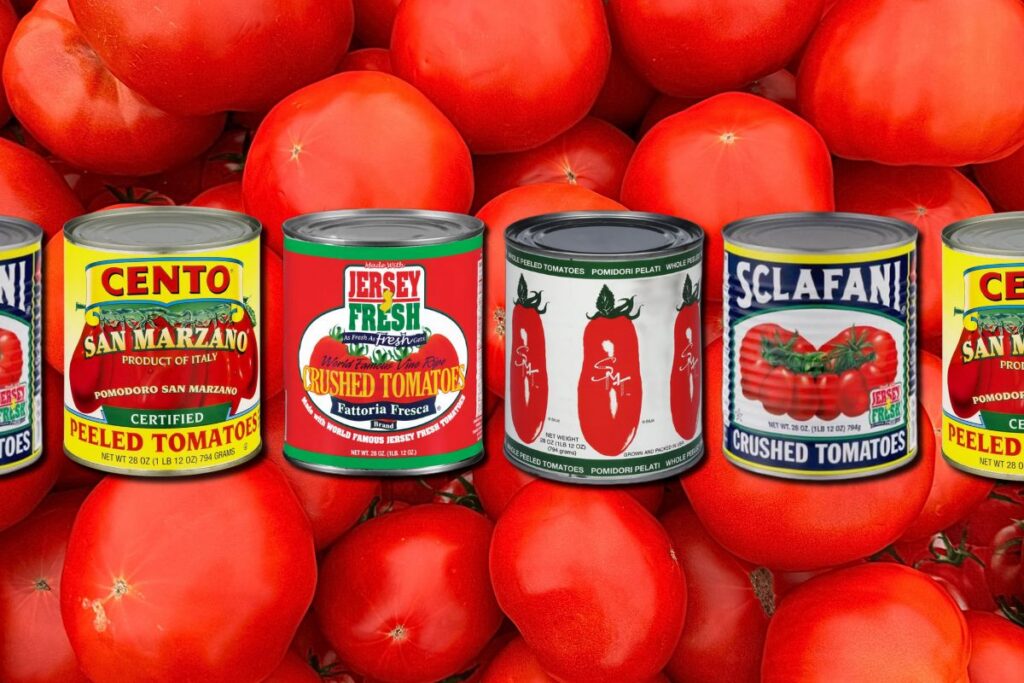

One of the most divisive conversations in the world of Italian cooking comes at the hands of the humble canned tomato.
Canned tomatoes are important. Ask 20 different chefs what they use and you might get 20 different answers. A pasta restaurant might use Bianco Di Napoli tomatoes from California, while a Neapolitan pizzeria might opt for whole-peeled San Marzanos—a Jersey-style red sauce joint might use something else entirely.
But there is a common answer across most of the country. The general consensus is that San Marzano tomatoes are the “best” tomato. But, this gets complicated in New Jersey, where tomatoes are considered a local pride—and canned varieties using Jersey-grown crushed tomatoes are increasingly common on grocery store shelves and in restaurant kitchens.
So, what’s the best? And what does “best” even entail?
The Case for San Marzano
San Marzano tomatoes are a highly celebrated variety of Italian plum tomato. Part of the draw with the name—which describes both a region and a specific type—is that many carry the DOP label. But what does that mean?
In Italian, DOP stands for Protected Designation of Origin—a label applied to foods that are certified as grown, processed, and packaged in a specific geographic region using traditional methods. You see this with products like olive oil, Prosciutto di Parma, and Parmigiano Reggiano.
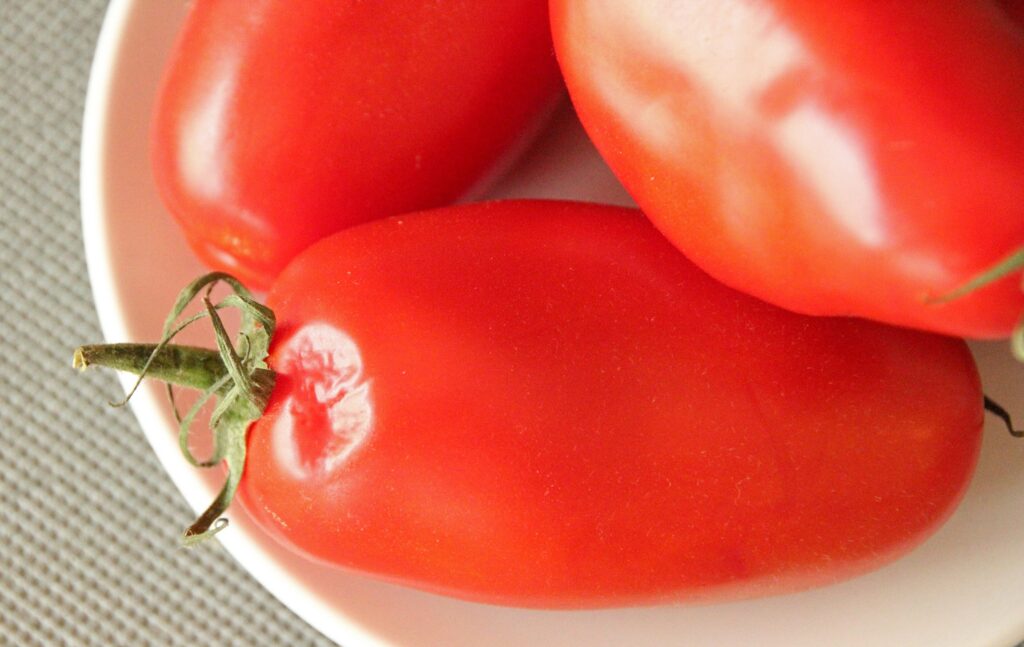
In the case of San Marzano tomatoes, the DOP label guarantees that the plum tomatoes are grown, harvested, and packed exclusively in the volcanic soil near Mount Vesuvius. Italians love to apply DOP labels to their products—but it’s not just about bragging rights. With San Marzano tomatoes, the DOP label not only sets strict boundaries on where they are grown, but it also holds them to an arguably stricter set of rules. DOP tomatoes must be harvested only at a certain color; they must be grown only using a specific method; they must be harvested only by hand; and perhaps most importantly, they must be peeled and packed whole. These rules have even sparked lawsuits.
So, while a San Marzano tomato can technically be grown anywhere, it cannot carry the DOP label unless it follows the strict set of rules that the Italians hold them to.
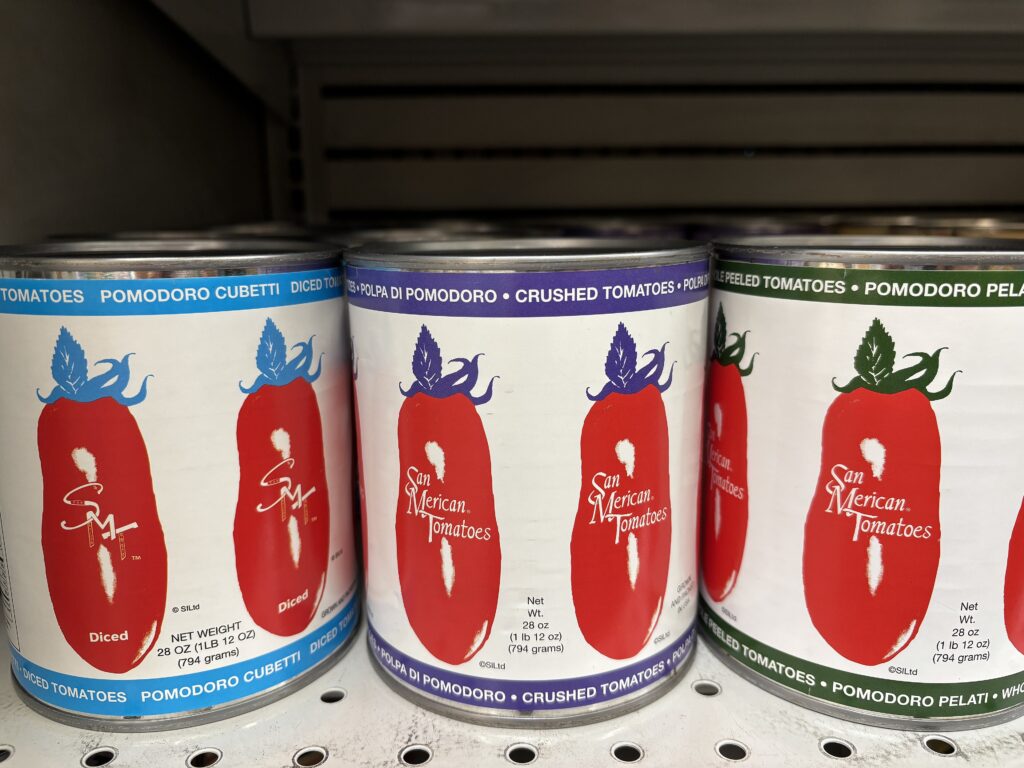
To give you a real world example, Cento tomatoes—which are available in nearly every grocery store—are certified DOP San Marzano tomatoes, while another popular brand uses the same variety grown domestically, cleverly named “San Merican” tomatoes. The latter actually did carry the San Marzano name for a long time without the DOP label. I suspect there was an offer made to change their name that they couldn’t refuse. Only kidding.
And where is the most common place you’ll find San Marzano tomatoes? A pizzeria, of course.
Ceres is unquestionably New York City’s hottest pizzeria right now—which means it’s probably the world’s hottest pizzeria.
Co-Owner Jake Serebnick, a New Jersey native, tells me that a preposterous amount of hours went into researching the perfect tomato for their naturally leavened NY-style pies. They tested different varieties, brands, and so on just to nail the flavor they were looking for.
San Marzano was the winner—more specifically a blend of different DOP producers that Serebnick refuses to reveal. But, the “why” is less of a secret.
“They just have this really nice savory flavor,” he told me. “There’s also a great amount of acid, which is really important for our pies. It means you can eat more pizza without blowing out your palate.”
While flavor is the primary quality most chefs are after when trying to demystify the hundreds of tomato options before them, Serebnick says texture plays almost as significant of a role. “San Marzano tomatoes have this amazing texture—they just fall apart,” a trait he insists is paramount to their sauce.
The Case for Jersey Fresh
New Jersey’s answer to the Italian DOP is Jersey Fresh. And while you might think it’s just a fun name to attach to Jersey-grown produce, it’s actually a bit more serious than that.
Jersey Fresh was started in 1984 as a marketing program to help farmers “inform consumers about the availability and variety of fruits and vegetables grown in New Jersey,” according to NJ.gov.
When a fruit or vegetable carries the official Jersey Fresh branding, it means that it meets specific guidelines on size, color, and quality. So, it’s two fold. It helps remind the world that we are in fact the Garden State, and it guarantees standards that put label-carrying produce above the competitors.
Go to any local farmers market in the state, and you’ll see Jersey Fresh labels all throughout. But one of the campaign’s most popular products is found right on grocery store shelves: canned tomatoes.
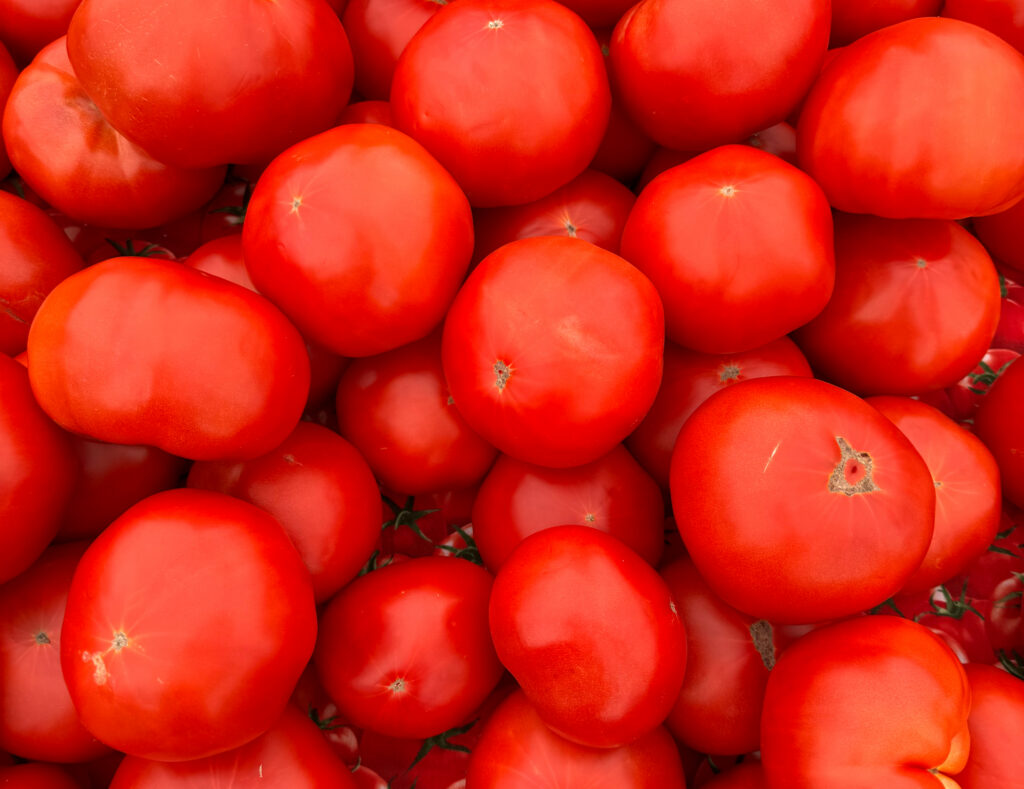
Like DOP San Marzanos before it, there isn’t one brand or producer of Jersey Fresh tomatoes. Instead, it’s a label applied to tomatoes that meet the guidelines. Sound familiar? Fattoria Fresca uses vine-ripened NJ tomatoes—and they’re so proud of it that their own name appears in fine print, while the Jersey Fresh label takes up a majority of the can. In fact, as a regular buyer of this product, I thought they were canned and sold by the state government for years.
Other brands, like Sclafani and Don Pepino, are less front-facing with it, but if you take a closer look at the label—there it is. Jersey Fresh.
And it’s not just a source of local pride. Jersey Fresh tomatoes have earned their place on pizzeria menus across the country for their bright flavor and consistency.
Corner Slice, a Maplewood, NJ pizzeria specializing in naturally-leavened square pies, proudly uses a blend of Jersey Fresh tomatoes and Stanislaus Alta Cucina from California—a common brand found in many pizzerias.
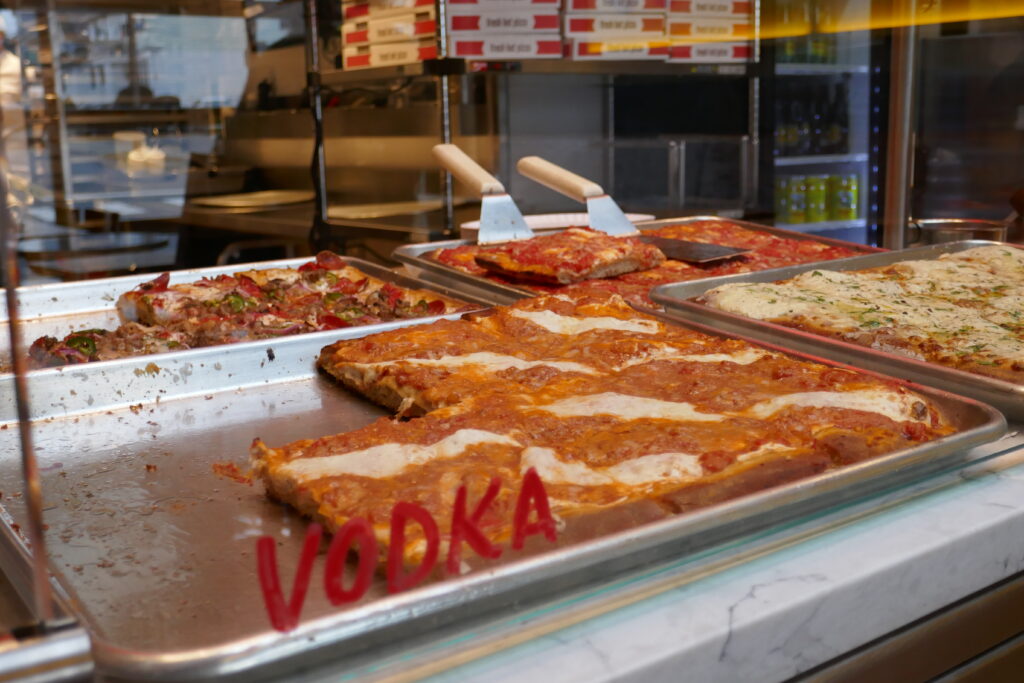
“I have always done a mix of Jersey Fresh and California tomatoes since we opened,” Owner Mike Bergemann told me. “I love blending the earthy grass notes of the Jersey Fresh with the sunny, bright, sweet notes of the California tomatoes.”
But for Bergemann, the Jersey Fresh tomato is the real difference maker. “The Jersey Fresh taste and smell like a backyard tomato, which is peak tomato nostalgia for me,” he said. “To me, a perfect pizza tomato isn’t just one that ‘tastes the best.’ It has to make you feel something, too. Jersey tomatoes do that for me every time.”
“No chance,” said Bergemann when asked which specific Jersey Fresh can he uses in the shop. “Gotta let folks do their own research sometimes!” I guess secrets are just a part of the business.
So, Which Is It?
The verdict is that there is no verdict. Both San Marzano tomatoes and Jersey Fresh tomatoes have earned their rightful place in the zeitgeist of the modern food world.
My pantry right now has cans of each—my mood usually determines which I pick. I might go for the Jersey Fresh if I’m making a quick rigatoni pomodoro on a weeknight. If I’m making a sheet pan pizza, I’ll probably choose to mill the San Marzanos. I’ve even heard of pizzerias mixing both Jersey Fresh and San Marzano for their sauce. I call this “tomatomaxxing.”
I have a secret third go-to. A guilty pleasure, if you will. Bianco Di Napoli tomatoes from California—which carry a bright, juicy, fresh-picked quality—are my exception. Does this mean I lose my Jersey Italian card?
In Italian cooking, and especially in pizza, there is no ingredient more important than the tomato—specifically, the canned tomato. But not all cans are created equal. San Marzano and Jersey Fresh tomatoes each carry unique qualities that make them, separately, excellent options to buy.
For chefs, the choice comes down to what each variety brings to the table for their specific product.

Peter Candia is the Food + Drink Editor at New Jersey Digest. A graduate of The Culinary Institute of America, Peter found a passion for writing midway through school and never looked back. He is a former line cook, server and bartender at top-rated restaurants in the tri-state area. In addition to food, Peter enjoys politics, music, sports and anything New Jersey.
