

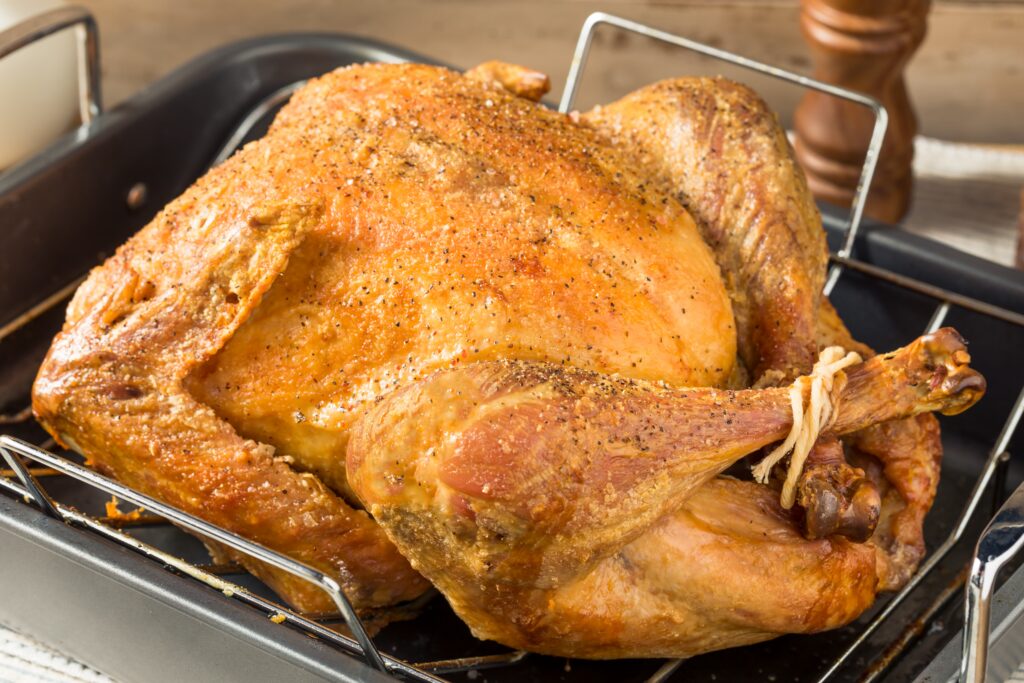

Dry-brining takes less space, less planning, and no bucket; and it gives you juicier meat and crispier skin. Here’s how to do it, plus six tips for your Thanksgiving turkey.
I hear the same complaints every Thanksgiving. “My turkey is always so dry” or “turkey doesn’t even taste like anything” or “turkey is only good when it’s drowned in gravy.” Okay, that last one is partially true, but the point stands: too many people accept mediocre turkey purely because they view it as an obligation. They’d rather focus more time on the sides.
But I’m here to tell you that you don’t need to chain yourself to dry, flavorless, miserable turkey. In fact, roasting a delicious bird with shatteringly crisp skin and meat that retains its moisture is quite easy.
Let me stop you right there. I am not going to suggest a brine. Not a traditional one, anyway. Brining does produce a moist bird, but it’s messy, you need a big enough space in your fridge to fit a bucket of liquid, and the added water can inhibit crispy skin if you don’t take the extra time to dry out the surface.
For years, professional chefs on TV suggested brining, forgetting that the average home cook doesn’t have a walk-in fridge or a commercial kitchen to operate out of. I still remember Thanksgiving 2009 when we tried the brine for the first time. It began with a melody of curse words when my father realized how much room we actually needed. That was followed by a splash of raw turkey juice all over the floor when we removed it to roast. And the result was a bird that was… just fine. We all looked around at each other: “Was this really worth it?”
So, what’s the solution? It’s called the dry-brine method. And it’s the only way I do Thanksgiving turkey.
What Is Dry-Brining?
Dry-brining is the act of seasoning raw meat with salt for an extended period of time prior to cooking. As the “dry” part suggests, there’s no liquid involved. The salt works through a process known as osmosis to draw out moisture from the meat. Yes, it pulls moisture out, but it results in juicier meat. How?
When you season a piece of meat—in this case a whole turkey—with salt, it brings beads of moisture to the surface, which in turn dissolve the salt to create a concentrated brine, according to Serious Eats. Once the salt is dissolved, the meat reabsorbs the moisture over time, both flavoring it throughout and producing a juicier interior.
Why Dry-Brine Your Turkey?
I personally use this method for everything from steaks and pork chops to roast chicken and even fish. But it’s turkey specifically where I really think the method shines.
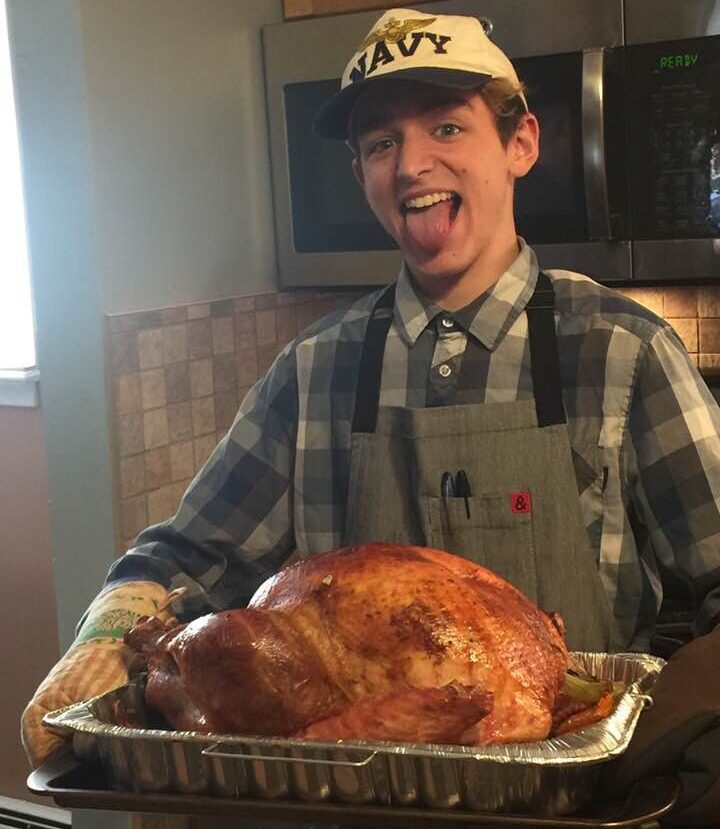
As I hinted at before, dry-and-bland turkey is the most common complaint I hear about the Thanksgiving spread—and it’s one I heard at my own table for most of my life before I switched to dry-brining some 10 years ago (sorry, Mom, but I just had to take over the turkey duty).
Then there’s the ease of it. Dry-brining is simply much easier than the classic wet brine for the average home cook to tackle. A traditional brine also relies on added water—which is great for the moisture of it all—but it falls short on flavor when compared to a dry brine, which uses the meat’s natural juices to produce a more concentrated flavor. It requires less space and less planning, it’s more flavorful, and it’s infinitely less messy.
But for me, one benefit is the biggest selling point of all: the crispy skin. Because dry-brining draws out liquid and then absorbs it back into the meat, the skin dries out over time. And we need that skin bone-dry because moisture is the enemy of browning.
I still remember a chef I had in culinary school yelling at me, “You can’t brown water!” when I placed a wet steak into a hot pan, only for it to steam into a miserable gray blob that I’d feel bad feeding even to my dog. And he was right; you can’t brown water. It’s scientifically impossible. So, if you want crispy, golden-brown turkey skin—which is arguably the best part of the bird—then you need really dry skin. That’s where the humble dry-brine stands out.
To recap: moist meat, intense flavor, crispy skin, no mess. Do you really need me to keep selling you?
How to Dry-Brine a Turkey
Okay, so you’re officially sold on dry-brining. Here’s how it’s done.
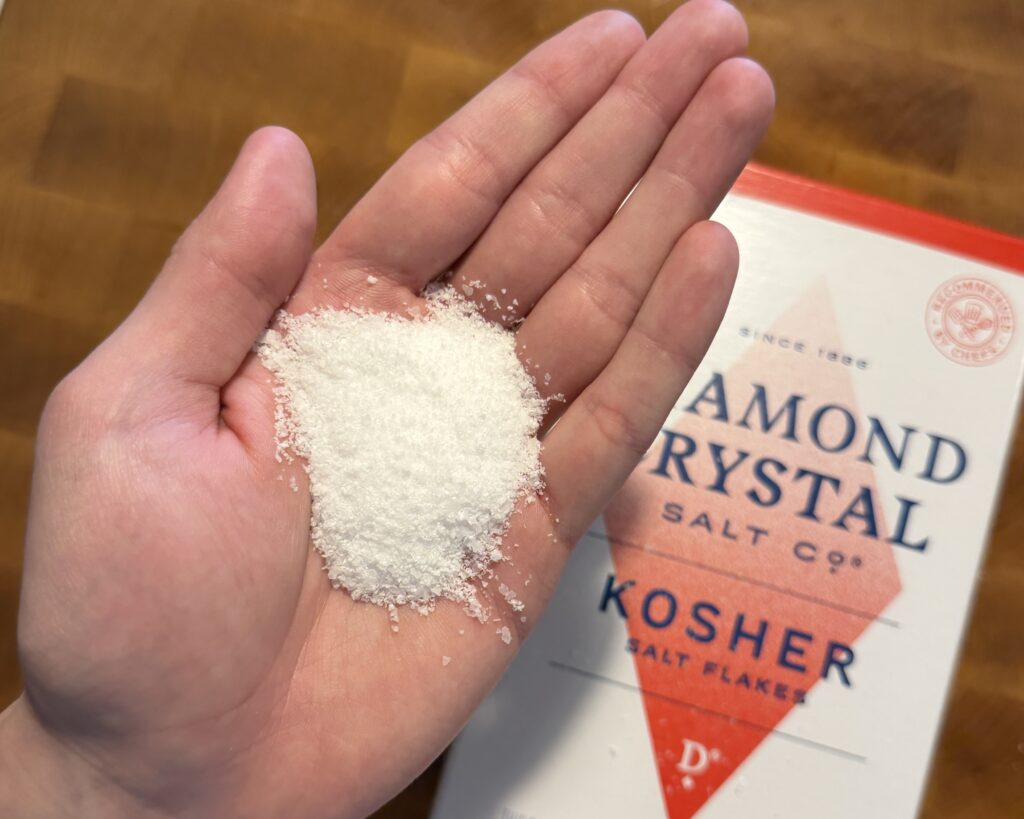
You need exactly three things to get started: a turkey, kosher salt, and time. Two days before Thanksgiving, take your turkey out of its packaging and pat it dry with paper towels. Then, season liberally all over, including the cavity. Place it on a sheet tray lined with a rack and leave it uncovered in the fridge until you’re ready to roast. In a rush, you can do this the night before, so long as you leave at least 12 hours for osmosis to work its magic, but I vastly prefer a two-day timeline.
If you’re skeeved out by the idea of an uncovered turkey chilling in the fridge, then you can loosely cover it in plastic or cheesecloth, but I would advise against wrapping it too tightly—we want that dry skin. The amount of salt depends on the size of your bird—around 1 tablespoon per 4 pounds is a good guideline.
Once the brining period is complete, you’re ready for the oven. You can add other seasonings at this point. If you’re following a recipe, just be sure to leave out any salt it calls for—the bird is already plenty salty.
Additional Turkey Tips
Besides the dry brine itself, which I will almost certainly never stray from, I do change up other parts of the turkey prep each year. Here are some of the tips I’ve come up with over a decade of Thanksgiving dinners.
1. Spatchcock Your Turkey
Most years, I spatchcock the bird before I even pick up the salt. Spatchcocking is a process that involves cutting the backbone out, breaking the breastbone, and roasting the turkey flat, skin-side up. Check out this video for a more in-depth tutorial. I really can’t recommend this enough—it cooks quicker, you get to use the backbone for stock, and it gets crispy all around, since none of the skin is hiding underneath it. The breast and leg meat also cook at a more even rate, mitigating the usual horror of perfectly cooked dark meat and bone-dry white meat. Or, even worse, perfectly cooked white meat and undercooked dark meat. Trust me, no amount of gravy can save an undercooked turkey leg.
You can do this yourself with strong kitchen shears or a hefty knife that can stand up to the bones. If you’re buying your bird from a butcher or poultry farm, most will be happy to do this for you.
That said, if you really can’t be bothered to spatchcock your turkey, I get it. Last year, due to some grocery mismanagement on my part, I had to roast the bird whole. Guess what? It was stellar. The breast was done well before the legs, but it still came out juicy. That’s how forgiving a dry brine is.
2. Add to Your Brine
Salt is the only ingredient that’s necessary for the dry-brining process to work, but that doesn’t mean you can’t play around with it. Most years, I’ll add lemon zest, chopped rosemary, and fresh-cracked black pepper. Or switch the lemon out for orange and the rosemary for sage. Get creative, just be mindful that herbs can burn in a hot oven, but I don’t personally mind a little char.
Serious Eats notes that you can add two tablespoons of baking powder to the salt to boost the browning effect even further, though I can’t speak to this personally.
3. Oil or Butter? Both
The bird will brown fine without any added fat thanks to the science laid out above, but it’s Thanksgiving—live a little. I like to brush the turkey with a light layer of neutral oil just before it goes in the oven to amplify the browning. During the last 20 minutes, I brush it with melted butter, chopped garlic, and herbs (rosemary, thyme, sage) for a final burst of flavor and color.
4. Buy a Great Turkey
It seems obvious, but the better the turkey, the better it will taste. I usually buy my bird locally at Goffle Road Poultry Farm in Wyckoff, where they raise, slaughter, and butcher amazing turkeys.
There are plenty more local turkey farms no matter where you are in New Jersey. Spring Valley Turkey Farm in Old Bridge, Ashley Farms in Flanders, DiPaola Turkey Farms in Hamilton Township, and Hinck’s Turkey Farm in Manasquan, to name a few.
If you can’t get it from a farm, try your local butcher. I’ve even ordered through Whole Foods—my store carries some great heirloom varieties.
5. Defrost Your Bird
If you can’t get your hands on a fresh bird, there’s nothing wrong with buying a frozen one, but you have to defrost it. Turkeys are large, and they need time to fully thaw. We’ve all experienced some version of panic on Thanksgiving morning when you reach inside the bird only to find that it’s still partially frozen. That’s because putting it in the fridge overnight—or even two nights prior—isn’t going to cut it.
Remove it from the freezer and set it in the fridge for at least three days prior to Thanksgiving. A larger bird might need even longer. If your bird is still partially frozen when it’s time to begin the dry-brining process, that’s okay too. You can season the bird as explained above and continue thawing it in the fridge while it dry-brines.
6. Patience Is Key
Impatience is your enemy on Thanksgiving, and there are two areas of turkey cookery where I see it the most.
First, you can’t just take the turkey out of the fridge and throw it right into the oven. Just like defrosting, it needs time. Leave your turkey at room temperature for at least an hour—but really, it should be closer to two, especially if it’s on the larger side. There is no danger in doing this, and letting the meat come closer to room temperature will allow it to cook more evenly. Think: if the whole bird is fridge-temperature when you chuck it into a scorching-hot oven, the outer layer will begin to cook while the deeper meat is still chilling around 40 degrees.
Patience matters again once the bird is out of the oven. Listen to me when I say this: you need to rest your meat. If you cut into it right away, all of the juice you worked so hard to retain will leach out onto the cutting board. Resting keeps the moisture in the turkey, and it makes carving much easier when you aren’t burning your fingers on scalding meat.
Resting also lets the internal temperature rise through a process called carryover cooking. The hotter surface equalizes with the cooler meat further down while it sits. If your target is 165°F in the deepest part of the breast, pull the bird at 155°F and let it finish while it rests—a piece of meat this size holds enough heat to climb more than 10 degrees higher.
Rest it 45 minutes to 1 hour before you even think of taking a knife to it. “But won’t it be cold?” No. Remember how long it took to defrost and come up to temperature? It’s a huge bird, and it clings to its heat just as stubbornly. Plus, it gives you time to get all of the sides together and your gravy made.
Never Eat Dry Turkey Again
Thanksgiving turkeys tend to fail in two ways. Some are flavorless. Many are dry. Millions of households in America serve a version that manages to do both. But there’s a foolproof fix that requires nothing more than salt and time.
If you take one thing from all of this, make it the dry brine. Do that, and you’ll never have to drown your turkey in gravy just to make it edible ever again. Okay, a little gravy never hurt.

Peter Candia is the Food + Drink Editor at New Jersey Digest. A graduate of The Culinary Institute of America, Peter found a passion for writing midway through school and never looked back. He is a former line cook, server and bartender at top-rated restaurants in the tri-state area. In addition to food, Peter enjoys politics, music, sports and anything New Jersey.
