

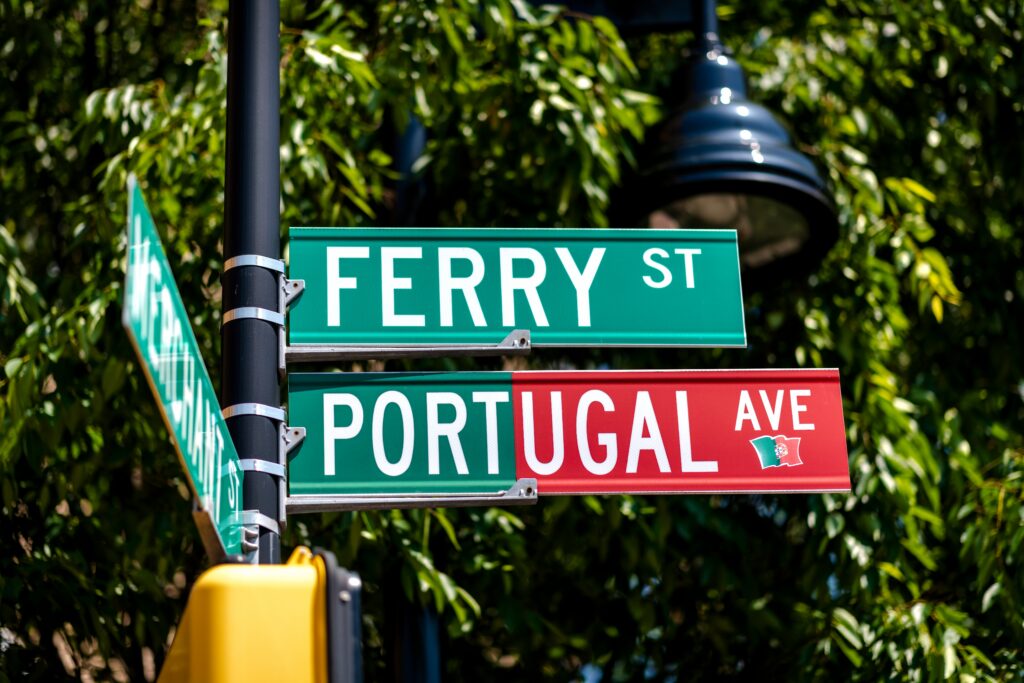

During the first half of the 20th century, millions of Portuguese immigrants came to the Northeast U.S., with large concentrations of the diaspora settling down in Newark, NJ—specifically in an area of the city known as the Ironbound. So much so that the flourishing neighborhood earned the nickname Little Portugal, a moniker it still holds today as the beating heart of Portuguese culture in America.
And while the Portuguese community isn’t as strong as it once was, pockets of the city still boom with the language, art, sports, and, of course, the food. Some of the best Portuguese food in the country can be found in Newark, and though it might not be the first cuisine that people think of when pondering the fare of New Jersey, Portuguese flavors are equally as important to the fabric of NJ’s rich—and delicious—history.
So, how did Portuguese food become such an important part of the Newark community? And why, after all these years, is it still the place to go for the best Portuguese bites in the state?
A Brief History of Portuguese Immigration to America
The dawn of the 20th Century brought with it an influx of immigration to America. While Germans, Italians, and Poles made up the vast majority of Newark settlers near the end of the 1800s, and into the turn of the century, Portuguese immigrants owned mid 1900s. The Ironbound—a working-class neighborhood which sits just north of the airport, hugged by the Passaic River—was the primary destination for those from Portugal seeking a better life in America.
By 1921, bits of Little Portugal started to show throuhg, but it wasn’t until the 1950s that the neighborhood as we know it began to take shape. Thousands of Portuguese compatriots lived among one another, speaking Portuguese, drinking Portuguese wine, and, perhaps most importantly, eating Portuguese food. That same year, the formation of a legitimate Portuguese community created a demand for more cultural centers, and Sport Club Portuguese opened its doors—the first of 20-plus Portuguese social clubs that would place roots in the Ironbound.
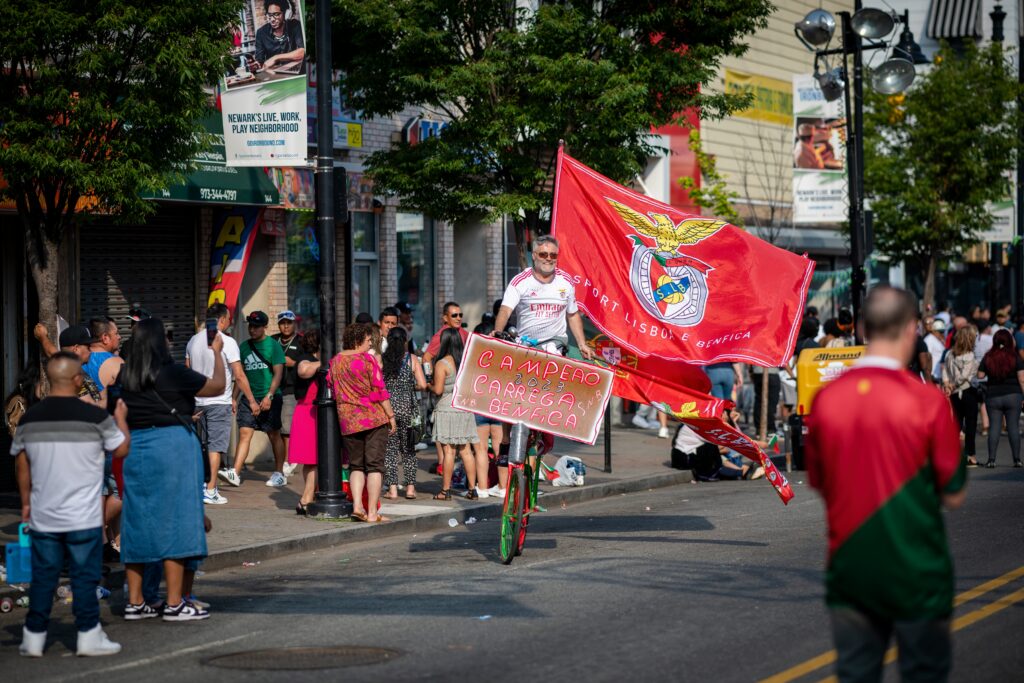
Ferry Street in particular grew into a hub for the culture—a commercial strip in the city that is populated up and down by Portuguese markets, restaurants, clubs, fishmongers, and sports stores. Today, Spanish and Latin Americans also populate the area.
It’s a true walkable community, where residents sip coffee at bakeries in the morning, then walk over to a Portuguese-flag-donning bar to watch soccer and drink beer with their fellow countrymen by afternoon. By all means, it is a slice of European life in Newark. Even today, when you’re in these bars and cafes, it feels more like Portugal than it does the USA. It’s a snapshot of a niche culture that’s only possible in Newark.
Markets selling fresh sardines and salted cod exist next to sports stores donning Ronaldo jerseys hung in the windows. Down the street, you might find barrels of olives in brine and butcher shops with cured hams dangling from the ceiling.
During its rise in the mid-century, Ferry Street attracted Portuguese people from across the world. Many came directly to the city from Portugal, but others emigrated to Newark after stints in Brazil and New England—other popular destinations for the Portuguese diaspora. By the late 1950s, Newark was the place to be for Portuguese-speaking Americans who were looking to hold on tightly to their national pride. Those looking for an opportunity to achieve the American dream without abandoning where they came from. If you ask me, that’s America at its absolute greatest.
It’s not just those from Portugal who were attracted to the area. In the ensuing decades, thousands came to Newark from across the Portuguese-speaking world—colloquially known as the Lusophone World. Immigrants arrived in the neighborhood from Brazil, Angola, and Cape Verde, to name a few.
It’s almost as if the long history of Portuguese colonization can be studied, in brief, all within Newark’s borders.
And the greatest way to study it is through its foods.
The Ironbound: Eating Through Ferry Street
The best way to understand the Ironbound is to walk it.
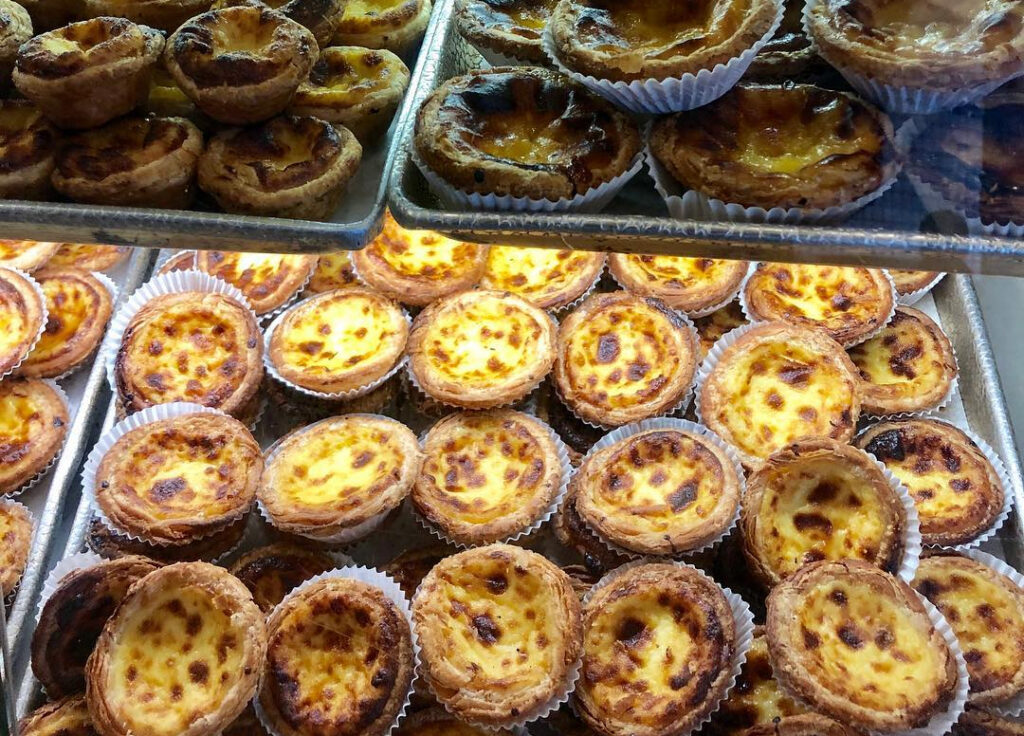
You might start your morning at the legendary Texeira’s Bakery, where the smell of fresh Portuguese rolls catches you halfway down the block. Get the bifana—thin-sliced marinated pork, stuffed into a still-warm roll. For sweets, you can’t go wrong with a pastel de nata with its char-flecked custardy center and the flaky pastry that encases it.
A bica, the Portuguese answer to espresso, provides your caffeine fix. You’re going to need that. There’s lots of eating in front of us.
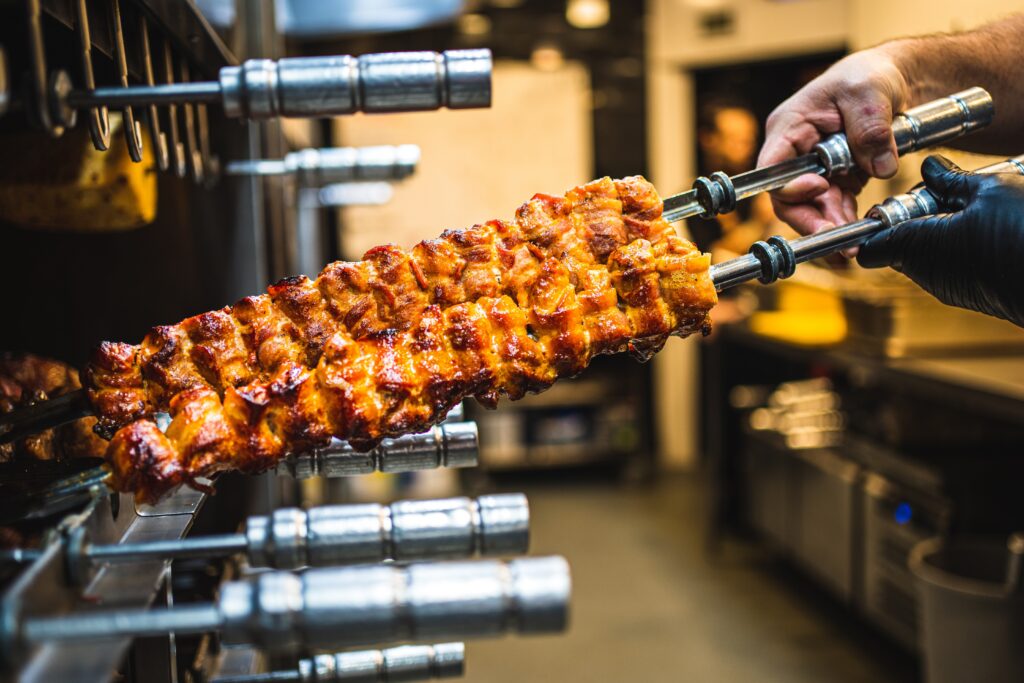
By midday, the smell of charcoal has taken over the neighborhood, drifting out from local gems like Ferry Street Barbecue and Picnic BBQ. And the Ironbound takes its barbecue seriously—every local has a preferred spot.
No matter where you choose, you can expect to find whole chickens coming off the grill, char-crisped and smoky—pork spareribs donning aromas all the same. And the underrated hero of every Portuguese barbecue spot: the fries. Golden-brown and ready to soak up whatever juices remain on your plate.
For proper Portuguese dining, Portugalia Bar & Restaurant presents a good option. The menu changes daily, offering traditional plates like Gambas a Mocambique (Mozambique-style prawns), charcoal-kissed short ribs, pork chops in garlic sauce, and simply seasoned grilled fish. There’s usually a small crowd at the bar—drinking beer, watching soccer, and conversing in Portuguese.
For dinner, we’re switching continents. It’s time for what is perhaps the Ironbound’s most famous draw: the rodizio. At Boi Na Brasa, like all rodizios, the meat keeps coming until you tell them to stop. Alongside it is the deliciously rich feijoada—a slow-cooked black bean and pork stew that’s the national dish of Brazil.
Fernandes Steak House II offers its own version of the same idea—meat presented sizzling on hot clay roof tiles, along with plenty of butter-drenched seafood, piles of rice, and Portuguese sausage with black olives.
A nightcap is non-negotiable. Just a block or so off Ferry Street, try Pour Abbey’s for a cold Super Bock on draft—the official beer of Portugal—and maybe a plate of clams in garlic sauce if you’re not already bursting at the seams. You know… when in Rome.
When the night is over, you’ve eaten your way through Portugal, Brazil, and bits and pieces of the rest of the Lusophone world—all without leaving a six-block stretch in Newark, New Jersey. It’s perhaps one of the greatest cultural snapshots you’ll find, not just anywhere in New Jersey, but in the country.
The Portuguese community in Newark might not be as large as it once was, but those who remain are keeping the tradition alive. For an outsider like me, it presents a completely different world than the one I live in just a couple of miles up the road. It’s a reminder of the melting pot that America, and New Jersey, truly is.
Neighborhoods like the Ironbound remind me that I’m exactly where I need to be. I wouldn’t trade my state for the world.

Peter Candia is the Food + Drink Editor at New Jersey Digest. A graduate of The Culinary Institute of America, Peter found a passion for writing midway through school and never looked back. He is a former line cook, server and bartender at top-rated restaurants in the tri-state area. In addition to food, Peter enjoys politics, music, sports and anything New Jersey.
