

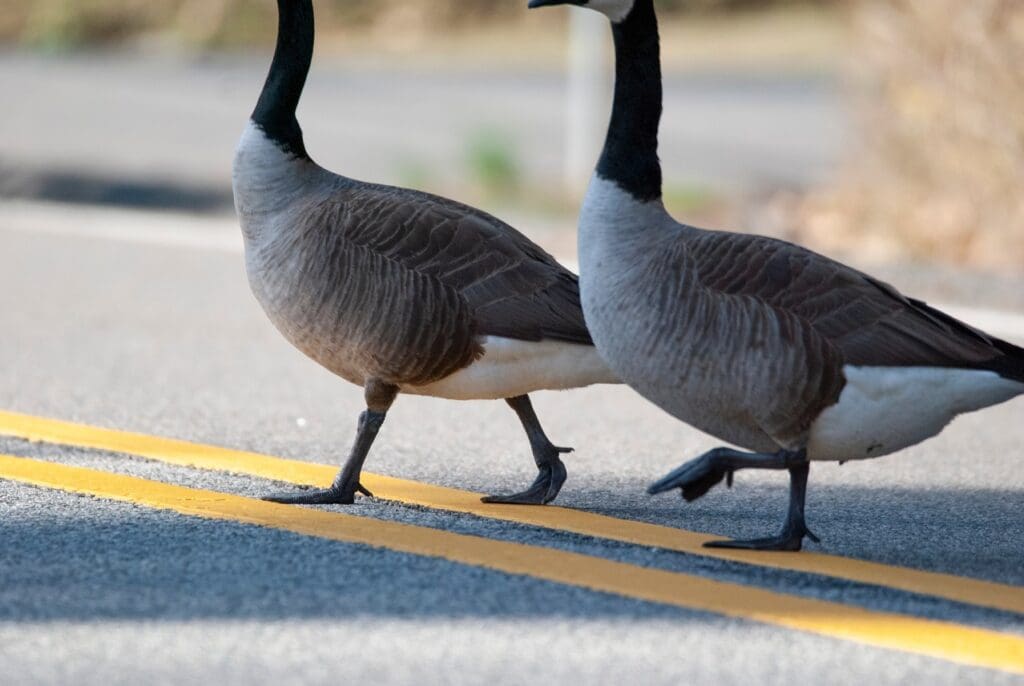

New Jersey wildlife officials are looking into a suspected outbreak of bird flu after large numbers of dead and dying geese were discovered across the state in parks, lakes, and reservoirs.
Large quantities of sick and dying geese have been reported in Monmouth, Somerset, Burlington, and Gloucester counties, leading to park closures and increased oversight. While no single cause has been officially confirmed, officials say Highly Pathogenic Avian Influenza, AKA bird flu, is the leading culprit.
In Gloucester County, two public parks in Pitman—Betty Park and Alcyon Park—were closed after dozens of dead geese were found near the bed of Alcyon Lake. Residents who live nearby reported sick birds wandering into backyards, appearing disoriented and weak before ultimately dying. County health officials suspect the virus may be actively circulating among local wildlife.
And that’s not the only place. Similar instances have occurred elsewhere.
In Somerset County, dead geese were found near the Environmental Education Center in Basking Ridge and Duke Island Park in Bridgewater. Burlington County officials also reported multiple sick or dead birds in nearby Hainesport.
Meanwhile, Monmouth County has seen some of the most visible impacts.
Drone footage obtained by News 12 shows groups of dead and dying geese along the Swimming River Reservoir. Wildlife observers say predators such as bald eagles can become infected after preying on contaminated birds, which will lead to additional spread and increased deaths.
Highly Pathogenic Avian Influenza is a contagious respiratory disease caused by Influenza A viruses. It spreads naturally among wild birds, especially waterfowl like ducks and geese. These birds often carry the virus without any symptoms. However, it can be deadly once it spreads to other wildlife and domesticated poultry such as chicken.
There are no reports of any poultry spread as of this time.
Officials assure that human risk remains low. Public water supplies are not considered at risk, and transmission to people, though possible, is rare. Now, the battle shifts to limiting the spread.
The New Jersey Department of Environmental Protection and local health agencies are working together to investigate the deaths, assess the scale of the outbreak, and remove affected animals safely and quickly.
Residents are urged to avoid contact with sick or dead birds and to keep pets away from affected areas. Anyone who encounters a dead, disoreiented, or visibly ill bird should report it to the state’s wildlife hotline at 877-WARN-DEP.
The investigation remains ongoing as officials work to officially determine the cause of death and to prevent further spread amongst New Jersey wildlife.

The New Jersey Digest is a new jersey magazine that has chronicled daily life in the Garden State for over 10 years.