

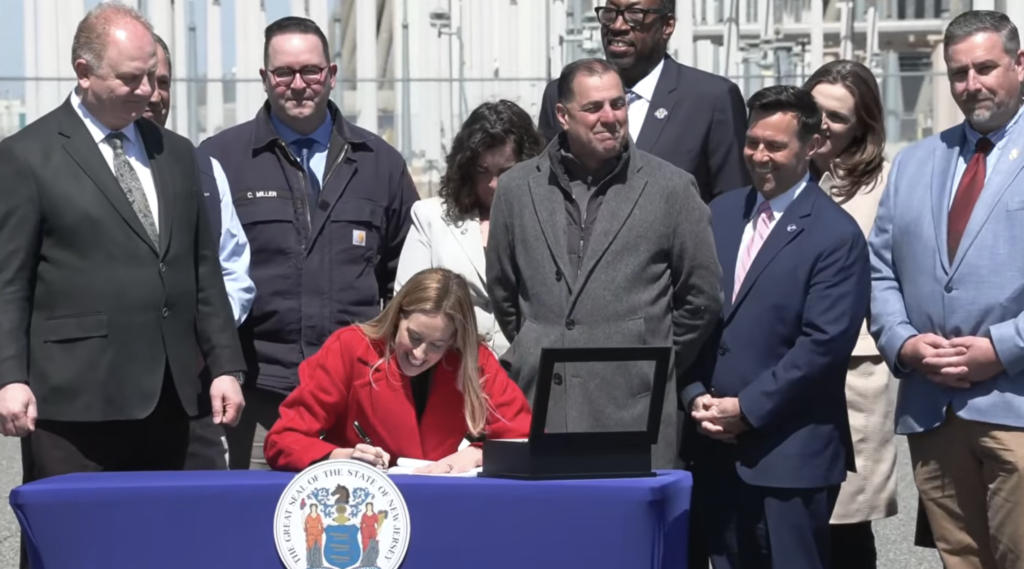

For four decades, an outdated law quietly blocked the construction of nuclear power plants in New Jersey. On Wednesday, with an energy crisis looming, Governor Mikie Sherrill signed it away.
Sherrill signed legislation at the Salem Nuclear Power Plant, removing a de facto moratorium on new nuclear construction in the state—a barrier that had been in place since the 1970s.
The law required new nuclear facilities to provide an approved method of radioactive waste disposal before receiving build permits. But there was a catch: no such federally approved method exists in the United States. The requirement made new nuclear development legally impossible within New Jersey.
The new law replaces that standard with a more practical one. It allows permits to be approved based on safe, federally compliant waste storage methods instead. With that hurdle cleared, New Jersey is now open to new nuclear development for the first time in nearly half a century.
What It Means For Your Bill
“New Jersey currently imports nearly half of its electricity, leaving our residents and businesses increasingly exposed to regional supply constraints, volatile costs, and the impacts of a rapidly changing grid,” PSEG said in a statement celebrating the legislation. “With energy demand rising and supply tightening, expanding instate nuclear generation is essential to maintaining reliability, predictability and our long-term energy independence.”
New Jersey’s existing nuclear plants—Salem and Hope Creek in Salem County—already account for roughly 40% of in-state electricity generation and supply about 80% of the state’s clean, pollution-free power. Existing nuclear plants save New Jersey consumers more than $400 million annually compared to alternative energy sources, according to a 2020 analysis by the Brattle Group.
What Comes Next
Sherrill also launched a new Nuclear Task Force to expedite the pursuit of new nuclear energy. The task force will focus on financing, supply chains, workforce development, regulatory frameworks, and public trust.
PSEG—which operates New Jersey’s existing nuclear plants—has expressed willingness to enable new nuclear development at its existing Salem County location, working with partners to leverage its Early Site Permit and operational expertise. However, the company stopped short of committing its own capital to finance the projects.
New nuclear plants take roughly a decade to construct, costing billions of dollars. The impact on your electricity bill won’t be immediate. But for a state that has watched its electric costs climb for years, Wednesday’s signing was a meaningful first step toward a long-term fix.
The moratorium is gone. The door for new nuclear energy is open.

The New Jersey Digest is a new jersey magazine that has chronicled daily life in the Garden State for over 10 years.