

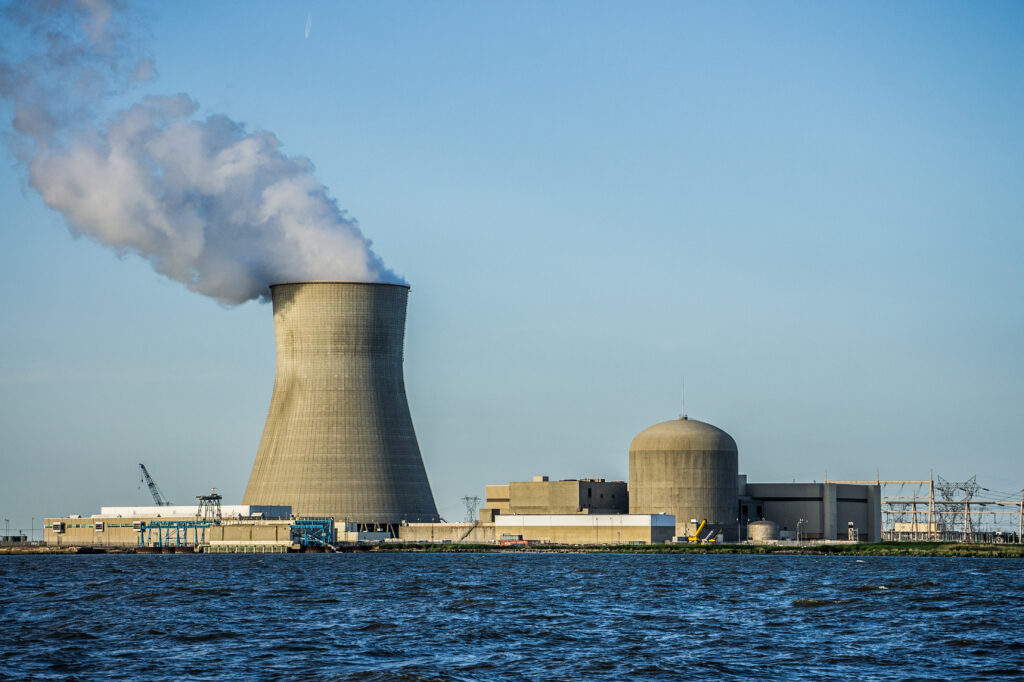

In April, New Jersey removed the legal barrier that had blocked new nuclear construction for 40 years. On Monday, Governor Mikie Sherrill signed the follow-up: a law that actually sets the wheels in motion to build new nuclear infrastructure.
It comes at a time when energy costs are soaring, leaving state leaders to look at all options available to bring them down.
Nuclear Is Back On the Table
Sherrill signed the Power New Jersey Act, which directs the state’s Board of Public Utilities to begin soliciting proposals for new nuclear generation, with a target of bringing 1,100 megawatts of new power to the grid. The bill cleared both legislative chambers unanimously last month with bipartisan support.
“This is how we build the future for our kids here in the state,” Sherrill said at the signing. “This is how we don’t kick the can down the road and we make sure in 10 years we’re not still facing a power generation problem or an affordability crisis.” Read Governor Sherrill’s full statement here.
Land adjacent to the state’s existing Salem Nuclear Power Plant and Hope Creek Nuclear Generating Station—the same facility where Sherrill signed April’s moratorium repeal—has long been designated by the U.S. Nuclear Regulatory Commission as a potential site for an additional reactor, according to NJBIA. New Jersey is one of just six states with a site pre-approved for new nuclear development.
Building a new reactor is neither quick nor cheap. Estimates put the cost at roughly $24 billion and at least 10 years of construction. Federal financing programs may cover up to 80% of that cost. The BPU is expected to issue its first request for developer interest within 180 days.
Is It a Subsidy?
Here’s where things get contentious. The law requires the state’s other electricity generators to purchase “reliable capacity certificates” from new nuclear plants once they come online—a mechanism critics call a subsidy that could raise bills for everyone else.
Sherrill rejects that framing. “To be clear, this isn’t a subsidy,” she said. “We’re setting up a program to purchase nuclear energy at a fair price, and we’re making sure we do it right by our ratepayers every step of the way.”
Proponents point to safeguards written into the law: ratepayers won’t pay anything until a project is actually built and generating power, and they won’t be on the hook for construction cost overruns—a direct response to the Vogtle Electric Generating Plant in Georgia, which finished seven years late and $18 billion over budget.
Not everyone is convinced the safeguards go far enough. According to New Jersey Monitor, Chris Widelo, state director for AARP New Jersey, warned that “the legislation authorizes a process that would place ratepayers on the hook for costs extending up to 40 years, yet there is still no clear estimate of what those costs could be.”
Rate Counsel Brian Lipman, whose office represents ratepayers before the BPU, raised a different concern: locking in decades of demand for a data center boom that may not last, suggesting it could be a bubble. His office has previously estimated the law’s subsidies could add between $7.80 and $22.43 to the average monthly electric bill.
Environmental groups opposed the bill on different grounds entirely, citing long-term nuclear waste storage costs, arguing the state should instead prioritize battery storage, solar, and wind. New Jersey expanded incentives for battery storage earlier this year.
Business groups, meanwhile, praised the move. NJBIA President Michele Siekerka called nuclear power “a critical part of an all-of-the-above approach” to New Jersey’s energy future.
What Comes Next
The law includes several built-in checkpoints: at least two public comment periods, a public hearing in any proposed host municipality, and a requirement that the BPU and New Jersey Economic Development Authority factor in independent assessments from the Division of Rate Counsel throughout the process.
Monday’s signing follows a string of recent moves aimed at softening the blow of rising electric bills, including a new rate-setting structure specifically for data centers, reduced utility profit margins, and a $25 credit issued to every residential electric customer in the state, with an additional $150 for those enrolled in certain assistance programs.
Whether new nuclear power ultimately lowers your bill or raises it depends on who you ask — and won’t be clear for years. But after decades of being legally impossible, it’s now officially underway.

The New Jersey Digest is a new jersey magazine that has chronicled daily life in the Garden State for over 10 years.