

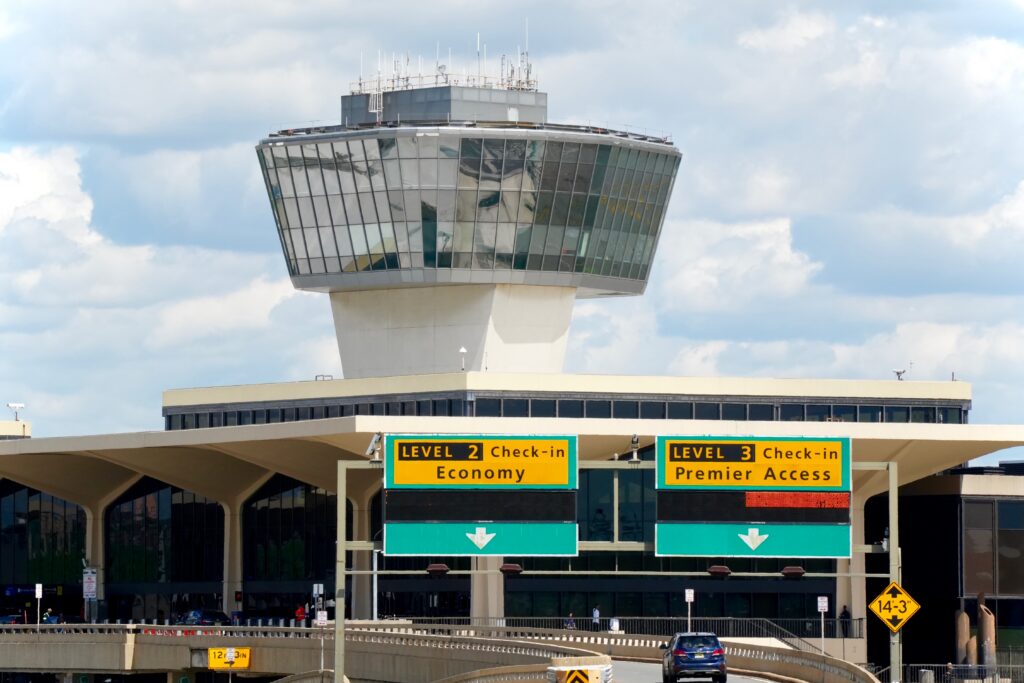

Newark Liberty International Airport’s air traffic controllers went dark for 90 seconds in April 2025—no radar, no radio contact, with planes still in the air. The likely cause: a missing dedicated data line between a New York radar facility and the Philadelphia TRACON center now handling Newark’s airspace, according to NJ.com.
That terrifying blackout was symptomatic of a much larger problem: a nationwide shortage of certified air traffic controllers that forced staff transfers from an overwhelmed New York facility to Philadelphia in the first place—a move that ended up driving even more controllers to quit.
New Jersey is now trying to fix the pipeline at its source. The state Office of the Secretary of Higher Education announced $3.5 million in grants to three public colleges under the New Jersey Air Traffic-Collegiate Training Initiative (NJ AT-CTI), a program designed to grow the state’s supply of aviation professionals, according to New Jersey Monitor.
Kean University and Atlantic Cape Community College each received $1.5 million, while Warren County Community College received $500,000. The funding, drawn from former Gov. Phil Murphy’s final state budget, supports schools that offer FAA-aligned curriculum under the federal AT-CTI program—which allows graduates to skip some standard FAA Academy requirements and get into on-the-job training faster.
Here’s how each school plans to use the money:
Kean University will launch a new FAA-aligned Bachelor of Science in Aviation Management, expand its drone minor into a full Drone Operations major, and open a Center for the Study of Unidentified Aerial Phenomena (UAP). The university will also build a UAP-Drone Research Center at its Skylands campus and develop a pre-college aviation and drone pipeline program in partnership with K-12 schools.
Atlantic Cape Community College will upgrade its current FAA training partnership to Enhanced AT-CTI status, adding advanced simulation training and expanded curriculum and staffing.
Warren County Community College will build out an air traffic control certificate program designed to feed directly into four-year FAA-certified programs like Embry-Riddle Aeronautical University, along with a new airport management and operations course.
The stakes are significant. Civil aviation supports 173,000 jobs in New Jersey and generates an estimated $37 billion in economic output statewide, according to FAA data. Nationally, the controller shortage sits at roughly 3,000 positions, a gap the Trump administration vowed to “supercharge” hiring to close after a deadly Washington, D.C. air crash last year, according to New Jersey Monitor. Despite a surge in applicants, the shortage persists due to increased flight volume, high attrition, and lengthy training requirements, the U.S. Government Accountability Office found in January.
Separately, the state’s Higher Education Student Assistance Authority offers up to $100,000 in student loan redemption for air traffic controllers working eligible FAA sites in the region.

The New Jersey Digest is a new jersey magazine that has chronicled daily life in the Garden State for over 10 years.