

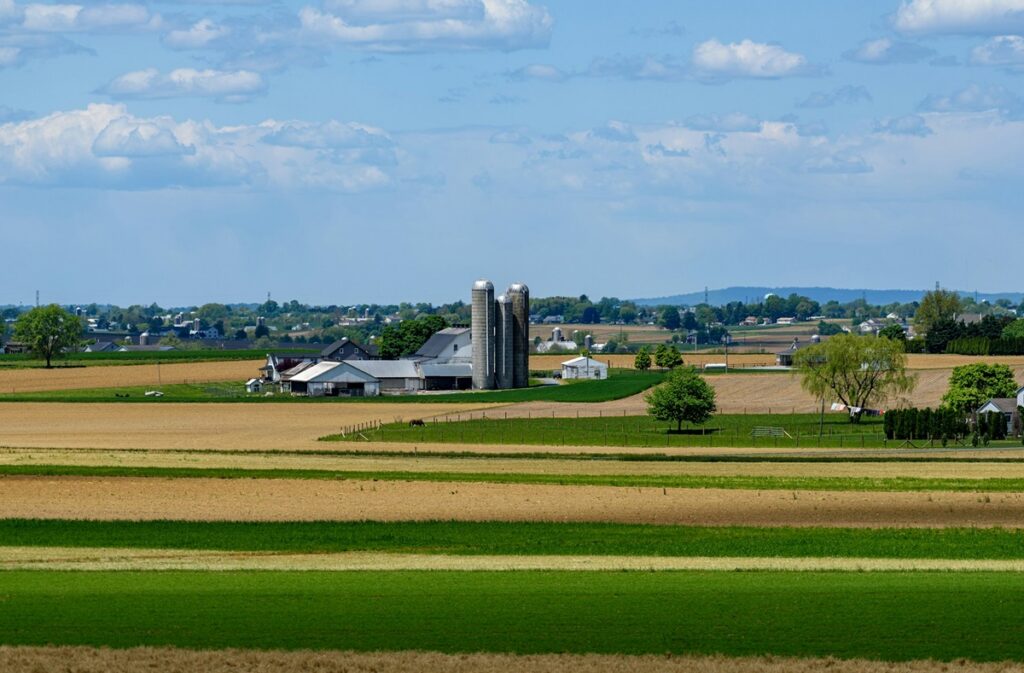

Texas farmers living next to these facilities describe dead beehives and cattle that won’t graze. Vineland, NJ is getting one a few hundred feet from houses.
Drive out past the produce fields in Cumberland County and you can hear it before you see it. Right now it is construction. Metal on metal, a high whine that carries further than you would expect across flat farmland, a few hundred feet from houses where people have lived for thirty years.
When the thing is finished, the sound changes. It stops being temporary.
DataOne is building a 350-megawatt, 2.6 million-square-foot hyperscale AI facility in Vineland for Nebius Group, part of a $17 billion arrangement with Microsoft. It is one of the largest industrial projects South Jersey has seen in a generation. It is going up over the Kirkwood-Cohansey Aquifer, inside a designated Wellhead Protection Area, in the state with more people per square mile than anywhere else in America.
Governor Mikie Sherrill has a plan for this. More than 60 environmental and community groups asked her for something else. Meanwhile, the concrete is already being poured.
What Happened in Texas
Rural Texas absorbed a wave of data center construction with minimal oversight, and the farmers who live next to those facilities have been describing the same thing for a few years now. Not the noise you notice in a parking lot. The low end. Cooling systems and turbines running continuously in the range of 65 to 90 decibels, which sounds survivable on paper and behaves differently when it never stops and when the frequencies sit low enough to travel through soil and structure instead of just air.
Farmers around these sites report cattle losing significant body weight, in some accounts up to 30 percent. Stillborn calves. Cows that will not walk out to pasture on the side of the property nearest the facility and cannot be made to. These are producer accounts rather than published studies, and they should be read that way, but they are consistent across operations that have no reason to coordinate.

The pollinator reports are the ones that should worry anybody in South Jersey. Growers near these facilities have said bee activity dropped to nothing after construction. Not thinned out. Gone.
Texas has also lost roughly 2 million acres of farmland and about 2,000 farms over the last five years, driven by consolidation, drought, and industrial competition for water and power. Data centers are one input in that, not the whole story. But water and electricity are finite in a way that press releases tend to skip.
Here is the part that matters for us. Texas had room. Thousands of open acres between a facility and the nearest bedroom window. Vineland has hundreds of feet.
Vineland Is Not Rural Texas
New Jersey does not have buffer land. That is the entire problem in one sentence.
The Vineland site sits in a working agricultural area with residential neighborhoods threaded through it, which is what South Jersey looks like almost everywhere. There is no version of this where the facility goes somewhere it will not be heard. The land to absorb it does not exist in this state.
More than 100 residents have turned out to protest, and the concerns they are raising are specific rather than vague. Property values. Noise that runs 24 hours with no off season. The wellhead protection zone. People who bought houses on quiet roads in Cumberland County are being told the road is about to host continuous industrial operation, and the answer they are getting is a jobs number.
Where the Power Comes From
A 350-megawatt load is not something you casually plug into the grid. So the facility largely will not. Instead it generates its own power on site, and the plan for how has already changed once.
The original filings and early community meetings described natural gas reciprocating engines, straight combustion, fed by a pipeline connection, covering roughly 85 percent of the facility’s power. Vineland residents pushed back hard on exactly that, on the emissions and the noise. DataOne and Nebius responded by changing the approach. They brought in Bloom Energy to deploy modular solid oxide fuel cells instead.
That is a meaningful improvement and the community pressure is what produced it. Fuel cells pull electricity out of natural gas through an electrochemical reaction rather than a flame, which means far less nitrogen oxide, sulfur oxide, and particulate matter than engines would have put into the air over those farm fields. They also run quieter. If you live on that road, the pivot bought you something real.
What it did not do, however, is change the fuel.
The facility still runs on natural gas delivered by pipeline. It still emits carbon dioxide, because you cannot extract energy from methane without releasing it. And it still means a 350-megawatt fossil-powered generating operation sitting on top of a shallow aquifer that supplies drinking water to more than a million people.
There is a second thing happening here that has nothing to do with emissions. Self-generation bypasses the grid, which means it bypasses grid rates, ratepayer oversight, and much of the utility regulatory structure that would otherwise apply to a power plant of that size. New Jersey’s entire public conversation about data centers has been framed around electricity prices and strain on the grid. A facility that makes its own power sidesteps that conversation while still consuming the fuel, the pipeline capacity, the land, and the water.
The “Giga” Farm
DataOne’s pitch includes something worth pausing on. The developers have proposed a vertical growing operation on site, a giga-farm, using the facility’s waste heat and CO2 exhaust to raise food for low-income residents.
Taken on its own terms it is clever engineering. Waste heat is real waste, and capturing it beats venting it.
Taken in context it is one of the strangest things I have read in a project filing. The plan is to build an indoor artificial farm running on the byproducts of a gas-fed power operation, on land in the Garden State, while the outdoor farms next door take on the noise, the water risk, and whatever else comes with a neighbor that never shuts off. Food security as an amenity package attached to the thing straining the region that already grows food.
There are also about 200 jobs promised, plus tax revenue for a city that can use it. Vineland is not a wealthy place and that offer means something. It should be weighed honestly. It should also be weighed against a facility that will be operating for decades in a spot where the consequences do not have anywhere to disperse.
Why the Bees Matter Here Specifically
New Jersey’s fruit and vegetable industry runs north of $340 million, and blueberries, peaches, and tomatoes are the backbone of it. Nearly all of that depends on insect pollination. No bees, no crop. There is no substitute input you can buy.
We are also coming off the worst commercial bee die-off in American history. Beekeepers nationally lost around 62 percent of their hives between 2024 and early 2025, roughly 1.7 million colonies, and South Jersey blueberry and cranberry growers already rent hives into a market that gets tighter and more expensive every season.
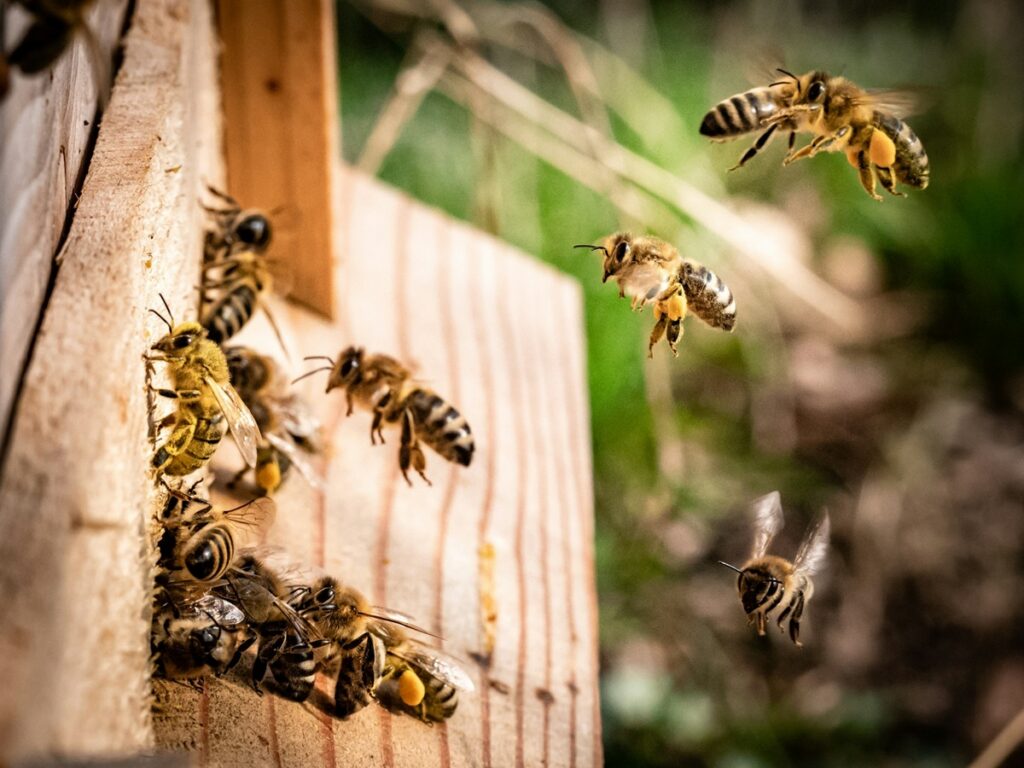
Continuous low-frequency acoustic vibration and localized heat plumes are exactly the kind of stressor nobody has studied properly at this scale. Quieter power generation does not eliminate this, because the cooling systems on a facility this size run constantly and are their own source of low-frequency sound and waste heat regardless of how the electricity gets made. Bees navigate using cues that vibration and thermal gradients can plausibly interfere with. Plausibly is the operative word. There is no long-term longitudinal research on how sustained low-frequency sound or continuous electromagnetic fields affect soil biology, pollinator behavior, or local plant and animal populations, because these facilities have not existed long enough for anyone to have finished the work.
That absence of evidence keeps getting presented as reassurance. It is not reassurance. Nobody has looked.
The Governor’s Four Pillars
Governor Sherrill unveiled what her office calls a first-in-the-nation framework for regulating data centers. It has four parts.
Pay their fair share. Data centers would be required to bring new clean energy online and help fund grid upgrades, so residential ratepayers are not covering the cost of infrastructure built to serve server farms.
Operate transparently. Mandatory reporting on energy and water consumption every six months. Right now nobody outside the company knows how much either.
Invest in communities. Standardized Community Benefits Agreements covering noise, light, and emissions, negotiated rather than promised.
Create good jobs. Prevailing wage requirements and hiring from local trades.
That is a serious framework and better than what most states have, which in many cases is nothing at all. The transparency pillar in particular changes the argument, because you cannot regulate consumption you are not allowed to measure.
Now the tension. More than 60 environmental and community organizations asked for a temporary construction moratorium, a pause to get standards written before more ground gets broken. Sherrill declined and chose regulation instead.
State officials have been candid that they are behind. The phrase being used is playing catch-up, against regional grid operator PJM and against developers moving faster than any rulemaking process can.
Which raises the question the framework does not answer. What does any of it do about Vineland? Rules written in 2026 land on a project that is already permitted and already building. Community Benefits Agreements are strongest as leverage before a shovel goes in the ground.
Though Vineland also makes the opposite case. The fuel cell switch happened because residents showed up and made enough noise about it, with no statewide framework in place at all. That is what leverage looks like when it works, and it suggests the pillars might do real work on projects that come next.
Sherrill has called the current environment the wild west, and she is right. The difficulty is that the condition she is describing has already produced a 350-megawatt fossil-powered facility over an aquifer, and rules applied to construction already underway are not the same instrument as rules applied to construction not yet approved. The state should be honest about which one Vineland is getting.
What Happens to the Water
The Kirkwood-Cohansey is shallow, unusually clean, and supplies drinking water to more than a million people while irrigating a large share of South Jersey’s farmland. Shallow is the word to hold onto. Depth is protection, and this aquifer does not have much of it, which is why the Wellhead Protection Area designation exists.
Industrial water withdrawal and industrial surface runoff are both live risks in that setting. Data centers use water for cooling, and the volumes at hyperscale are substantial. Six-month reporting will tell us how much after the fact. It will not tell us in advance whether the draw is compatible with the farms and the wells pulling from the same source.
What Garden State Means Now
The nickname was never marketing. New Jersey’s identity got built on agriculture and on a particular kind of livable residential density, small towns and farm stands and roads that go quiet after dark, all of it wedged between two of the largest metro areas on the continent. That combination is unusual and it is the thing people mean when they defend this state to outsiders.
AI infrastructure has to go somewhere. That is true and nobody serious disputes it. The buildout is happening at a scale that will reshape parts of the country whether any of us weigh in.
The question is whether the densest state in America is the right place for hyperscale facilities in agricultural corridors above shallow aquifers, and whether we intend to answer that question before or after the results come in.
Texas is running the experiment now, with room to spare and a still-incomplete picture of what it costs. We do not have room to spare. If Vineland turns out to be the preview instead of the exception, we will be learning it from strained wells and from quiet Cumberland County roads that hum at a frequency you feel more than hear.

The New Jersey Digest is a new jersey magazine that has chronicled daily life in the Garden State for over 10 years.