A corporate bankruptcy in California and four days of insane weather in the Garden State produced opposite disasters. The lesson underneath them is the same one.
Del Monte Foods filed for Chapter 11 in the summer of 2025, sitting on $1.2 billion in debt. When the processing plants went dark, the company canceled 20-year contracts with roughly 70 family-owned peach growers in California’s Central Valley. Just like that. Twenty years of handshakes and harvests, gone in a courtroom filing. More than 74,000 tons of clingstone peaches had nowhere to go.
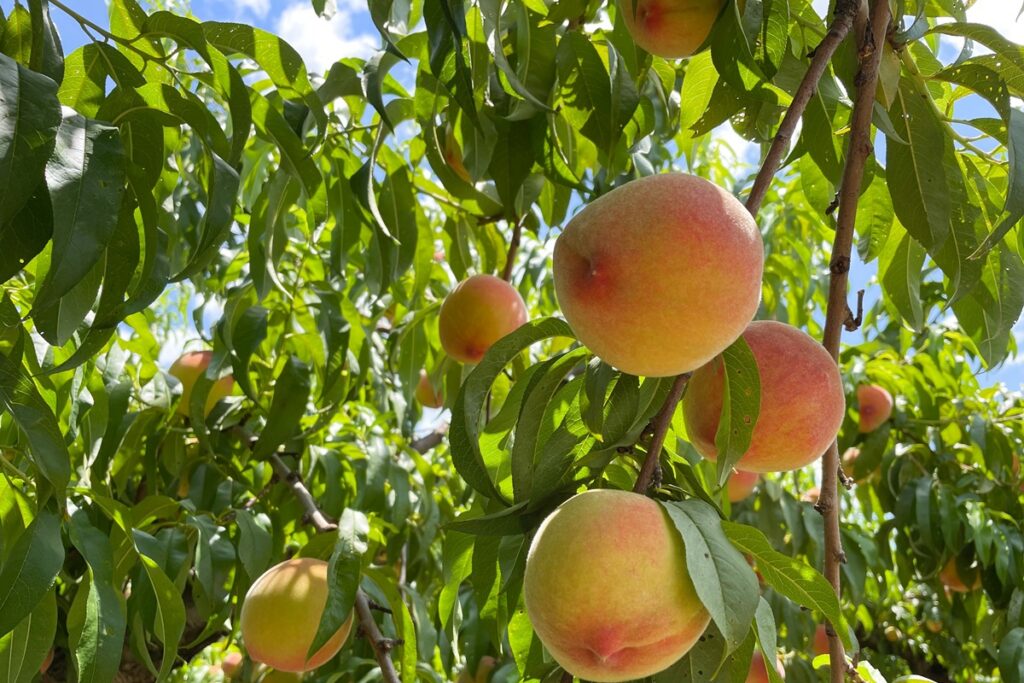
Clingstones aren’t farm stand peaches. Nobody’s eating these over the sink in August. They’re bred for cans, and without a cannery they might as well be decorative. There was no other processor within reach. Growers were looking at maintenance bills and pest problems on orchards that would never pay them another cent.
So the USDA put up $9 million to rip them out. Roughly 420,000 fruit-bearing trees across 3,000 acres, taken down with public money so somebody can eventually do something else with the dirt.
Yeah. It’s as bad as it sounds. It’s also exactly what the system was always going to do.
How One Bankruptcy Wiped Out 70 Farms
About 40 percent of the American food supply gets wasted every year, per USDA and EPA estimates. Everybody assumes that’s leftovers scraped into the garbage. It isn’t. Most of it dies way upstream, in fields and warehouses, before a single person ever gets near it.
Del Monte is the whole problem in one story. When one company handles processing for an entire region, that company’s balance sheet is the region’s balance sheet. Some executives sign paperwork in Delaware and 70 farms in California find out they don’t have a customer anymore. No backup buyer exists because nobody ever built one. Specialization made the whole thing efficient. Efficient made it snap like a dry branch.
To be clear, nobody in a boardroom decided that torching healthy food with tax dollars sounded good. It just ended up being the cheapest option left standing after every other door shut.
New Jersey Has the Opposite Problem
Now here’s where it gets weird, because Jersey’s got a peach crisis this year too. Ours just runs the other direction.
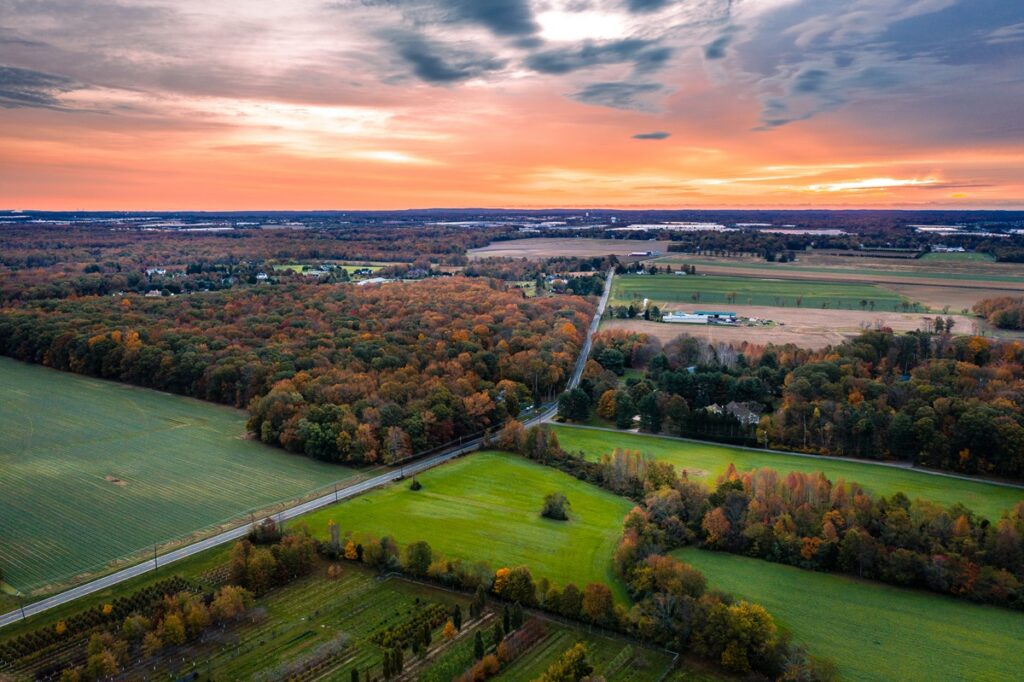
This state is a legitimate heavyweight in fresh market peaches, top of the national list most years. Gloucester, Burlington, Monmouth, and Mercer counties do the heavy lifting, and the whole thing runs on farm stands, direct sales, and pick-your-own. No corporate middleman. No 20-year contract to lose, because who needs one.
Then April happened. Temperatures shot into the mid-80s and touched 90, which pushed peach trees across the state into full bloom weeks early. Then from April 19 to April 22, an arctic snap rolled through and dropped overnight lows to 22 and 25 degrees. Trees were wide open, flowering, at their absolute most vulnerable. The freeze killed the pistils outright. Whatever fruit had started forming got wrecked and dropped.
Four days. That’s all it took.
Farms all over the state canceled or seriously cut back their 2026 PYO seasons. And that’s not just about peaches. Pick-your-own is foot traffic, and foot traffic is what floats a lot of these places the rest of the year. Farm stands came up short. Prices on local stone fruit went up.
Two thousand miles apart, two peach industries on the floor. One buried in fruit it can’t sell. One with barely any fruit at all.
How to Support New Jersey Farms
California’s growers got flattened by a corporate decision they had zero say in. Jersey’s growers got flattened by four days of weather nobody on earth controls. Different causes, same exposure.
What separates them is what comes next. When Del Monte folded, the executives walked out clean. There’s nothing to fall back on there, because the relationship was a contract, and a contract is worth whatever a bankruptcy judge says it’s worth on a Tuesday.
Local food doesn’t run on contracts. It runs on people showing up.
Which is the actual point here, and it’s less comfortable than the usual buy local speech. Supporting a Jersey farm is easy in August when the peaches are perfect, the parking lot’s full, and everybody’s taking pictures. It’s a lot harder in a year when there’s nothing on the trees.
That’s the year that counts. Buy the tomatoes and the corn. Buy the cider, the pies, the jam. Support your local New Jersey farmers markets. Get on a CSA. The farms that make it through a bad harvest are the ones whose customers stuck around for it, and those farms are the only reason this state isn’t completely at the mercy of a supply chain that can evaporate the way Del Monte’s did.
One bad freeze shouldn’t be the end of a family farm. Whether it is comes down to the people who live down the road from it.

Michael is the Editor-in-Chief of New Jersey Digest and Creative Director at X Factor Media. A Bergen County native, he discovered his passion for storytelling while studying at Montclair State University. In addition to his work in journalism and media, Michael is an avid fiction writer. Outside the office, he enjoys kayaking, a bold glass of Nebbiolo, and the fine art of over-editing.