

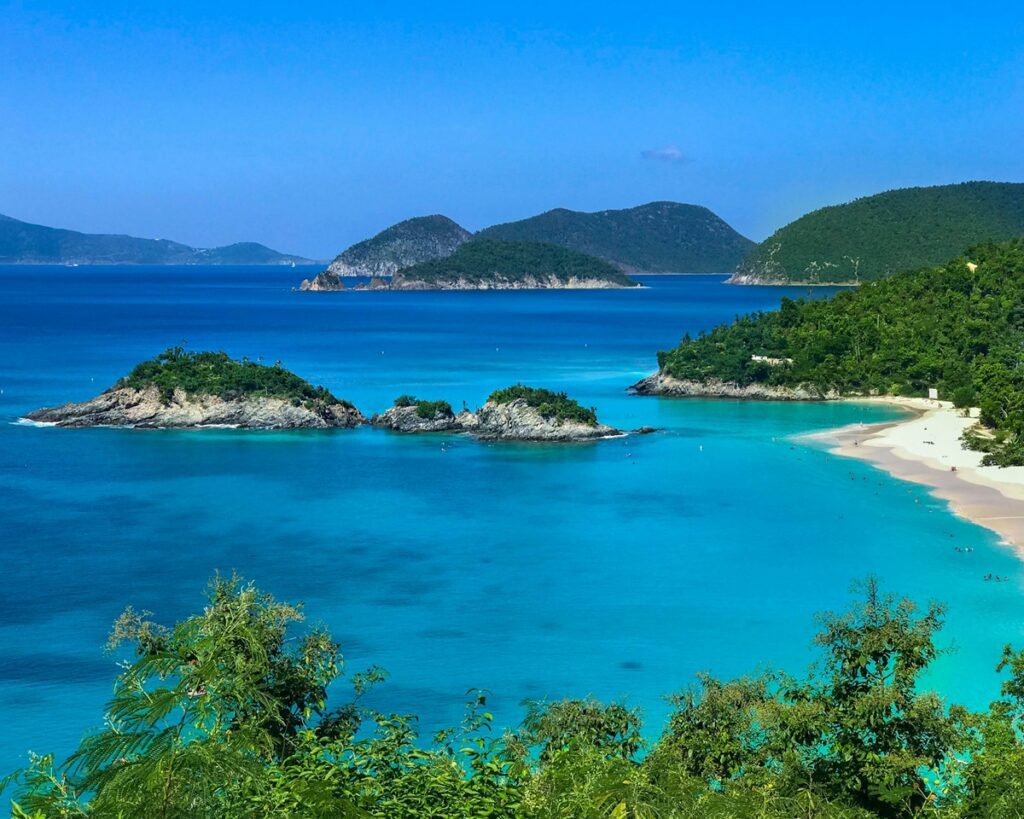

Here’s something a lot of New Jersey travelers still don’t fully register: the U.S. Virgin Islands are American territory. You fly out of Newark, you land four and a half hours later, and there’s no passport line, no currency exchange, no foreign transaction fees. Your phone just works. You spend dollars. The whole process of arriving feels more like landing in Florida than landing somewhere that looks like this.
And right now, a lot more people are figuring that out. The territory just had its best first quarter ever—303,388 visitors between January and March, up 12 percent from last year. March alone hit 121,716 arrivals, a number the islands had never seen in a single month. St. Thomas led it with nearly 247,000 visitors in the quarter. St. Croix added another 56,000. Something clicked in 2026 and the numbers are showing it.
United flies nonstop from Newark to St. Thomas. American, Delta, JetBlue, and Spirit all have service with connections if the direct flight doesn’t line up with your schedule. Southwest started flying there earlier this year, which added options and helped with fares. St. Croix has its own airport if that’s your destination—American and Delta fly there directly, though you’ll often connect through San Juan, which adds some time.
The whole thing, door to beach, runs under five hours from New Jersey. For somewhere that genuinely looks like the Caribbean, that’s almost unfair.
St. Thomas
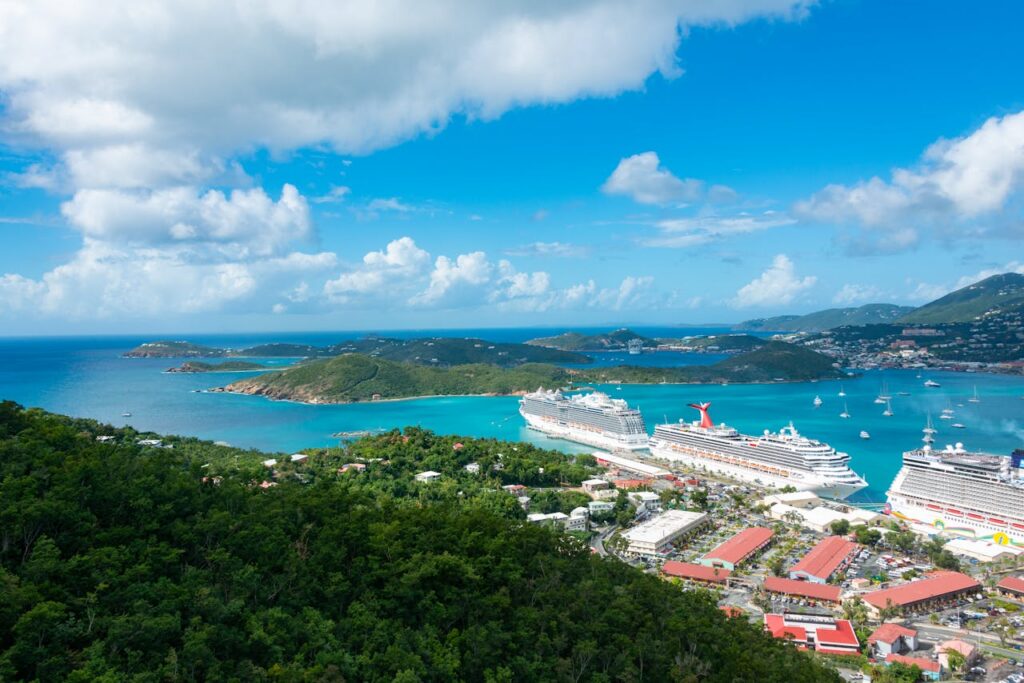
Charlotte Amalie, the main town, is a harbor. Cruise ships, duty-free stores, rum shops everywhere. Some people love that energy. Others want to get away from it fast. Both are reasonable and both lead somewhere worth going.
Magens Bay is fifteen minutes north by car and it’s the reason the island ends up on every best-beaches list. The water is calm because the hills wrap around the bay and block the wind. It’s not a secret but it doesn’t feel wrecked. On a good morning it’s one of those places where you sit down and don’t move for three hours.
Lindquist Beach on the East End is quieter and has better water clarity. Less built up, fewer people, the kind of shore that’s getting harder to find in the Caribbean. Coki Beach nearby has snorkeling right off the sand. Hull Bay on the northwest side is where the locals go—fishing boats, a bar, trade winds, none of the resort stuff. Worth the drive.
Ferry to St. John leaves from Red Hook. Twenty minutes.
St. John
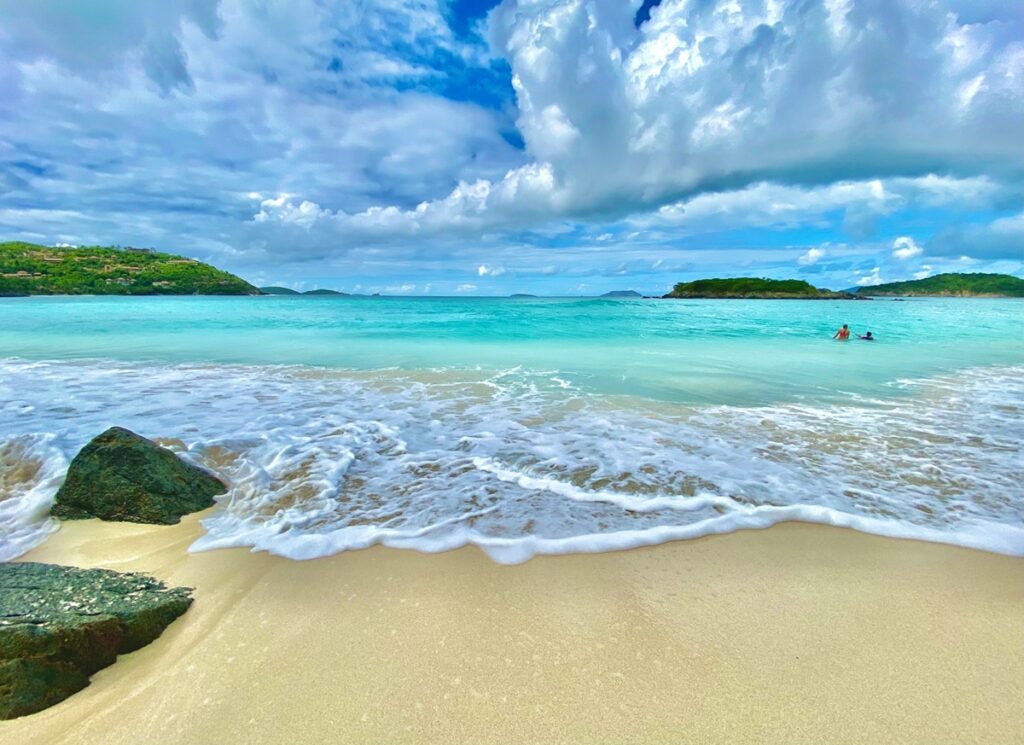
Cruz Bay is tiny. You see it in an hour. That’s the whole point of St. John—it’s not about the town. About 60 percent of the island is national park, protected since the 1950s, which means the coastline looks the way Caribbean coastline used to look before developers got to it everywhere else.
Trunk Bay has an underwater snorkeling trail right offshore. Cinnamon Bay is longer and handles crowds better. Maho Bay is the calm, shallow one—chest deep water so clear it’s disorienting.
Drive across the top of the island through the park. It takes thirty minutes and the views over the north coast with the British Virgin Islands in the distance are the kind of thing people bring up months later when talking about the trip.
St. Croix
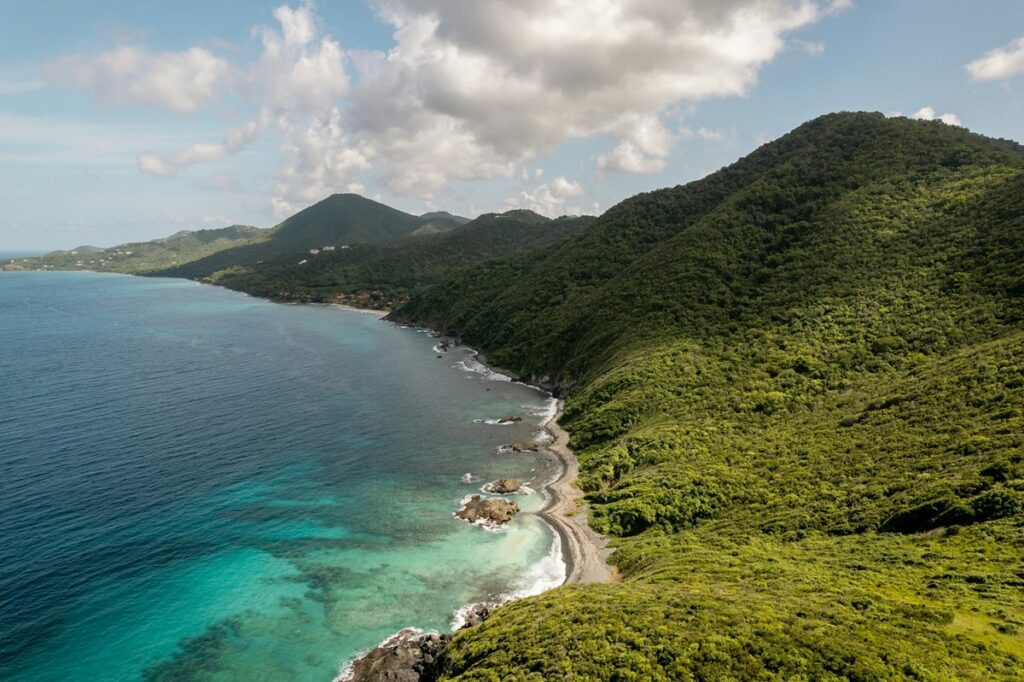
Bigger than the other two islands put together. Longer drives, more spread out, different pace. Also the best food scene in the territory by a margin that isn’t close.
Christiansted has the historic waterfront—Danish colonial buildings, a harbor boardwalk, restaurants that would be packed every night if they were in a city. Savant runs out of a converted house on a torch-lit terrace with a menu that changes and doesn’t try to be everything. It’s exactly as good as people say. Rum Runners has tables over the water and does seafood right.
Frederiksted on the west end is slower and more local. The beach is right there when you walk out of anywhere. Sunset facing west directly into the Caribbean is genuinely one of the better things you can do on any of the three islands.
Sandy Point at the southwestern tip is two miles of undeveloped white sand with nothing on it. No chairs, no vendors, nothing. One of the longest untouched stretches of beach in the entire Caribbean. Leatherback sea turtles nest there, so access is managed during nesting season—check before you go. Buck Island offshore has reef snorkeling in shallow water, coral formations intact, fish still there in real numbers.
Why It Makes Sense Right Mow
The time zone helps more than people realize. One hour behind Eastern in winter, same time in summer during daylight saving. Your body has almost nothing to adjust to. You can fly down on a Thursday night, feel normal on Friday morning, and have a full weekend before flying home Sunday. You’re back in New Jersey by dinner.
No passport. Dollar economy. Four and a half hours from Newark. Three islands that all look and feel different from each other. The record numbers make sense. Go before everyone else catches up.

Michael is the Editor-in-Chief of New Jersey Digest and Creative Director at X Factor Media. A Bergen County native, he discovered his passion for storytelling while studying at Montclair State University. In addition to his work in journalism and media, Michael is an avid fiction writer. Outside the office, he enjoys kayaking, a bold glass of Nebbiolo, and the fine art of over-editing.