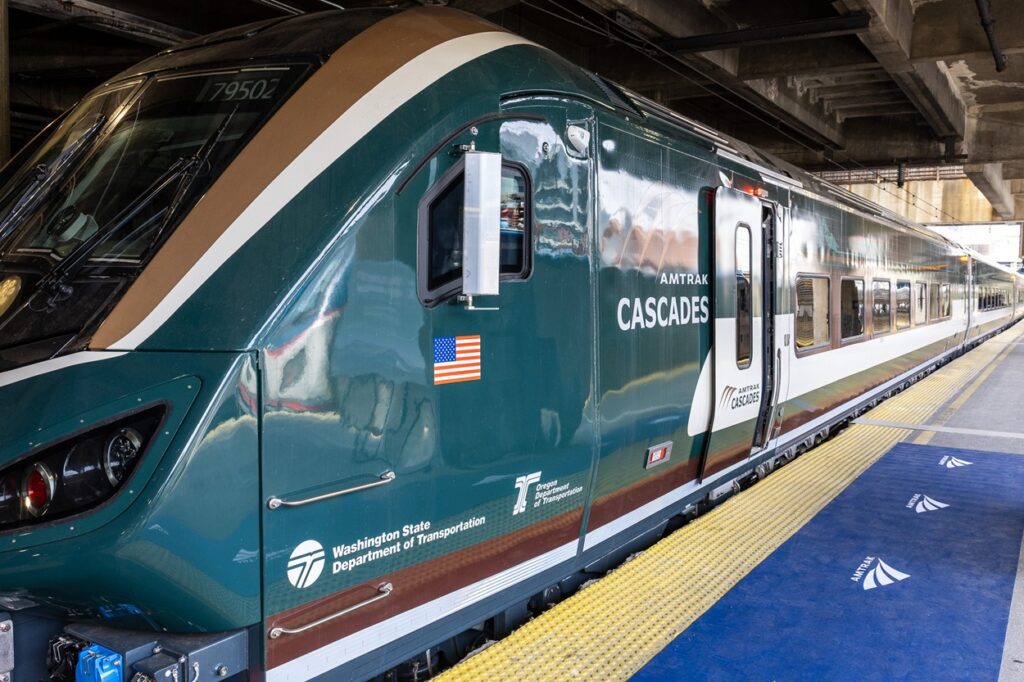
Amtrak is finally replacing the 50-year-old trains used on the Northeast Regional with a new fleet called Airo.
Somewhere in Amtrak’s fleet right now, there is a passenger car that entered service during the Nixon administration. It has outlasted eight presidents, the fall of the Soviet Union, the rise of the internet, and approximately forty years of promises that something better was on the way. It smells like all of those years. It rides like them, too.
New Jersey riders know this car intimately. Not because they chose it, but because for five decades, it was the only choice. The Northeast Regional—the rail spine connecting New Jersey to New York and Philadelphia, the train that hundreds of thousands of this state’s commuters, students, and travelers depend on—has been running on equipment built before most of its current passengers were born. The Acela got upgraded. The business travelers got their premium product. The rest of us, well, you get the picture.
That ends now, and let’s be clear, this is a good thing. Amtrak has revealed the Airo—83 new trainsets built by Alstom, capable of 125 miles per hour, designed with the apparent radical premise that a regional train should be something a person might actually want to ride. The first trains enter service on the West Coast this summer. New Jersey’s turn comes in 2027. It has been a long time coming, and the backstory of why it took this long is as important as the hardware itself.
Fifty Years. Let That Settle.
It is worth pausing on the timeline before getting to the seats and the Wi-Fi, because the timeline is the story. The cars the Airo replaces have been in service for roughly half a century. In that span, the airline industry reinvented itself multiple times. Cars went from carbureted engines to electric motors. Smartphones were invented, became ubiquitous, and are now being redesigned again. The physical infrastructure of nearly every other form of American transportation was overhauled at least once.
The Northeast Regional Kept Running Its 1970s Equipment.
This is not an accident or an oversight. It is the accumulated result of chronic federal underinvestment in passenger rail, a political culture that treats Amtrak as a budget line item to be trimmed rather than an infrastructure asset to be maintained, and a funding structure that has left the regional and state-supported routes—the ones ordinary commuters use—perpetually behind the premium Northeast Corridor services that attract more political attention. The Acela corridor got investment. The rest got deferred.
New Jersey has absorbed this neglect in its daily life more than almost any other state. We are the most densely populated state in the nation, with an economy and workforce that flows constantly between New York and Philadelphia. We are, by geography and necessity, one of the most rail-dependent states in the country. And for fifty years, the trains serving that dependency have been held together by maintenance crews performing what can only be described as institutional heroism on aging equipment that the system should have replaced a generation ago.
What the Airo Actually Is
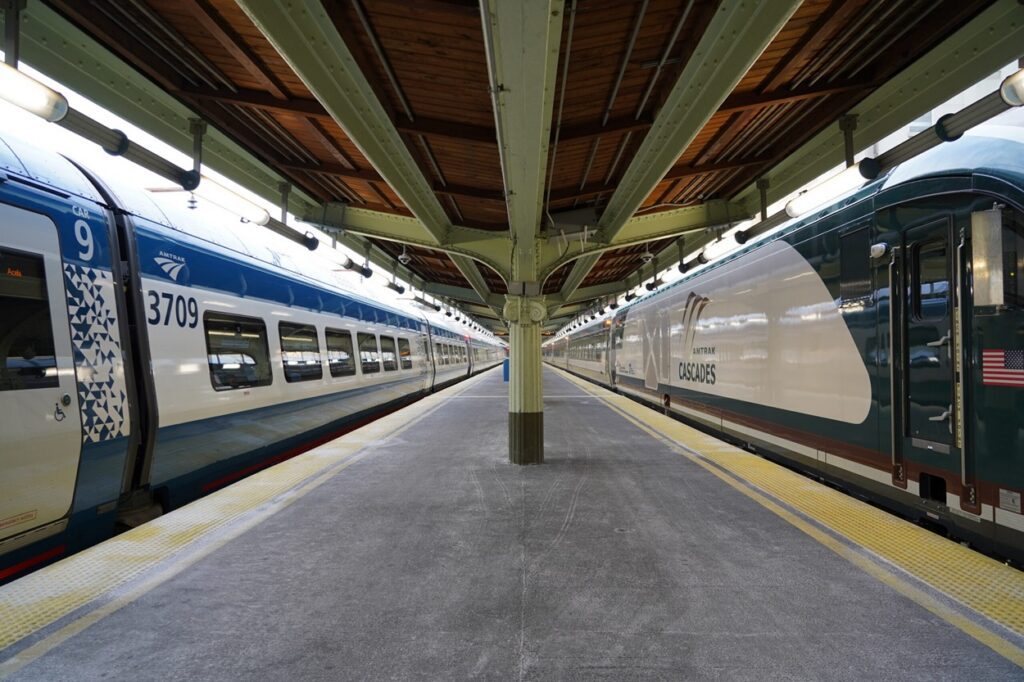
Before the details, one clarification that matters for New Jersey readers specifically: the Airo is not the Acela. This is important because Amtrak has two distinct products on the East Coast, and they serve very different purposes.
The Acela—which went through its own full generational upgrade when the NextGen version entered service in August 2025 at 160 mph—is the premium, limited-stop, higher-fare product. Fewer stations, faster end-to-end times, priced accordingly. It is a good train. It is not the train most New Jerseyans ride.
The Airo is the everyday train. The one that stops at Newark Penn, Metropark, Princeton Junction, Trenton. The one that serves the Empire Service up through the Hudson Valley, the Keystone to Philadelphia and Harrisburg, the Pennsylvanian, the Downeaster, the Vermonter, and more than a dozen other routes. The 83-train Airo fleet is replacing the workhorse equipment on the routes that working people actually use. That distinction matters, and it has been somewhat lost in coverage that treats this as a straightforward tech upgrade story.
This is not just a tech upgrade story. This is Amtrak finally investing—seriously, visibly, in hardware you can sit in—in the tier of service that has been treated as an afterthought for decades.
What New Jersey Riders Will Actually Notice
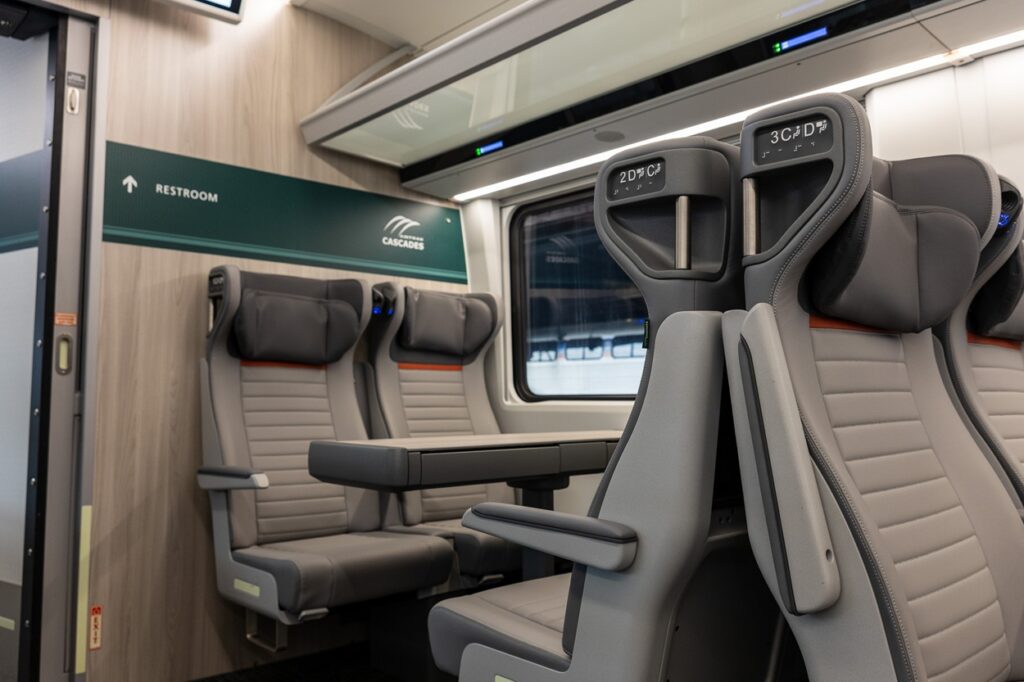
Start with the basics, because the basics have been bad for long enough that getting them right is itself news.
Seats with ergonomic support and moveable headrests. Tray tables large enough and sturdy enough to hold a laptop without the structural anxiety that currently accompanies opening one on the Northeast Regional. USB-C ports at every seat. Individual reading lights. 5G Wi-Fi throughout. For the commuter who has been treating the train as a dead zone—a gap in the workday to be endured rather than used—the connectivity upgrades alone change the fundamental value proposition of the trip.
The windows are significantly larger, panoramic in design, built to actually frame what’s outside them. This sounds like a minor amenity until you consider what’s outside them: the Hudson Valley on the Empire Service, the Delaware River corridor on the Northeast Regional south of Trenton, the Connecticut shoreline on the way to Boston. Amtrak is betting, reasonably, that the scenery is a selling point that the current equipment has been actively suppressing with its undersized, scratched-up windows.
The Café Car is redesigned with self-service options and a layout that Amtrak describes as reminiscent of a New York City bistro. Whether the food itself improves is a separate, more skeptical question. But the physical space—which on the current equipment feels like a break room attached to a moving vehicle—is getting a genuine rethink.
Accessibility upgrades are comprehensive: wider vestibules, accessible restrooms, wheelchair lifts, redesigned café car access throughout. These corrections are overdue in a way that goes beyond the cosmetic—the existing equipment has struggled with federal accessibility standards for years, and remedying that is not optional. It’s a baseline.
The Speed and the Smarter Engine
At 125 miles per hour, the Airo is not European high-speed rail. It is not going to close the gap between American and Japanese bullet train technology in one fleet cycle. That is a different, longer, more expensive conversation involving infrastructure that does not currently exist.
What 125 mph does is move the Airo meaningfully faster than what it replaces, on tracks that already exist, without requiring a decade of corridor reconstruction first. That is a practical win, and practical wins are what New Jersey riders actually need.
The dual-power system—which switches between electric and diesel traction depending on the infrastructure available—carries a benefit that has been underreported in the initial coverage. Fewer locomotive swaps means fewer scheduled delays. For riders out of New York City’s Moynihan Train Hall, where engine changes have historically been a reliable source of the Northeast Regional’s notorious schedule padding, this is a concrete, everyday improvement that will show up in departure and arrival times rather than in a press release.
On emissions: the Airo produces roughly 90 percent less particulate matter running on diesel than the equipment it replaces. For a state that has spent years fighting for cleaner air in communities along the rail corridor—communities that have borne a disproportionate share of the environmental cost of moving everyone else around—that number is not a marketing footnote. It is a meaningful, measurable improvement in the air quality of the places the train passes through.
The Timeline, Honestly
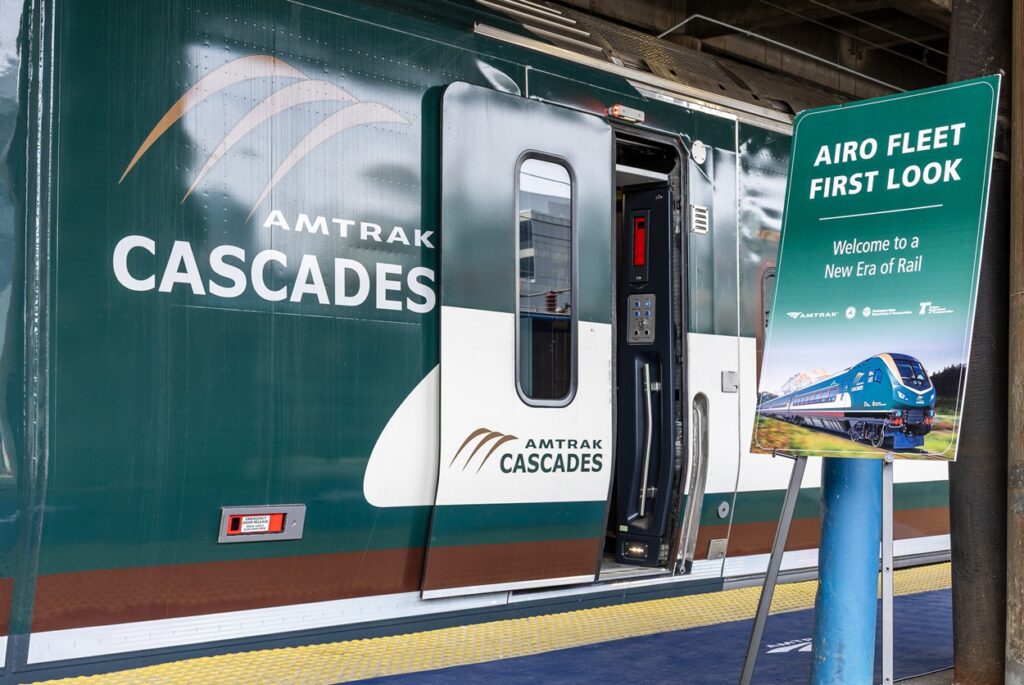
The Airo begins revenue service on the Cascades route—the Pacific Northwest corridor connecting Seattle, Portland, Vancouver, and Eugene—this summer. The decision to start there rather than on the Northeast Corridor is deliberate: the Cascades is operationally simpler, and working out the inevitable new-equipment issues on a less complex route before bringing the trains into the most congested rail environment in North America is the sensible call.
Testing on the Northeast Regional and Empire Service begins later in 2026. Revenue service for Northeast passengers—meaning the actual trains you board at Newark Penn, Metropark, or Princeton Junction—arrives in 2027.
That is the honest answer, and it is worth giving plainly: if you are a New Jersey rider waiting for this, you are waiting until 2027. Not this summer, not this fall. The countdown is real, and it is not short. What is also real is that after fifty years of waiting, a defined, funded, contracted timeline with trains already built and a deployment schedule already set is categorically different from the promises that have come before.
Can Amtrak Actually Execute?
The question that hangs over all of this—and that any honest piece about Amtrak improvements is obligated to raise — is whether the operational reality will match the hardware.
New trains running on old infrastructure are still subject to old infrastructure’s constraints. The Northeast Corridor’s track, signals, and shared-use arrangements with freight carriers are not being replaced alongside the passenger equipment. A beautiful train held at a red signal outside Trenton is still a late train. Amtrak’s on-time performance has shown genuine improvement in recent years, but it remains uneven, and no fleet upgrade changes the underlying physics of a constrained corridor.
What is different this time—and what earns at least cautious optimism—is the evidence of execution capacity. The NextGen Acela rollout in 2025 was, by Amtrak’s historical standards, a genuine success: on schedule, functionally sound, well-received. An organization that can deliver one major fleet transition has demonstrated it can manage the operational complexity of another. That is not nothing. For an agency with Amtrak’s history, it is actually quite a lot.
The Train New Jersey Was Always Owed
There is a version of this story that writes itself as pure good news, and it is tempting to leave it there. New trains. Better seats. Faster service. USB-C ports. After fifty years, Jersey finally gets what it deserved.
But the fuller version of this story includes the fifty years themselves. Includes the commuters who spent decades on equipment that the system knew was aging and chose not to replace. Includes the communities along the corridor that absorbed the emissions of older, dirtier engines because the capital investment never materialized. Includes every delayed train, every broken seat, every scratched window that made the trip between Newark and New York feel like an imposition rather than a service.
The Airo is a good train arriving at the right time. It is also, in a real sense, an overdue debt being repaid. New Jersey riders are owed some acknowledgment of both things—the genuine excitement of what’s coming, and the legitimate frustration of how long it took to get here. This comes just after the Portal Bridge Project hit a potential milestone.
Mark 2027 on the calendar. Show up on the platform. Take the window seat.

Michael is the Editor-in-Chief of New Jersey Digest and Creative Director at X Factor Media. A Bergen County native, he discovered his passion for storytelling while studying at Montclair State University. In addition to his work in journalism and media, Michael is an avid fiction writer. Outside the office, he enjoys kayaking, a bold glass of Nebbiolo, and the fine art of over-editing.