

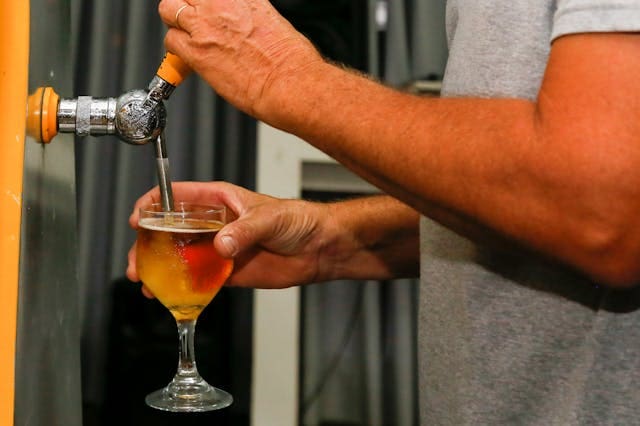

You’ve seen it a hundred times: perfect weather, a river breeze, a headliner on stage—and a beer line that wraps around the block like it’s part of the attraction. The band hits your favorite song while you’re trapped between the trash can and the pretzel cart. It’s not that demand is the problem; it’s the bottlenecks. The quickest, least disruptive fix many organizers are using isn’t more folding tables or bigger coolers—it’s mobile tap trailers designed to pour fast, cold, and consistently in the middle of a crowd.
Below is a practical playbook for planners, beverage managers, and festival operators who want shorter lines, happier guests, and steadier revenue—without turning a street fair into a construction site.
1) Why beer lines balloon—and how to shrink them
A long line usually hides three separate bottlenecks stacked on top of each other: compliance (ID/wristbands), transaction (ordering/payment), and dispensing (the actual pour). When any one of those lags, the whole queue crawls.
The slowest leg is often dispensing. Ice tubs warm up; warm beer foams; foamy beer gets dumped; every bad pour adds seconds that pile into minutes. The physics are simple: when beer warms a few degrees on its way from keg to faucet, CO₂ breaks out of solution and you fight foam. Well-balanced draft systems that hold beer near 38°F from keg to tap avoid this spiral, and the difference in line speed is noticeable within minutes.
There’s also the perception problem. People tolerate waits better when they can see progress and when the line keeps moving. Service research has hammered this home for years: occupied time feels shorter than unoccupied time, uncertain waits feel longer than known waits, and a visible “finish line” helps. Good queue design (clear signage, a steady trickle rather than stop-and-go clumps) changes how a wait feels—and, often, how long it actually is.
So the brief: keep beer cold and moving, and make the line feel fair and predictable. Tap trailers are built for exactly that.
2) What a mobile tap trailer actually changes on the ground
A modern tap trailer isn’t just a billboard with faucets. It’s a self-contained draft system: refrigerated compartment, properly balanced lines, gas management, and a bank of taps that pour at the same temperature all day. Consistent 34–38°F storage and delivery means fewer foamy restarts and fewer do-overs when crowds surge. If you want to sense-check your setup, the Brewers Association’s Draught Beer Quality Manual lays out temperature, pressure, and line-balance practices that reduce foaming and waste—exactly the stuff that slows a festival queue.
Here’s why this matters. Imagine a busy hour where you need to serve 600 beers. If a single faucet nets roughly one pint every 10–12 seconds in real-world conditions (allowing for glass swap and a quick head settle), that’s about 5–6 finished pours a minute. With six working faucets, you’re in the 30–36 pours-per-minute range, and your queue drains steadily instead of pulsing and stalling. The math shifts even more in your favor when you separate payment from pouring (more on that below).
Choosing the right unit is mostly about faucet count and footprint. Street closures and waterfront promenades don’t leave a lot of back-of-house space, so you need output without a sprawling bar build. A compact trailer with 6–8 faucets can replace multiple ice-bath stations while freeing staff to focus on IDs and service. If you’re sourcing equipment for the season rather than a one-off, look into purpose-built beer tap trailers that ship draft-ready—refrigeration, line balancing, and gas rails dialed in—so you’re not troubleshooting fittings in the middle of a festival.
Placement details pay off:
- Sightlines and staging. Park the trailer where the line won’t cut foot traffic—and where the crowd can watch efficient pours. Visible throughput discourages line abandonment and spreads guests across service points.
- Shade and surface. Sun warms beer lines, even when the keg box is cold. Keep the trailer shaded where possible; confirm you can chock wheels and level on pavers so every staffer is pouring at a comfortable height.
- Predictable menu. Fewer SKUs keep taps flowing and decisions quick. If you run four beers, make two of them high-demand crowd-pleasers so the line doesn’t pause on sampling questions.
3) Waterfront specifics: permits, power, and busy-hour choreography
Waterfronts add quirks—tight access windows, boardwalk weight limits, and cross-traffic from runners, strollers, and bikes. The good news is that trailers simplify compliance and setup because you’re not building a bar from scratch each time.
Permits and layout. City event offices typically ask for site plans that show ingress/egress, emergency lanes, and any vehicle placement on promenades. You’ll expedite approvals when your plan clearly separates ID checks from pouring, and when your beer-garden footprint keeps paths clear for emergency services. The NYC Street Activity Permit Office guidance is a good example of the details cities expect—sound permits, generator placement, and other considerations that directly affect where your trailer can sit and how your line moves.
Power and water. Many tap trailers run happily on a standard 110–120V circuit (for lights and POS) because the refrigeration is integrated and efficient. If shore power is limited, park a quiet generator well downwind and route cabling overhead or with cable ramps—no tripping hazards across the queue zone. Confirm gray-water handling with your city; waterfront sites can be stricter than inland venues.
Throughput choreography. The best line-cutting move at a beer trailer is not more taps; it’s splitting the queue into stages. Put age verification and wristbanding up-line under a pop-up tent. Move payment and ordering to a second point with clear menu boards and preset POS buttons. Let the trailer team focus on pouring and handing off. For a public-safety lens on why this works, FEMA’s Special Events Contingency Planning course emphasizes pre-planning roles and channeling crowd movement so responsibilities don’t collide in one choke point.
For readers planning along the Hudson or the Shore and looking to map service to foot traffic, these roundups of waterfront restaurants in New Jersey and summer festivals and events in New Jersey (2025) can help you anticipate peak flows near your venue and plan where a trailer should sit so you intercept guests before they back up near the stage or promenade.
4) Staff, service, and payment: the levers that shave minutes
Even the best trailer can’t outrun a slow transaction. If you’re serious about lines, set your POS and staffing like a quick-service kitchen, not a bar.
Separate roles. Pourers pour. Runners swap kegs and handle glassware. Cashiers verify orders, take payments, and manage refunds. When one person does all three, the line stalls; when each station does one thing, the line flows. Keep radios on the runners and pre-stage kegs by the door closest to their assigned taps.
Responsible service keeps lines safer (and faster). Trained staff check IDs consistently, cut off problem service before it escalates, and pace guests toward water or food—each of which keeps the queue from becoming a customer-service incident. FEMA’s event-planning guidance (above) frames this as part of overall crowd management, not just alcohol policy.
Payment wins. Contactless and mobile wallets speed things up. Price in whole dollars when you can, build presets into your POS (“Lager,” “IPA,” “Seltzer,” “Water”), and collect tips as a prompt screen, not a conversation. If you must do tokens or wristbands, sell them in a separate merch queue, away from the taps, so you’re not clogging the pour zone with explanation and change-making.
Cold-chain discipline. Don’t roll warm kegs into a hot tent and expect fast pours. Chill them upright 24 hours before service and move them in small batches. Trailer refrigeration helps, but it’s not a time machine. The more your beer stays near draft-service temps from storage to faucet, the fewer foamy do-overs and the quicker each hand-off. For a clear checklist on temperature and pressure, the Draught Beer Quality Manual is worth a skim before gates open.
Want more local context for planning after-parties or overflow traffic once the fair wraps? The Digest’s roundup of top rooftop bars in New Jersey (2025) can help you coordinate with nearby venues so guests have a post-event plan—another subtle way to reduce last-minute surges at your beer trailer during teardown.
5) A simple way to measure whether your trailer “worked”
Nearly every team measures beer sold. Fewer measure minutes saved. To know if the trailer is paying off, track both.
Start with two numbers: headcount in line and average wait. Every 15–20 minutes during peak hours, have a floater note “25 people, ~6 minutes to the rail.” When you change the setup—open more faucets, add a cashier, or move ID checks—capture the same snapshot again. If the queue drops by a minute and sales hold steady or climb, that’s proof, not vibes.
Then look at pour consistency. The most painful time loss in a high-volume line is foam you have to dump and re-pour. If your team is throwing away half-filled cups, you’ll see it in keg change frequency and in the look on your guests’ faces. A balanced trailer system that holds temperature and pressure steady is the cheapest insurance against that waste. The Brewers Association’s retailer guide expands on this with flow-rate targets and troubleshooting charts—handy to print and tape inside the trailer door. (See: Draught Beer Quality for Retailers.)
Finally, assess your “burst” capacity. Street fairs and waterfront concerts surge right after an opening act, right after a race finishes, or when the sun dips and the breeze kicks up. Use those peaks to test whether your staging can clear a wave in 10–15 minutes. If not, add a second cashier pop-up, pre-pour a small cache of waters or NA options, or trim the menu so the taps can sprint through the crush.
6) Real-world deployment tips, drawn from events that work
Keep your plan short, your crew briefed, and your backup gear within reach. These small choices tend to separate the five-minute line from the fifteen-minute one:
Put the trailer where thirsty people enter, not where they exit. At waterfront promenades, that’s often near a path funnel or the first shade pocket after the security checkpoint. Catching guests early spreads demand across time instead of crushing the taps during the headliner.
Train on the trailer, not just on POS. A five-minute pre-shift on how to seat couplers, clear a gas lock, and tweak flow control saves you from “uh oh” moments during the rush. Keep spare gaskets, a spray bottle of sanitizer, and extra couplers in a labeled crate.
Don’t let sampling clog the main line. If you want to offer tastes, spin up a tiny “decision lane” off to the side and cap samples at a single ounce. Shorten decisions, and you shorten the line.
Design for weather. Waterfront wind can dent foam stability. Block cross-drafts at the faucets with a sidewall or position the trailer so pours aren’t directly into a gust. Shade the queue; people dehydrate and get impatient faster in direct sun, and you’ll end up doing more welfare checks and re-pouring more spilled drinks.
Coordinate with security early. Work the site map with public-safety partners during planning. If you’re operating in or near New York City, align with the primary permitting agencies and SAPO well ahead of load-in so you’re not relocating the trailer after gates open.
And if you’re scouting where crowds naturally migrate before or after the fair, the Digest’s seasonal coverage of spring festivals around New Jersey helps you anticipate competing draws on the same weekend—useful when you’re scheduling staff breaks and deliveries so you don’t step away right as a neighboring event empties into your block.
The takeaway
Lines at street fairs and waterfront events aren’t a law of nature. They’re a trace of how you’ve arranged compliance, payment, and pouring. A mobile tap trailer attacks the slowest piece—dispensing—by keeping beer cold, pours even, and faucets plentiful where people already are. Pair that hardware with simple queue design (ID first, cash next, pours last), staff to roles, and a few temperature-discipline habits, and you’ll watch waits shrink from a song and a half to half a verse—and you’ll sell more beer while you’re at it.

The New Jersey Digest is a new jersey magazine that has chronicled daily life in the Garden State for over 10 years.