


From a Newark-area cheeseburger sub to a Burlington County cola syrup, nine New Jersey foods that locals grew up on and outsiders have never heard of.
Catch a New Jerseyan in the wild, and chances are they’ll start talking your ear off about food within two minutes. We can’t help it. We’re true gavones, and we love the foods of our state.
Everyone knows the basics: Taylor Ham/pork roll, pizza, bagels, rippers, and so on. Then there are the other local favorites not everyone associates with the region: Jewish delis, Texas wieners, disco fries, and more. But what about the underrated foods of New Jersey? The dishes only a true local would know.
These are the sandwiches, pies, plates, and sweets enjoyed right here in New Jersey, and still (mostly) unheard of beyond our borders.
Italian Hot Dog
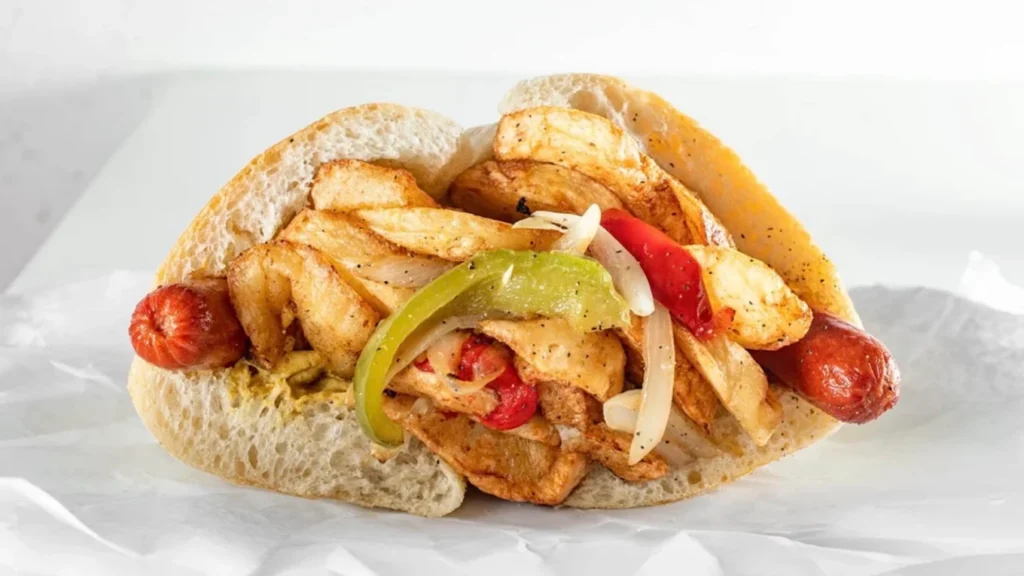
This one is a true North Jersey staple, and if you grew up eating it, then you just know. But for those not from the state—and specifically the Newark area—it might seem completely out-of-left-field. That’s because it is. It’s why we love it. The Italian hot dog is made up of five main components: pizza bread (a round bread, cut in half and opened as a pocket), an all-beef hot dog (usually two of them), fried potatoes, peppers, and onions. Plus, two more components that most people get it with: ketchup and mustard. The Italian Sausage is another popular variation of the sandwich, which swaps the Frankfurter in favor of sweet Italian sausage. The dish is so beloved by locals that New Jersey-native Queen Latifah has even praised the sandwich in interviews, where she said “Jimmy Buff’s brings me back to where I need to be… Home.”
The food was reportedly popularized in 1932 by James “Buff” Racioppi at his restaurant Jimmy Buff’s on 14th Avenue and 9th Street in Newark. But according to history, it was really his wife Mary Racioppi who first came up with the idea some years prior. Mary would make the hot dogs for Jimmy and his crew while they played cards. It was a hit, and they subsequently built a restaurant around it. The original Newark location closed, but you can still get an Italian hot dog at Jimmy Buff’s in West Orange and Kenilworth.
For me, I closely associate Italian hot dogs with Dickie Dee’s in Newark—my Dad’s pick when he’s got a craving.
Italian Cheeseburger
That’s right. We’ve got the Italian hot dog, and we’ve got the Italian cheeseburger. Both come from the Newark area and share a lot of DNA. While the former has somewhat made its way into popular culture, the Italian cheeseburger is still totally niche. The classic Italian cheeseburger comes with griddled burger patties, American cheese, sautéed onions, French fries, salt, pepper, ketchup, and mayo, served on a soft sub roll.
We know the Italian cheeseburger came out of the Newark area, but who invented it, and where, is less well documented than its hot dog brethren. Jimmy Buff’s has served it for as far back as we know—and Dickie Dee’s is also known for its version. However, for many today, the Italian cheeseburger is most closely associated with bodegas in the area, which some locals call the “papi store,” and with Sandwiches Unlimited, a beloved sub shop with locations in Orange and East Orange that is widely considered to have one of the best—and most quintessential—versions of the Italian cheeseburger.
I grew up just 20 minutes from the Italian cheeseburger’s stomping grounds, but this one was unknown to me until my 20s. A true deep cut, if you ask me.
Sloppy Joe
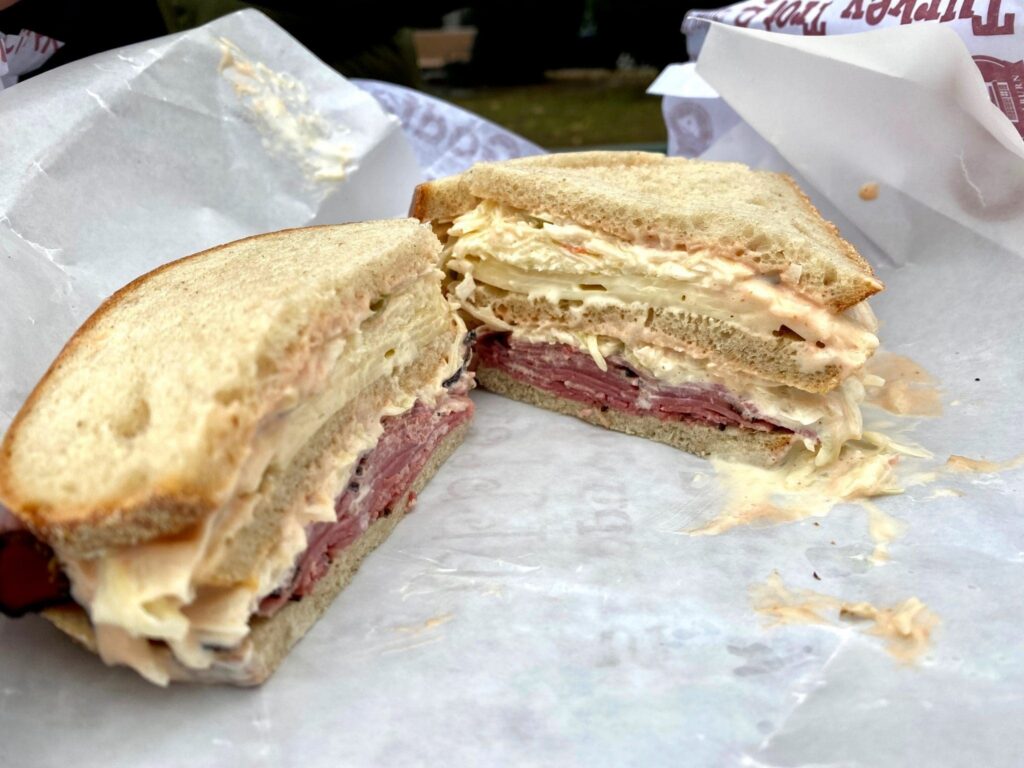
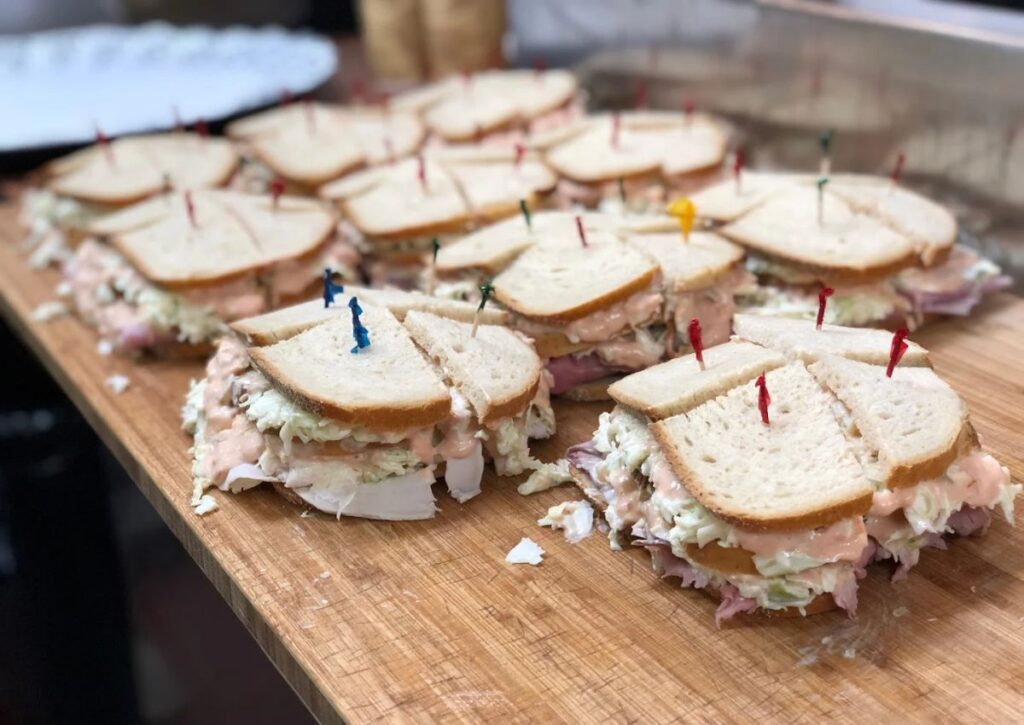
To roughly 333 million Americans, a sloppy joe refers to a tangy, hot ground-beef sandwich, served on a hamburger bun, but to the approximately 9.5 million in New Jersey, the words “sloppy joe” describe something completely different. The New Jersey sloppy joe is served cold, it’s a triple decker, and it’s morphed from humble origins into something of local legend. A sloppy joe is made up of deli meat, Swiss cheese, Russian dressing, and coleslaw, served on rye bread. Diners pick their meat—usually a combination of two of the following: corned beef, pastrami, roast beef, turkey, and sometimes ham. The original version used cured beef tongue, according to Serious Eats, and the sandwich is typically cut into squares.
The sloppy joe was invented at Town Hall Deli in South Orange in the 1930s. According to the deli itself, the sandwich was conceptualized after Maplewood Mayor Thomas Sweeney took a trip to Cuba, where he dined at a local joint called Sloppy Joe’s Bar in Havana. It was there that he developed a taste for the sandwich, which consisted of a similar makeup of ham, tongue, rye bread, dressing, and Swiss cheese. Upon his return, he asked Town Hall Deli owners Heinz Berdorf and Fred Joost to recreate it. Just like that, the sloppy joe was born. Other popular North Jersey delis serving the classic include Millburn Deli and Mr. J’s in Cranford.
As for Sloppy Joe’s Bar in Havana—the watering hole once frequented by Ernest Hemingway—it reopened in 2013 after being closed for 48 years. The sandwich it serves today resembles something much closer to the ground-beef version.
Trenton Tomato Pie
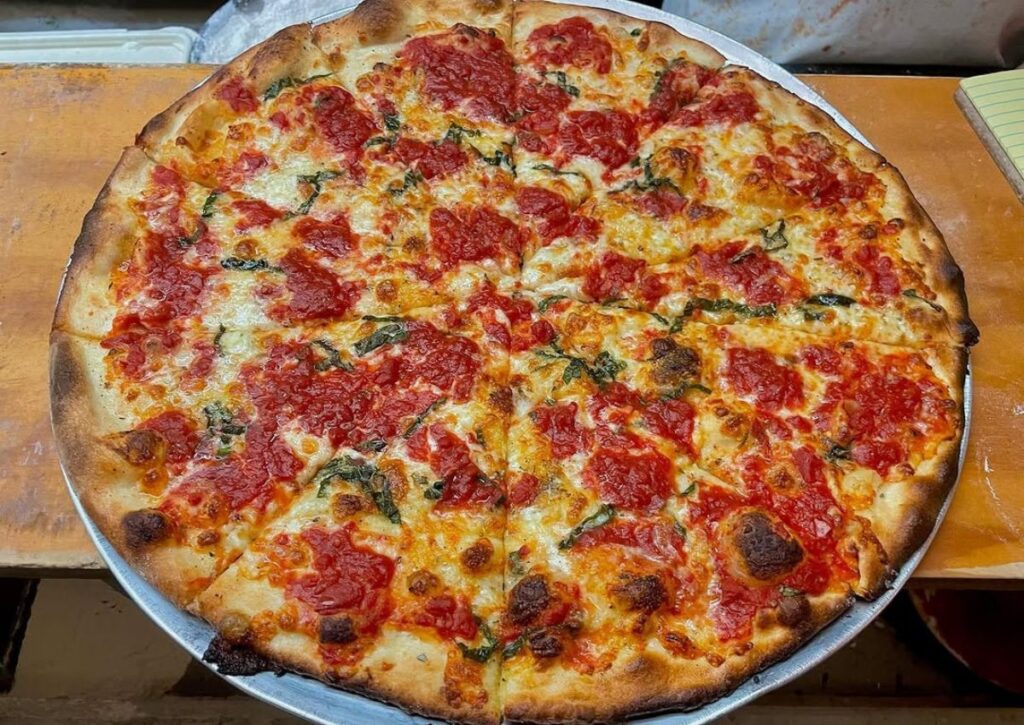
Pizza is certainly well known in New Jersey, including some regional specialties like the New Jersey bar pie. But there isn’t a pizza in the state that’s more localized than this one—and, in fact, I might get myself in trouble with the Trentonians for calling it pizza at all. The Trenton tomato pie, which I’ve covered extensively in the past, includes hand-crushed tomatoes and low-moisture mozzarella—layered in reverse—on top of a crisp, well-charred, round crust.
The style was invented in 1910 at Joe’s Tomato Pies in Trenton. One of Joe’s workers, Giuseppe “Joe” Papa, opened his own spot two years later, called Papa’s Tomato Pies, also in Trenton. Papa’s—still serving tomato pies in nearby Robbinsville—says it is the oldest family-owned and continuously operated pizzeria in America. De Lorenzo’s Tomato Pies (also originating in Trenton and later moving to Robbinsville) is perhaps the most popular Trenton-style tomato pie restaurant in the state. Besides the hand-crushed tomatoes and cheese, toppings are usually kept simple—torn raw sausage and pepperoni, to name a few.
For an added layer of “if you know, you know,” diners who frequent Papa’s often spring for the mustard pie—a tomato pie with a thin smear of Gulden’s spicy brown mustard on the base. If it sounds weird, that’s because it is. It’s also entirely delicious with sausage as a topping.
Chicken Savoy
Belmont Tavern, a cash-only, no-reservation Italian-American joint in Belleville, is serving one of New Jersey’s most iconic dishes. Chicken Savoy—more specifically, Stretch’s Chicken Savoy—is what put the shoebox-sized tavern on the map. The dish is utterly simple: hard-roasted chicken, a savory coating, and a zippy jus made from red wine vinegar.
Charles “Stretch” Verdicchio debuted Chicken Savoy on the Belmont Tavern menu in 1967, and it quickly became a staple, inspiring dozens of other versions—though none hold a candle to the original, if you ask me. The exact method is still somewhat of a mystery. We know it uses chicken that’s broken down into parts, roasted, and then painted with a paste made from Pecorino, garlic, and herbs, before it’s roasted again until it turns a deep, almost-black hue. To finish, the pan is deglazed with red wine vinegar, creating a tart jus from the chicken drippings. Some versions served at other restaurants use balsamic, but for it to be authentic, it has to be red wine vinegar.

Panzarotti
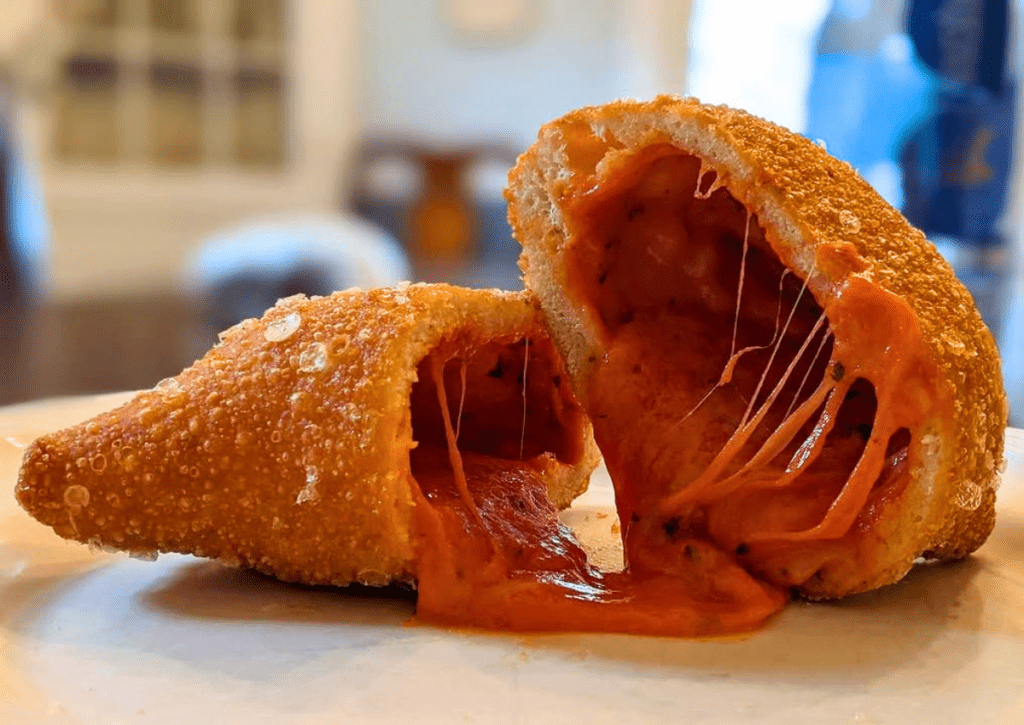
Amid the messy cheesesteaks and crispy, saucy pizzas of South Jersey is a lesser-known delicacy with a cult following: the panzarotti. It’s a handheld, deep-fried pocket of pizza dough, filled with mozzarella and zesty tomato sauce, and best enjoyed alongside an ice-cold root beer. Toppings are optional, and specialty versions exist, like the cheesesteak and the Gobbler, a seasonal favorite filled with roast turkey, stuffing, gravy, and cranberry.
The South Jersey panzarotti is based on the Italian panzerotti from Apulia, but it was popularized in New Jersey by Pauline Tarantini, an Italian immigrant from Brindisi. In the early 1960s, she began stuffing and frying them by hand out of her Camden home to help pay the bills, and her husband, Leopold, sold them at gas stations for 25 cents apiece. By 1963, they had opened their own storefront. Today, the family still runs Tarantini Panzarotti Inc., where Leo Tarantini and his son Kevin make and distribute nearly 5,000 a day.
To try one, head to Franco’s Place in Haddon Township, opened in 1971 by one of the Tarantinis’ ten children, Franco.
Beefsteak Dinners
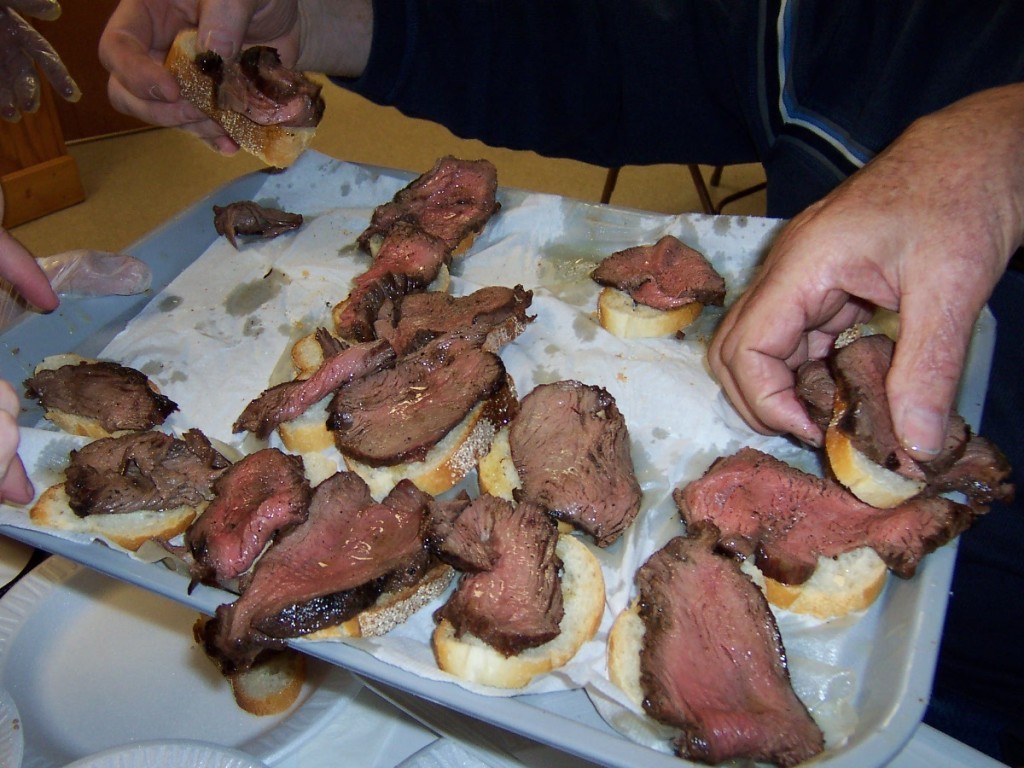
Every now and then, I learn that a food completely normal to me is actually something specific to the region. Cue: the beefsteak dinner. The all-you-can-eat, entirely messy meal features pounds of thin-sliced steak (usually beef tenderloin) beside piles of sliced bread—popularly white bread, but sometimes Italian or French bread, too. The dinners are often held for fundraisers, but are also popular at firehouses and banquets. Cutlery is usually not provided, so diners eat with their hands.
Beefsteaks originated in New York City during the mid- to late 19th century. Traditionally, beefsteaks were men-only, featuring lots of beer, banter, and sometimes live brass bands. However, by the mid-20th century, the practice had largely died out—except in New Jersey, where it remains a deeply felt part of regional culture in Bergen and Passaic counties. Don’t worry, the men-only rule is a thing of the past. Nightingale Catering in Clifton—where beefsteak lore runs all the way back to 1938—still operates, catering beefsteak dinners for fundraisers, firehouses, and more in the surrounding towns.
There’s also some beefsteak etiquette. Diners often go easy on the bread to leave room for more steak, and a common way to keep count is to set aside a slice for each slice of steak eaten. It’s an unspoken rule, but you’d better follow it.
Boost!
Okay, I had to include a drink here, because South Jersey’s Boost! is the true definition of hyper-regional. Outside of Burlington County, the soft drink remains largely unknown. Boost! is non-carbonated, caffeinated cola syrup. The dark-brown liquid is typically mixed with water or carbonated water, but some locals swirl it into milk for something akin to a milkshake, and others like it frozen as a slushy.
Originally called Tak-Aboost, Boost! was marketed toward as an elixir to give athletes “endurance and last minute strength,” according to NJ.com, and it was even shipped overseas to soldiers during World War II. It was renamed Boost! in 1985, and it’s still sold today at convenience stores and gas stations in Burlington County, where you’ll sometimes find it frozen in slushy dispensers. A short film titled Bottled Up: The Legend of Boost!, was released in 2013 to celebrate 100 years. Watch it here.
Yum Yum Italian Ice
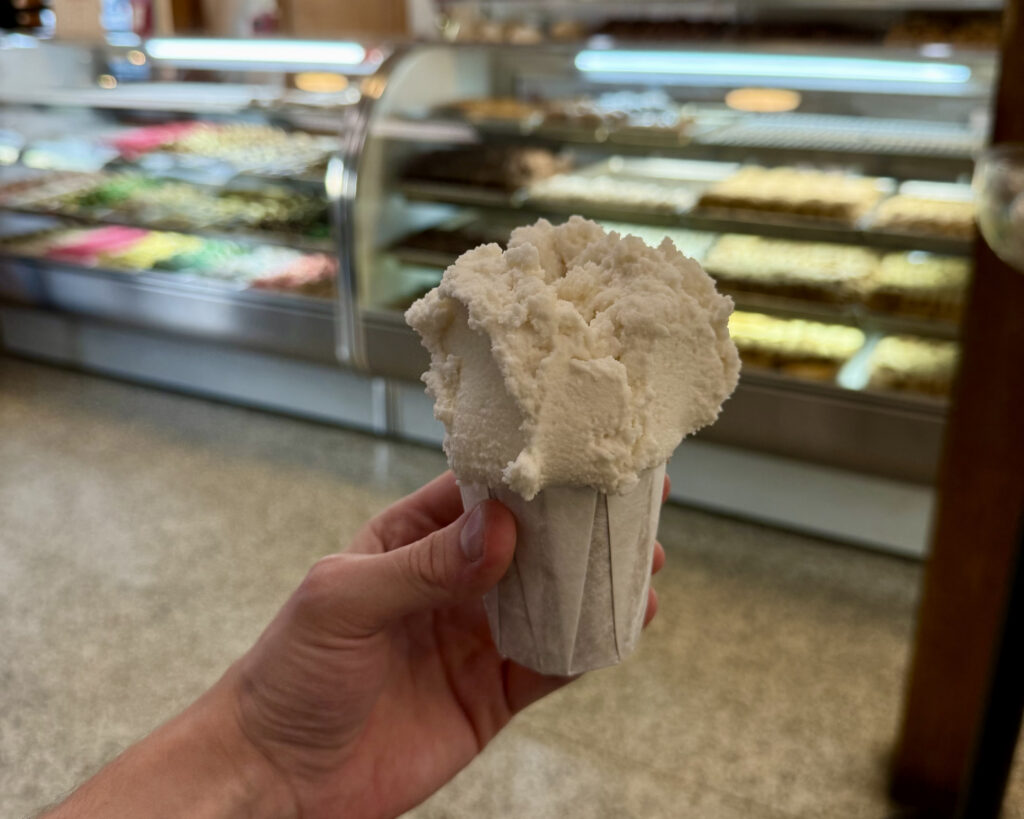
Italian ice isn’t hard to come by in New Jersey, New York, and even Philly, where they call it water ice. But Yum Yum—a creamy, dairy-based style—is something entirely specific to New Jersey.
I grew up eating Yum Yum at Lyndhurst Pastry Shop, and for most of my life I believed it was a flavor exclusive to the store. However, its history is a bit more layered. According to Leo’s Ice Cream, Yum Yum was invented by Giovanni Leo at Leo’s Yum Yum sometime in the early 1900s. It quickly became a local favorite, with demand sweeping South Jersey. Today, the store lives on as Leo’s Ice Cream, which keeps the family name.
While the name originally referred to the style and not a specific flavor, North Jerseyans like me associate Yum Yum with a creamy, vanilla-flavored ice. At Lyndhurst Pastry Shop, that’s what ordering a pint of Yum Yum will get you, though the shop also serves other creamy ices, such as cannoli.

Peter Candia is the Food + Drink Editor at New Jersey Digest. A graduate of The Culinary Institute of America, Peter found a passion for writing midway through school and never looked back. He is a former line cook, server and bartender at top-rated restaurants in the tri-state area. In addition to food, Peter enjoys politics, music, sports and anything New Jersey.

