

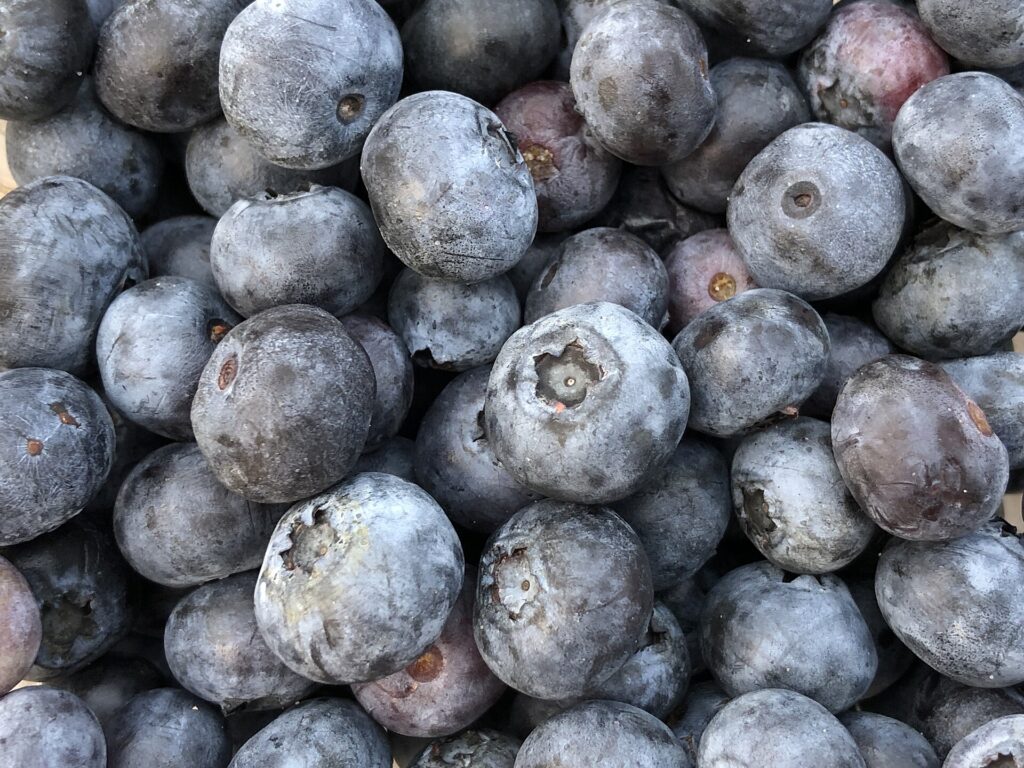

July is National Blueberry Month. Celebrate by diving into New Jersey’s rich history as the birthplace of blueberry cultivation.
There’s nothing better in the summer than a bowl of fresh blueberries. Eaten raw, they burst with a bright tartness. Cooked down in a pie or jam, their sweetness comes to the forefront. Blueberries are synonymous with the heat of summer. That’s especially true here in New Jersey.
But it wasn’t always like it is now. Cartons of blueberries didn’t line the tables at farmers markets—and Driscoll didn’t have its own shelf at the grocery store.
In fact, before Elizabeth White got involved, there was no such thing as a commercially grown blueberry. Instead, if you wanted to try a fresh blueberry, you had to find it in the wild—which is precisely how people ate them for thousands of years, picking berries off low-lying bushes across North America. Native Americans had been doing it for at least 13,000 years, using the fruit for food, medicine, and flavoring. But it wasn’t until last century that we figured out how to grow them on a farm.

That’s where White comes in. The daughter of a cranberry farmer in Burlington County, New Jersey, she grew up working the land at Whitesbog, the family’s farm near Hammonton. By the early 1900s, fascinated with the wild blueberries in forests surrounding her home, she had become convinced that blueberries could be the next great American crop—if someone could only figure out how to cultivate them. Local farmers told her it was impossible. Thankfully, she ignored them.
In 1911, White came across a USDA publication titled Experiments in Blueberry Culture by botanist Frederick Coville, who had been conducting his own independent research into wild blueberry cultivation. She reached out, imploring him to come to Whitesbog. He obliged. Together, they did what everyone else said was impossible.
Their method for doing so was unconventional. White recruited local Pinelands residents—she called them her “pineys”—to scout the wild and bring her cuttings from the best-looking blueberry bushes they could find. She and Coville then grafted and cultivated the best specimens on the farm, cross-breeding varieties to develop plants that could survive and produce reliably in agricultural conditions.
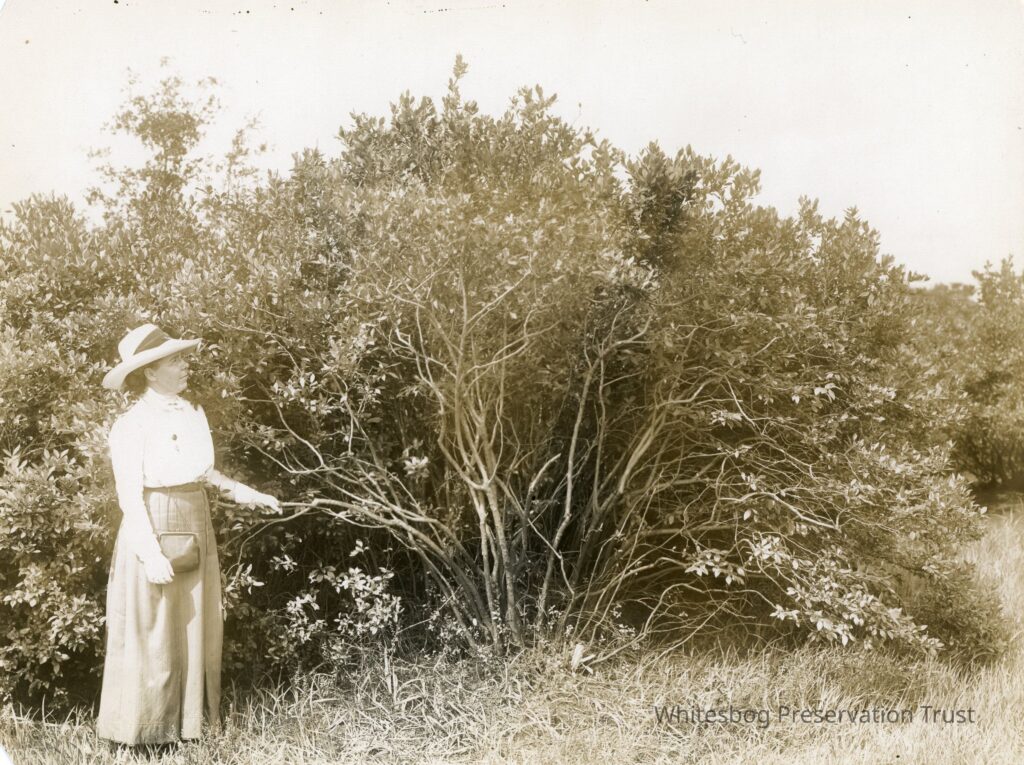
As they suspected, it worked. In 1916, White and Coville harvested and sold the world’s first commercial crop of highbush blueberries, called Tru-Blu-Berries. The state of New Jersey recognized White in 1932 for her outstanding contributions to agriculture and farming, which she continued to make until her death in 1954.
Today, Whitesbog Historic Village still stands in Browns Mills and is open to the public. The farm White built her legacy on is now a place people visit for a glimpse into a crop that is actually much younger than most people expect.
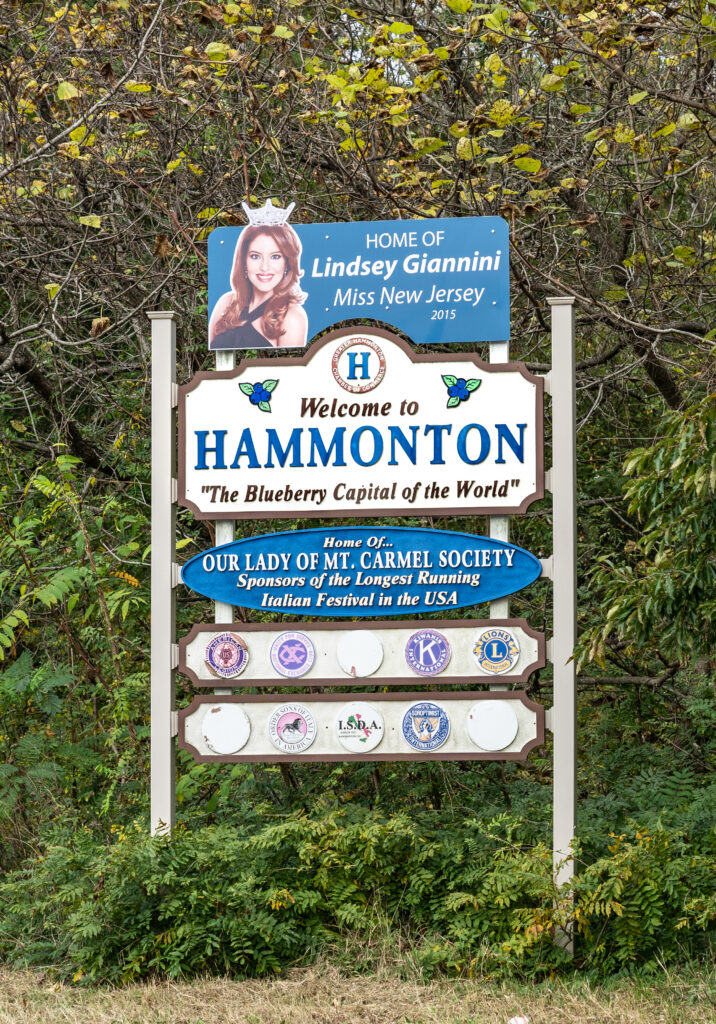
What she started on a tiny New Jersey farm in the early 20th century has grown into something global—blueberry cultivation is now practiced on every continent but Antarctica. The U.S. alone produces nearly a billion pounds of the fruit each year. And here in the Garden State, the Hammonton area accounts for roughly 80% of the state’s annual output of more than 50 million pounds. The concentration of production is so significant that Hammonton has justifiably earned the moniker “The Blueberry Capital of the World.”
July is National Blueberry Month. As we fill our baskets with pounds of blueberries at the market this summer, it seems only right to spend some time celebrating the woman from Burlington County who made it possible. Her name is Elizabeth White.

Peter Candia is the Food + Drink Editor at New Jersey Digest. A graduate of The Culinary Institute of America, Peter found a passion for writing midway through school and never looked back. He is a former line cook, server and bartender at top-rated restaurants in the tri-state area. In addition to food, Peter enjoys politics, music, sports and anything New Jersey.
