

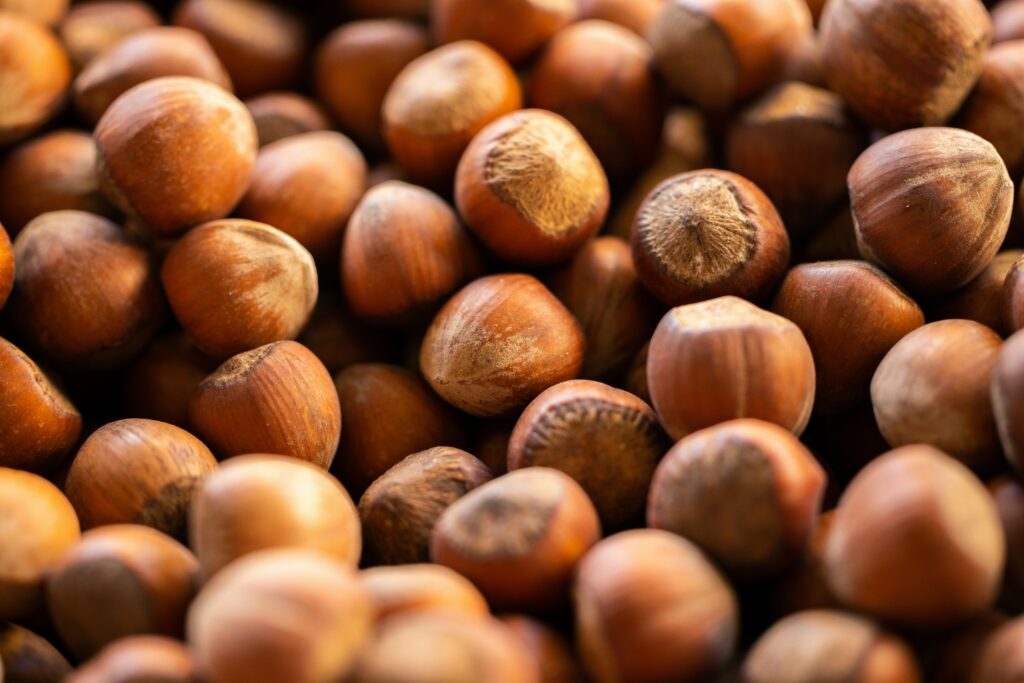

Last week, the New Jersey State Assembly voted to name the hazelnut the official state nut of New Jersey. It passed easily in a 58-15 vote. For hazelnut freaks like myself (I eat Nutella nearly every day) it’s great news, but not everyone is on board.
“Why on earth do we need a state nut?” Assemblyman Brian Bergen (R-Morris) said on the floor, according to NJ.com. “This moronic, awful, stupid, crazy, nutty piece of legislation shouldn’t even be up for a vote today.”
While Bergen’s comments are obviously pointed at the Democratic majority, his objection does inadvertently raise a fair question: Why the hazelnut? New Jersey only started growing them commercially in 2020, but the New Jersey hazelnut lore actually goes much deeper than that.
Rutgers University researcher Thomas Molnar has spent 30 years breeding disease-resistant hazelnut trees that can survive in the eastern United States—something previously considered impossible. A fungal disease known as eastern filbert blight had made commercial hazelnut farming unviable across most of the country. The hazelnuts we eat are almost entirely imported from Turkey, which produces about 70% of the global supply.
Molnar’s breakthrough changed that. Rutgers released its first blight-resistant cultivars to growers in 2020. Thanks to his work, New Jersey became the first East Coast state where farmers could commercially grow hazelnuts.
That research has been seen on food menus, too. At acclaimed pizzeria Razza—recently named the No. 3 pizzeria in the country—a seasonal pie called “Project Hazelnut” utilizes Rutgers hazelnuts as the primary ingredient, reflecting on Owner Dan Richer’s local-first approach to pizza.
A small but growing group of farmers are taking the bet, according to New Jersey Monitor. Among them is Ozgur Tunceli, who planted nearly 1,000 trees on her 89-acre farm in Ringoes. Ed Clerico, a third-generation farmer in Hillsborough, planted his orchards along Royce Brook, seeing hazelnut trees as both a crop and a tool for flood mitigation and carbon sequestration. Four NJ farmers have formed an agroforestry cooperative to process and sell their nuts together.
The state wants to help them scale. Agriculture Secretary Ed Wengryn is exploring incentives to offset the high startup costs that have kept the industry small. Sen. Andrew Zwicker (D-Middlesex) is seeking $6.5 million in state funding to build a processing facility and establish grower support.
“The potential for New Jersey to become a major player in hazelnut production is enormous,” Zwicker said.
The challenges are real. Hazelnut trees take five years to produce their first nuts and seven to eight years for significant yields. Processing equipment must largely be sourced from Europe. Plus, building a domestic market from scratch takes time.
But the upside is significant. The trees require fewer pesticides than fruit crops, are harvested by machine, can live over 50 years, and the nuts can be stored unshelled for over a year.
As for the state nut designation—bill sponsor Assemblyman Sterley Stanley called hazelnuts “a true breakthrough in science that reinforces why we are known as the Garden State.” The bill still needs to pass the Senate before it heads to Governor Sherrill’s desk.
The Garden State may soon have an official nut, and the beginnings of an industry to back it up. I’m already sold—we’re the hazelnut state.

Peter Candia is the Food + Drink Editor at New Jersey Digest. A graduate of The Culinary Institute of America, Peter found a passion for writing midway through school and never looked back. He is a former line cook, server and bartender at top-rated restaurants in the tri-state area. In addition to food, Peter enjoys politics, music, sports and anything New Jersey.
