

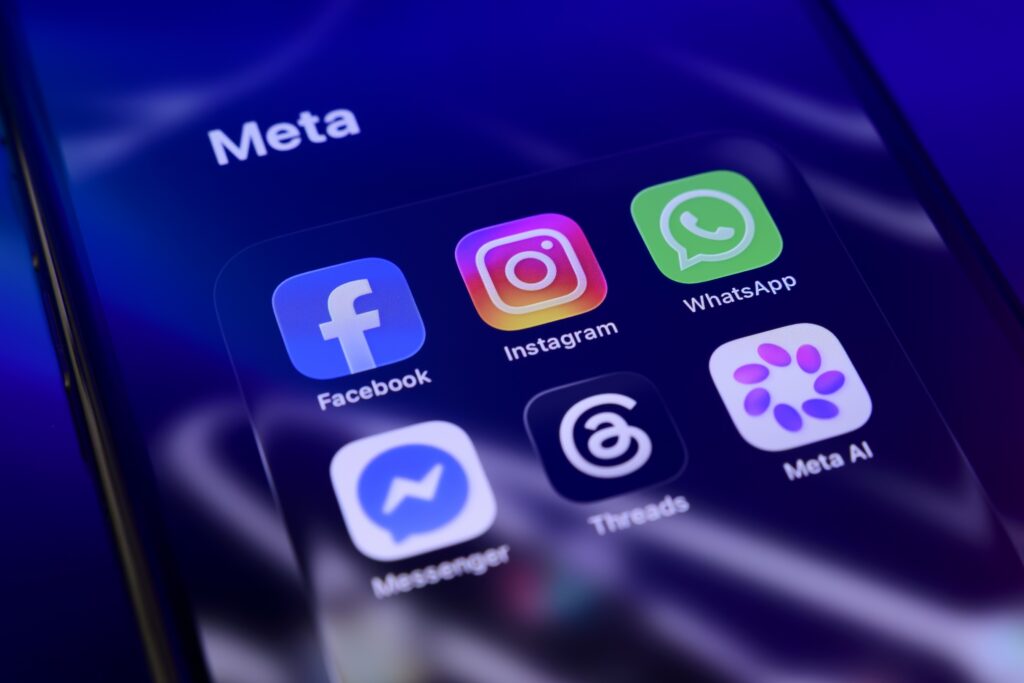

The Garden State is at the center of a massive case, one that could see Meta—Mark Zuckerberg’s social media titan—pay up to $17.1 billion in a landmark settlement. And New Jersey is set to walk away with hundreds of millions of it.
Per an official release by New Jersey Attorney General Jennifer Davenport’s office, Meta reached a settlement of $12.1 billion minimum, up to $17.1 billion maximum after New Jersey—along with 28 other states—sued the company over social media protection.
The lawsuit is framed on the grounds of consumer protection, with Davenport’s office directly comparing it to the Big Tobacco settlements of the 1990s. New Jersey co-led the effort, along with Attorneys General from California, Kentucky, and Colorado.
It stems from a 2021 investigation—which sparked a lawsuit in 2023, alleging Meta designed Instagram’s features to be addictive to children, internally documented resulting mental health harms, failed to warn parents, and misled the public about platform safety.
It comes just one week after Governor Sherrill signed three separate pieces of legislation designed to crack down on what she framed as Big Tech’s “addictive algorithms.”
It resolves claims filed by 47 States and D.C., Puerto Rico, American Samoa, and the Northern Mariana Islands.
Here’s What’s Changing
There are several reported changes coming to Meta apps.
Children will be limited to two hours of daily use, combined across both Instagram and Facebook, with pauses after 15 minutes of continuous use, and again after 60 and 90 minutes. This will be in effect for five years. If other social apps like YouTube, Snapchat, and TikTok adopt comparable measures, Meta’s limit will drop to 60 minutes, with an extended timeline of 10 years.
“Nighttime blocks” also come into the fold. Youth access is restricted between 12 a.m. and 6 a.m. During school hours—weekdays from 8 a.m. to 3 p.m.—push notifications are limited to avoid distraction.
Lying about your age to bypass restrictions will become more difficult with enhanced age verification procedures. Additionally, stronger safeguards against bullying, eating disorder content, and suicide or self-harm content will be put into place, as well as easier-to-use parental controls, and restricted “social comparison features,” like visible like counts and beauty filters—which have each been linked to poor youth mental health outcomes.
“I’m a mom of four kids and have seen firsthand how social media platforms can harm our kids—and how parents are often left in this fight alone. That’s why, last month, I signed the strongest laws in the nation to take on Big Tech and put real limits on how and when these companies can reach our kids online,” said Sherrill in a statement following the settlement. “The lawsuit our Attorney General helped lead against Meta is another big step in ending the addiction that the technology companies are pushing on kids for profit.”
In the settlement, New Jersey is set to receive at least $525 million.
As algorithms continue to advance, and social media addiction seemingly worsens because of it, New Jersey is celebrating a win over the largest social media conglomerate in the world.

Peter Candia is the Food + Drink Editor at New Jersey Digest. A graduate of The Culinary Institute of America, Peter found a passion for writing midway through school and never looked back. He is a former line cook, server and bartender at top-rated restaurants in the tri-state area. In addition to food, Peter enjoys politics, music, sports and anything New Jersey.
