

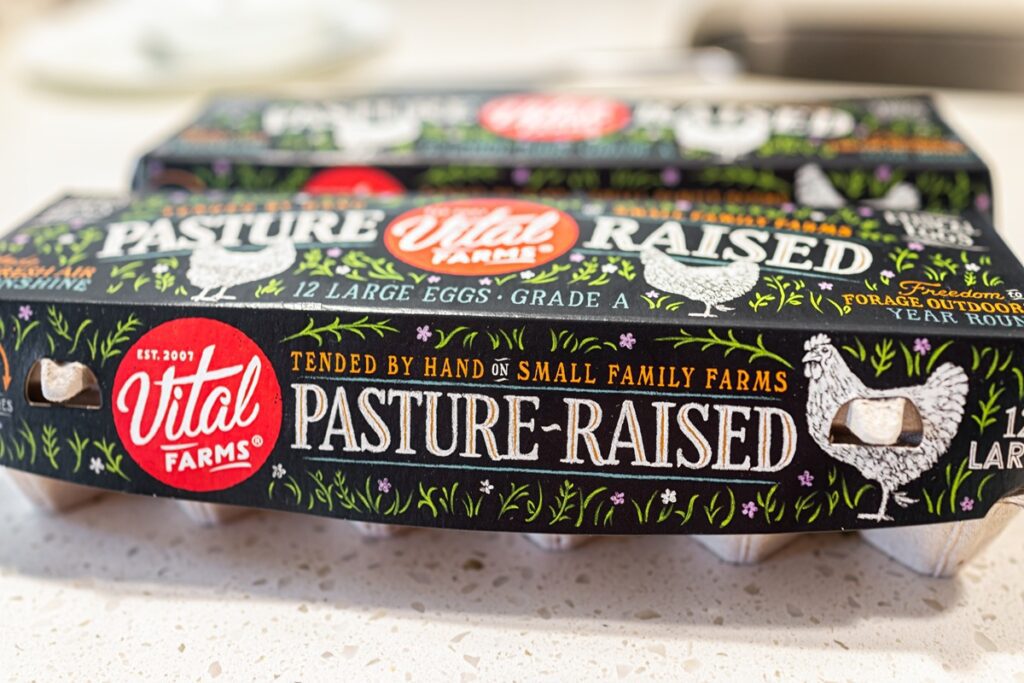

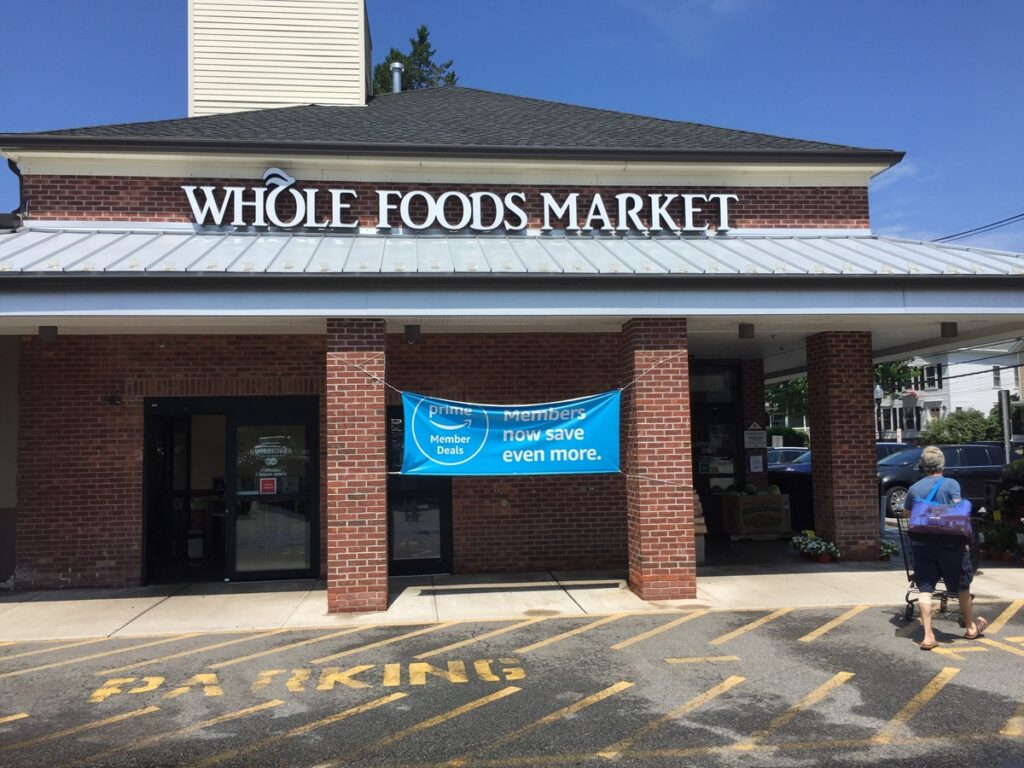
For years, Vital Farms has been one of the easiest “good choices” to spot in New Jersey grocery stores. The brand’s cartons are everywhere, especially at Whole Foods locations across the state, promising pasture-raised eggs, ethical farming, and a cleaner alternative to conventional grocery-store options.
That assumption is now being questioned.
A recent third-party lab test found that linoleic acid made up roughly 23 percent of the fat in Vital Farms eggs—a level typically associated with seed oils rather than eggs from birds raised primarily on forage.
The findings have sparked debate not just about one brand, but about what “pasture-raised” actually means in today’s food system. I have bought Vital Farms eggs weekly for the last few years, especially when the local farmers’ markets aren’t open for the season. Needless to say, I felt compelled to take a deeper look.
Vital Farms’ hens do have outdoor access. But they are also fed a conventional corn-and-soy-based diet—the same crops that dominate industrial agriculture thanks to decades of federal subsidies that make them cheap, abundant, and difficult to avoid at scale. That feed composition matters because what chickens eat directly affects the fat profile of the eggs they produce.
The result, critics argue, is a product that looks meaningfully different on the shelf—darker yolks, higher prices, friendly packaging—but may not be nutritionally distinct from standard cage-free or free-range eggs in ways that justify costing two to four times more.
Vital Farms addressed the testing indirectly in public comments, saying in a TikTok response, “We’ve always been open about what our hens eat. This is not new information.”
That statement may be accurate. The response highlights how much distance there can be between what a label technically allows and what shoppers assume it means. For many buyers, “pasture-raised” still reads as a bird living primarily on grass and insects, even though grain-based feed remains a major part of the diet.
The attention also lands at a moment when Vital Farms bears little resemblance to its earliest version. The company started small, with a limited flock and direct sales to local customers, before expanding rapidly over the last several years. That shift accelerated in 2020, when the company went public. Today, its largest shareholders include big institutional investors.
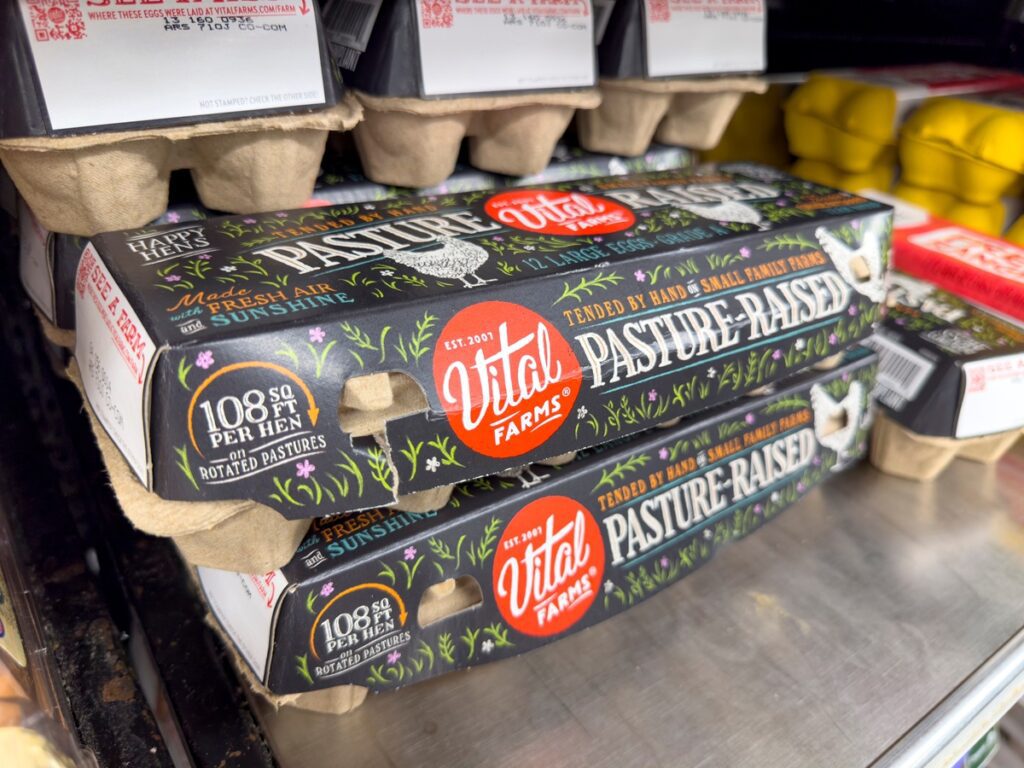
With that shift came scale—and with scale came the economics of efficiency. Corn and soy remain among the cheapest feed inputs in the country, largely because of federal subsidies that have shaped the American food supply for decades. Even pasture-based systems rely on them once production reaches national volume.
Critics point to other changes as well, including the use of darker yolk coloration to meet consumer expectations of what “healthier” eggs should look like. None of this necessarily makes Vital Farms eggs poor quality. In fact, they are likely still better than the lowest-tier grocery-store options.
The issue is value—and whether premium pricing is supported by meaningful nutritional differences.
The question carries weight because linoleic acid intake has risen steadily in the modern American diet. Federal dietary guidelines currently place recommended intake in the range of roughly 12 to 17 grams per day, depending on calorie consumption.
When researchers focus on deficiency rather than optimal intake, the numbers drop sharply. Estimates of what the body actually requires fall far below current averages, landing closer to a small fraction of daily calories.
Meanwhile, common cooking fats and processed foods supply linoleic acid in concentrated amounts, making it easy for intake to rise quickly without much notice.
Intake appears to climb even higher among people whose diets lean heavily on packaged and restaurant foods. That reality exists alongside broader concerns about metabolic health in the U.S., where diet-related illness continues to rise.
Researchers remain divided on cause and effect, but questions around omega-6 exposure have become more common—especially when viewed through the lens of industrial food production rather than nutritional necessity.
Eggs sit squarely in that discussion.
Smaller producers who manage pasture rotation more aggressively and rely less on corn and soy tend to produce eggs with noticeably different fat characteristics. Those operations are harder to scale and rarely supply national grocery chains.
The future of eggs, some argue, may not be in bigger labels or better marketing, but in shorter supply chains. That’s a harder story to sell—and a harder system to build—but one that avoids the contradictions now surrounding some of the most recognizable names in the egg aisle.
For New Jersey shoppers, the takeaway isn’t panic or purity. It’s awareness. Not all “pasture-raised” eggs are created equal, and as food companies grow, the definition of quality often shifts in ways that labels don’t fully explain. For myself, I’ll be looking into better options.

Michael is the Editor-in-Chief of New Jersey Digest and Creative Director at X Factor Media. A Bergen County native, he discovered his passion for storytelling while studying at Montclair State University. In addition to his work in journalism and media, Michael is an avid fiction writer. Outside the office, he enjoys kayaking, a bold glass of Nebbiolo, and the fine art of over-editing.