

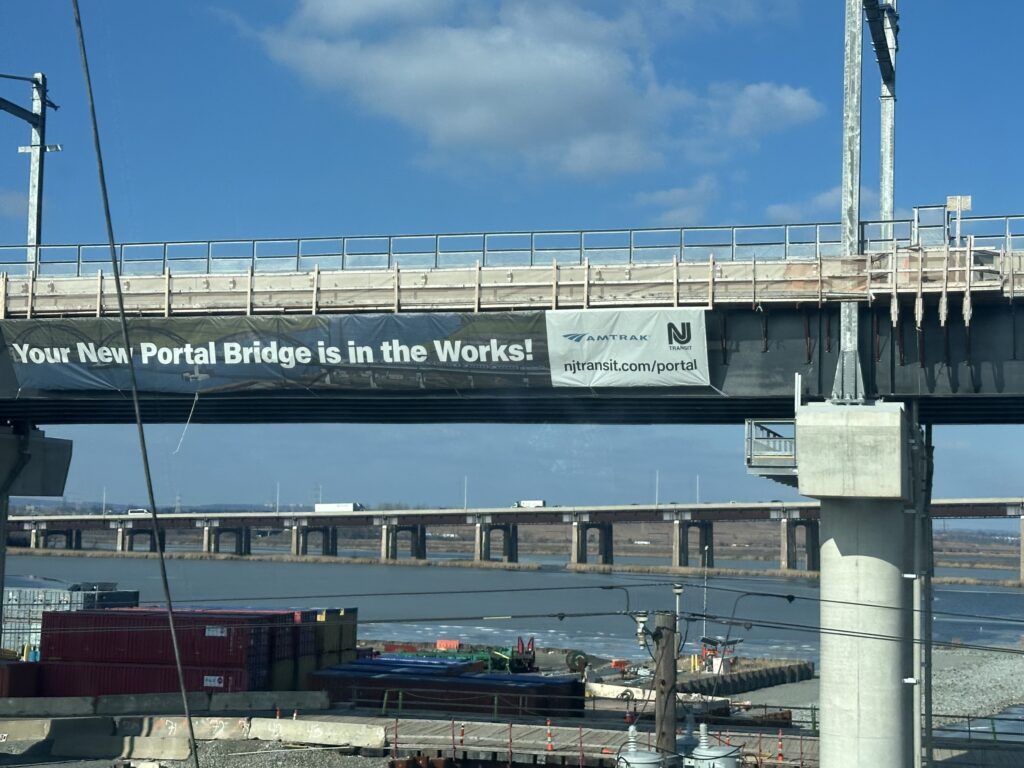

An important connection between New Jersey and New York is finally being replaced. However, the transition is poised to disrupt thousands of commuters. And it’s already started.
Officials say the Portal Bridge replacement is about 25% complete, marking a critical phase for the project. The work is part of a massive infrastructure upgrade, promising smoother future commutes—but is causing cancellations, reroutes, and delays right now.
Here’s what the Portal Bridge is, and why officials say the juice is worth the squeeze.
Portal Bridge is Used by 200,000 Commuters a Day
The Portal Bridge crosses over the Hackensack River in Kearny, carrying trains along the Northeast Corridor. It’s the busiest passenger rail line in the Western Hemisphere.
Roughly 200,000 passengers travel across it each day in trains operated by NJ Transit and Amtrak. A majority of riders take it into Manhattan.
Because so many trains (and people) rely on this single crossing, any issue or delay can instantly disrupt travel across the entire region.
Why the Changes Are Necessary
The original Portal Bridge opened in 1910. It was built as a swing bridge, meaning it rotates open to let boats pass.
That design became a major weakness over the last century.
In that time, the bridge has caused:
- Frequent mechanical failures
- Electrical issues
- Major train delays
- System-wide commuter disruptions
The bridge’s age and multiple moving parts made it one of the Northeast’s biggest bottlenecks in rail travel. Over 100 years later, officials decided it is finally time to replace it.
The New Portal Bridge Makes Good Progress
The replacement, known as the Portal North Bridge, is designed to eliminate the problems of the outdated construction.
The new bridge:
- Sits 50 feet above the river and doesn’t need to open for boats
- Uses modern track infrastructure and electrical systems
- Improves reliability and capacity
Crews are now in the middle of the most delicate phase of the transition: moving train service from the old bridge to the new one.
Workers are installing and fine-tuning tracks, signals, and overhead electric wires that power trains.
Officials say trains will soon begin running westbound on the new bridge.
Why Commuters Are Dealing With Disruptions Right Now
No one said the transition would be easy. It’s already affecting daily travel for hundreds of thousands of commuters.
Recent impacts include:
- Frequent train cancellations
- Schedule changes
- Trains rerouted to Hoboken instead of Penn Station
- Crowding on alternate routes
To combat delays and cancellations, transit officials have even urged commuters to work from home when possible. The current transition phase is expected to last until mid-March.
The Old Portal Bridge Will Be Demolished
Once the new construction is complete, the original Portal Bridge will be retired and eventually torn down, ending more than 100 years of commuter service.
The construction is more than 90% complete—but building the new bridge is only a piece of the puzzle. The overall transition period remains about 25% complete.
The Goal: Fewer Delays and More Reliable Commutes
Officials are assuring commuters that the short-term pain is worth the long-term gain. While the current disruptions are frustrating, the goal is clear.
The new bridge is expected to:
- Reduce breakdowns
- Improve punctuality
- Increase reliability
- Modernize the busiest rail connection in the Western Hemisphere
For the hundreds of thousands who rely on this route every day, the Portal Bridge replacement could finally eliminate one of the biggest sources of commuter delays between New Jersey and New York.

The New Jersey Digest is a new jersey magazine that has chronicled daily life in the Garden State for over 10 years.