

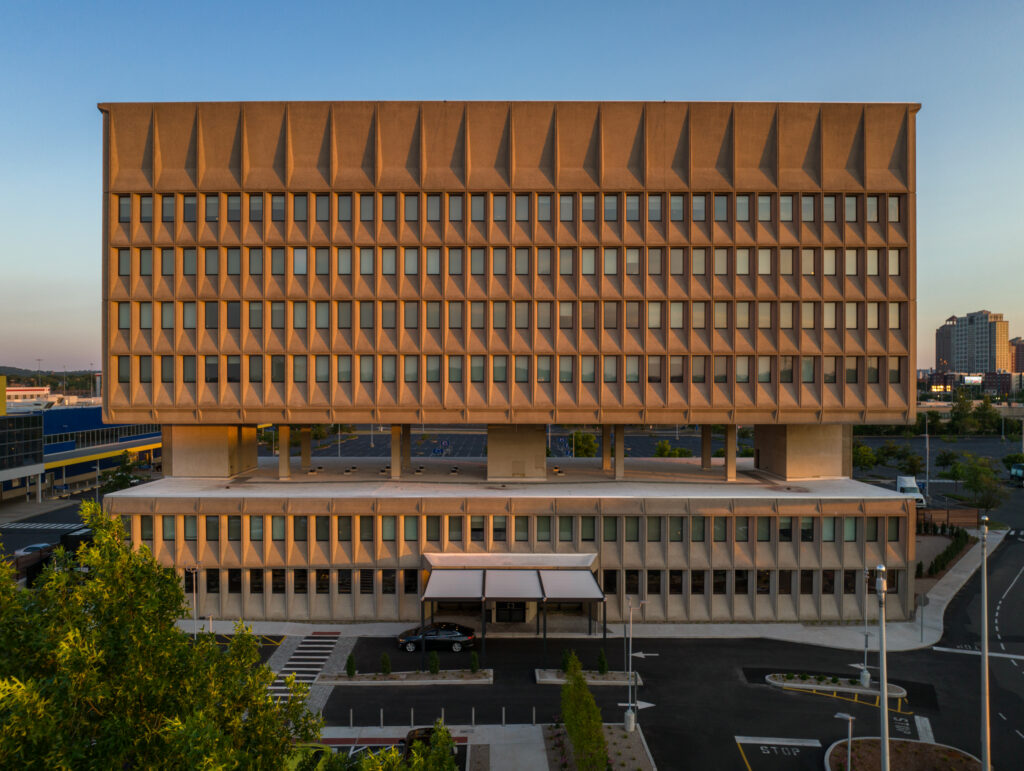

Hotel Marcel is America’s first zero-emission, Passive House-certified hotel—housed in Marcel Breuer’s landmark 1968 brutalist building, powered entirely by solar, and located just minutes from downtown New Haven’s best dining and attractions. It proves that sustainability doesn’t have to be a compromise.
I’ll be candid. When I read the words “sustainable hotel” I often hesitate. Not because I’m anti-sustainability, but because, in my travel experience, it often feels like a massive trade-off. Rougher sheets, aggressive minimalism, an overall feeling that comfort is beside the point. It’s fine—noble, even. But it’s not a true getaway if I can’t relax.
When I heard of a hotel less than two hours up I-95 that was flipping this idea on its head—well, I was intrigued, to say the least. Hotel Marcel proves that sustainability doesn’t have to be a compromise. You can have your soft sheets. Your beautiful spaces. Your amenities, too. There’s no need to lower your expectations. You shouldn’t have to.
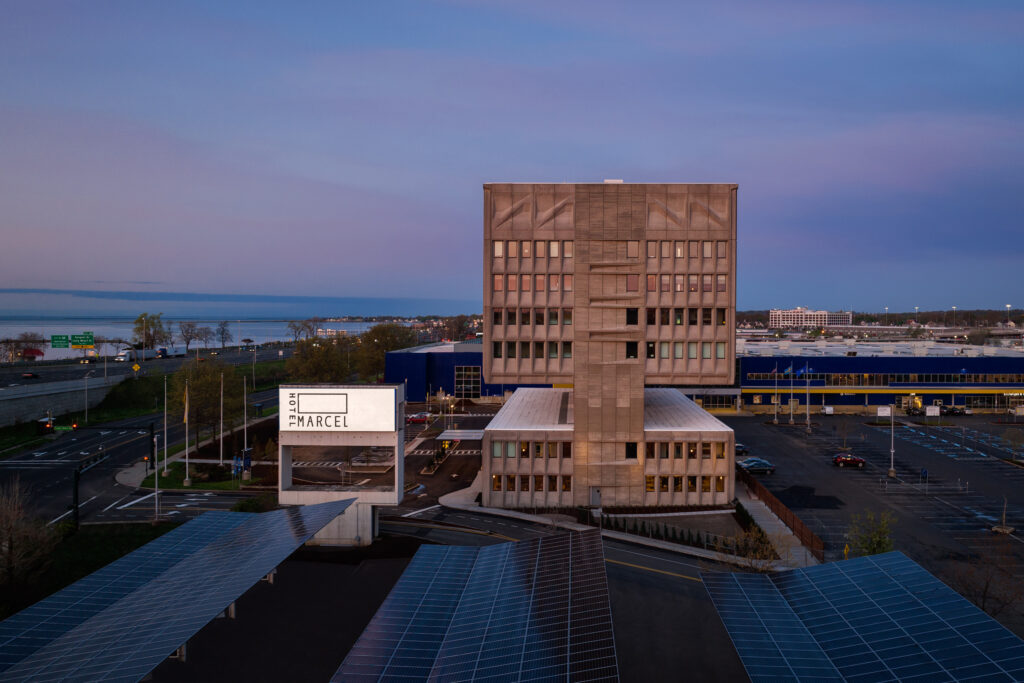
Housed in Marcel Breuer’s landmark 1968 Brutalist building—originally built for the Armstrong Rubber Company, now on the National Register of Historic Places—Hotel Marcel operates as America’s first zero-emission, Passive House-certified hotel, right in the heart of New Haven, Connecticut. The grounds run entirely on solar power, and the rooms are actually comfortable and quiet.
The building tells a story from the moment you check in. But the rest of the stay is the real reason to book.
The Building Is the Story
Before you even have a chance to drop your bags, stop, take a step back, and look at the building.
The Armstrong Rubber Company headquarters, designed by Marcel Breuer and completed in 1968, is one of the more striking examples of Brutalist architecture you’ll find in New England. A towering structure, complete with raw concrete, bold geometric forms, and soldier-like pillars, it is the reason to book. The silhouette is bound to divide opinion, as brutalist architecture often does. But when you’re standing in front of it, there’s no denying its presence.
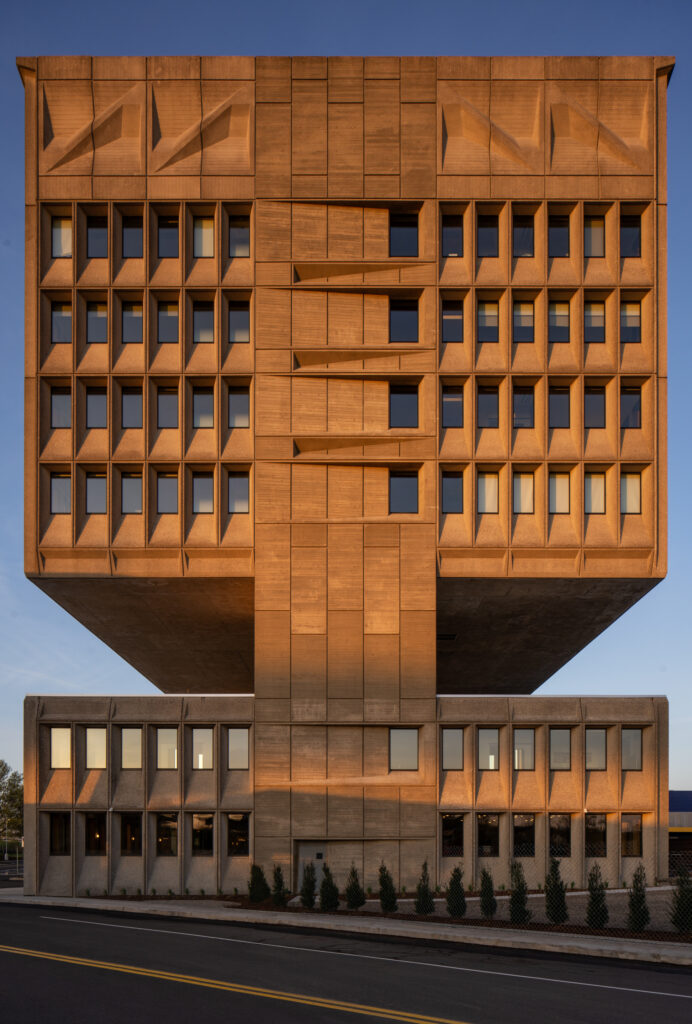
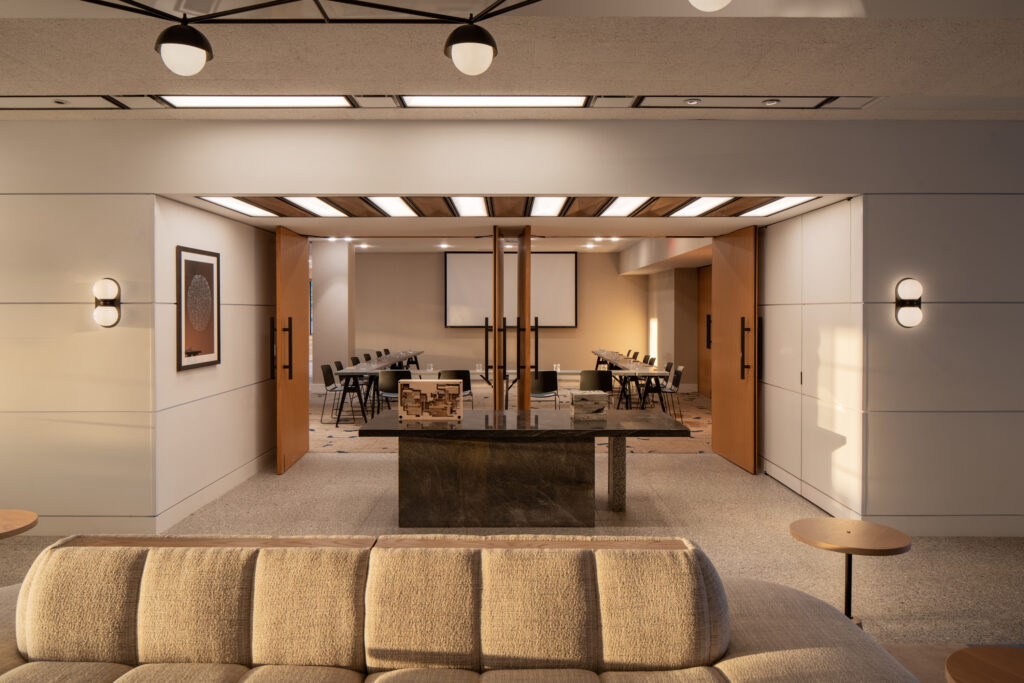
Breuer’s architectural career began at the Bauhaus, the legendary German art school that still shapes modern design today. That lineage is something Hotel Marcel holds onto, and it’s visible throughout the interior: meticulously restored finishes, repurposed 1960s light fixtures, and custom furnishings that echo Breuer’s philosophy.
The building has earned a spot on the National Register of Historic Places for that very reason. I have never been so engrossed in a hotel’s design. It makes an architectural argument that is impossible to look past. And you become a part of that story during your stay.
America’s Most Sustainable Hotel. No, Really.
The building grabs you. But what’s actually powering it is equally as important. Hotel Marcel boasts several sustainability accolades that put it in a league of its own, not just in New England, but across the nation.
It’s America’s first zero-emission hotel, meaning it releases zero carbon emissions or harmful pollutants into the air. Hotel Marcel is also America’s first Passive House-certified hotel—a designation given to ultra-energy-efficient buildings that use up to 90% less energy than typical structures. Finally, it’s LEED Platinum-certified. LEED—or Leadership in Energy and Environmental Design—is a green building certification program developed by the non-profit U.S. Green Building Council which aims to build cost-effective, energy-efficient buildings.
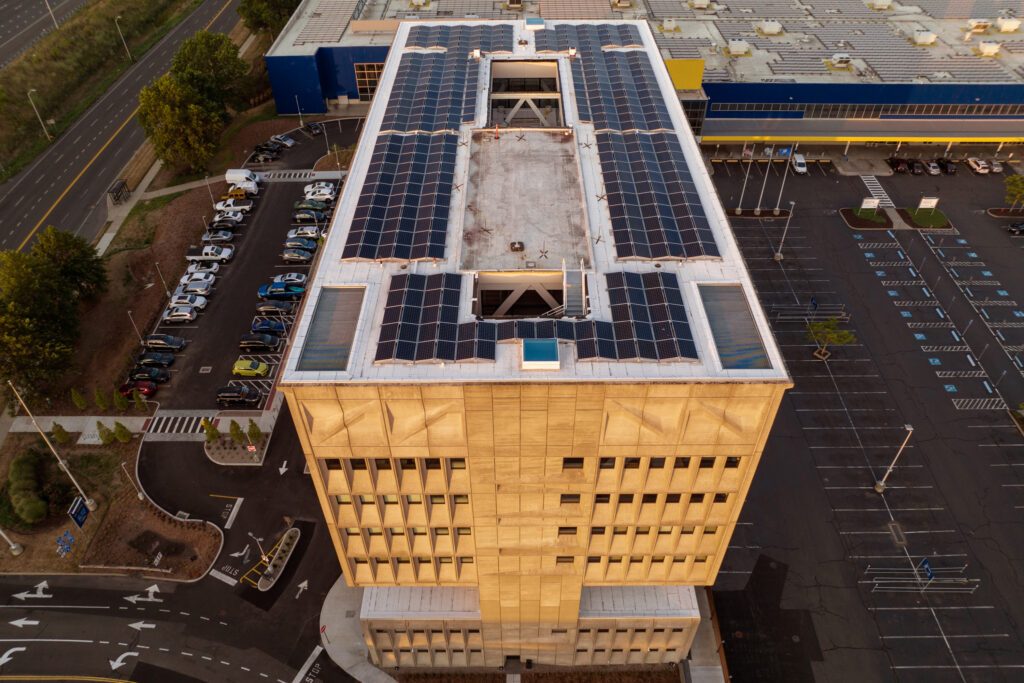
These aren’t just empty certifications. They provide peace of mind to environmentally conscious travelers, and create a real difference in the fight against climate change, but without compromising a thing about the actual stay.
To add to the environmental allure are more than 1,000 solar panels, an on-site microgrid, battery storage, and pristine air quality throughout the property. All of this adds up. Hotel Marcel posts a carbon reduction equivalent to 846 acres of mature forest annually.
I got the sense quickly they aren’t just checking off boxes—Hotel Marcel is committed to the environmental responsibility that comes with operating a large hotel. And far more than the competitors. That much is clear.
What’s Waiting in the Room
All of this is great—the architecture, the solar panels, the history—but what about the rooms?
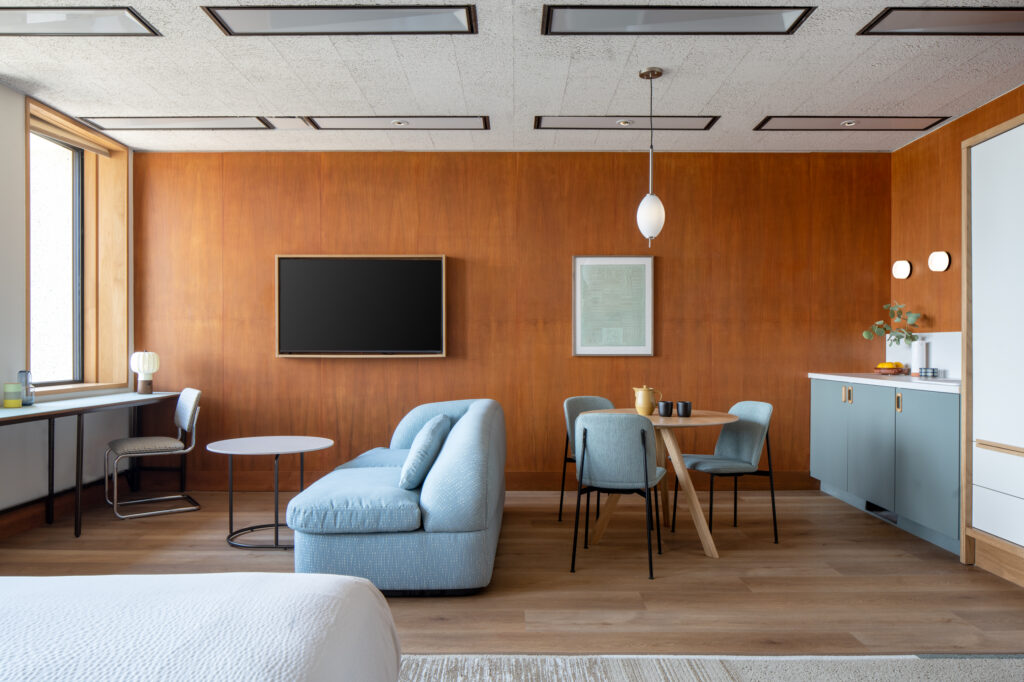
Hotel Marcel holds 165 guest rooms and suites, each one carrying the Bauhaus DNA of the building without ever feeling like a museum exhibit. Minimalist by design, but without the cold remove that minimalism can sometimes produce. The details connect the space to Breuer’s original vision without freezing it there.
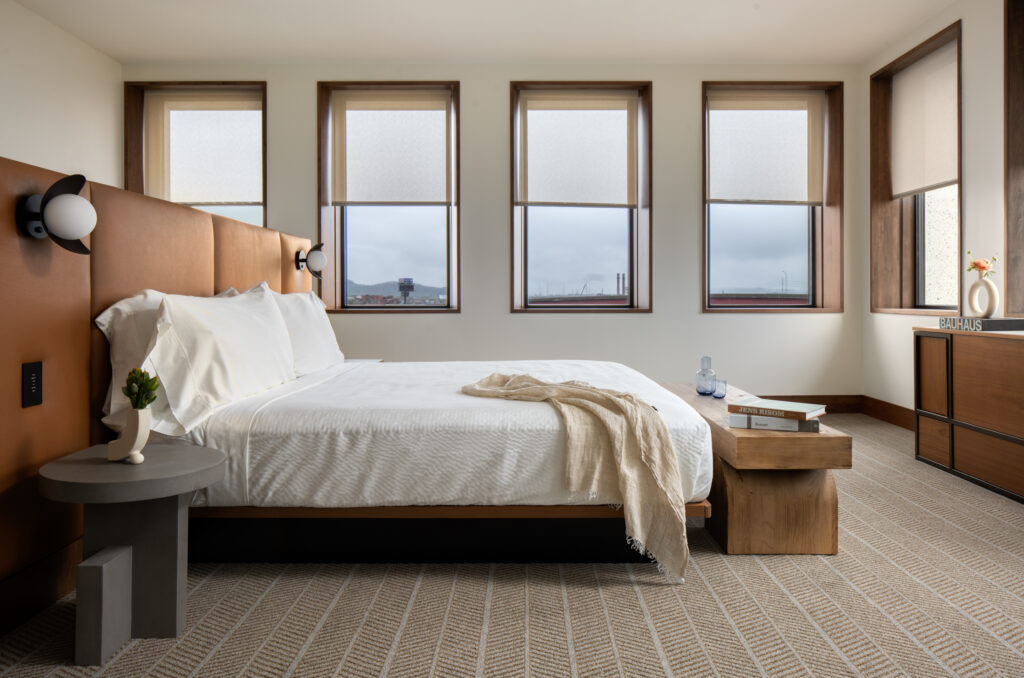
But the thing that really caught me off guard is the quiet. Passive House construction means triple-glazed windows and ultra-insulated walls—which matters more than you’d expect when you’re staying in a concrete office building right off of I-95. The blaring horns and noisy engines of the highway disappear completely. What’s left is a legitimately restful suite that keeps the story of the building alive.
The City Outside the Door
The sustainable approach carries directly into the dining room.
BLDG, Hotel Marcel’s on-site restaurant, operates on a farm-to-table, locally sourced philosophy that echoes the property’s broader approach. The menu weaves through the seasons with local produce and meats—charred cabbage with corn romesco, summer melon and heirloom tomato salad, grass-fed steaks, and even a fish and chips made with Massachusetts skate, a knowing nod to the New England staple.
The architecture is present too. The space feels like a natural extension of the building rather than an afterthought, with the same considered design sensibility running from the front entrance, to the tables and chairs.
But New Haven’s dining scene at large deserves to be explored, too. The hotel sits just two miles from downtown, and some of the city’s most storied institutions. Try the original hamburger at Louis’ Lunch. The thick, juicy beef patties are cooked in custom-made vertical broilers and served on white toast. It’s a must-stop for any burger fan—just don’t ask for ketchup. Seriously, they get mad.
And pizza fans have some exploring to do, too. Is New Haven pizza better than Jersey? Listen, I’m not going to make any bold claims here, but I am a huge fan of the style. If you’re as serious as I am, you’ll do the full circuit: Frank Pepe’s, Sally’s, Modern, and BAR. Just be sure not to call it pizza when ordering. It’s “ah-beetz,” and you have to ask for cheese if you want it. They’re serious about that kind of thing in these parts.
Food Truck Paradise is also just down the road, offering hungry diners a collection of several different cuisines and trucks to try.
Beyond food, Hotel Marcel is located near other attractions like Yale University, Harkness Tower, New Haven Museum, and Wooster Square Park. To make getting around the city even easier, Hotel Marcel offers complimentary zero-emission rides within five miles through a partnership with Hyundai—a detail that fits the property’s concept so naturally it almost goes without saying. Almost.
New Haven might not be the first city that comes to mind when pondering the Northeast, but spend a day actually exploring all it has to offer and it’ll soon become one of your favorites.
Hotel Marcel Makes the Case
I’ll admit I was skeptical of Hotel Marcel. I left converted.
There’s something to be said for a property that delivers on every promise it makes—the architecture, the quiet, the food, the environmental credentials—without asking you to compromise on any of it.
But here’s the thing: Hotel Marcel isn’t asking you to feel good about your stay at the expense of enjoying it. It’s proving, definitively, that sustainability and thoughtful design, amenities and location, were never in conflict. The solar panels are up. The Passive House is certified. The rooms are restful. The pizza, sorry, the ah-beetz is only a complimentary ride away.
New Haven might surprise you. Hotel Marcel is the way to do it.

Peter Candia is the Food + Drink Editor at New Jersey Digest. A graduate of The Culinary Institute of America, Peter found a passion for writing midway through school and never looked back. He is a former line cook, server and bartender at top-rated restaurants in the tri-state area. In addition to food, Peter enjoys politics, music, sports and anything New Jersey.
